

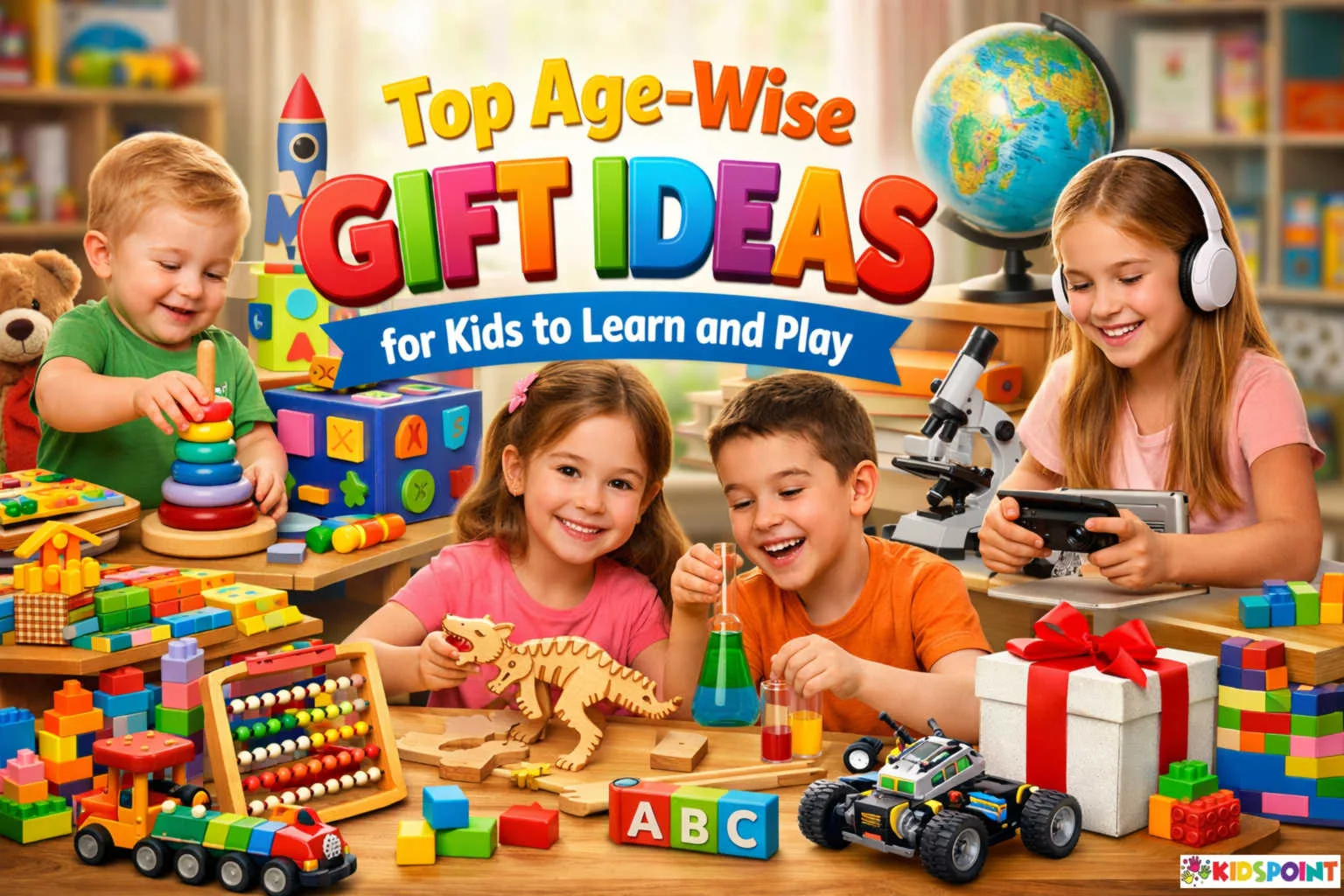
Choosing the perfect gift for a child can feel overwhelming, especially when you want something that is both fun and educational. Children grow rapidly, and their interests, abilities, and developmental needs change at each stage. That’s why selecting age-appropriate gifts is essential—not just for entertainment, but for supporting learning, creativity, and overall development.
At The Kids Point, we believe that the best gifts are those that inspire curiosity, encourage exploration, and make learning enjoyable. In this comprehensive guide, we’ll explore top age-wise gift ideas for kids that combine play with meaningful learning experiences.
Why Age-Appropriate Gifts Matter
Before diving into gift ideas, it’s important to understand why age matters when selecting toys and learning tools.
Supports Developmental Milestones
Each age group has unique physical, cognitive, and emotional milestones. The right gift helps children practice and master new skills.
Keeps Kids Engaged
A toy that’s too advanced may frustrate a child, while one that’s too simple can quickly become boring.
Encourages Learning Through Play
Children learn best when they are having fun. Age-appropriate gifts create the perfect balance between education and enjoyment.
Gift Ideas for Infants (0–12 Months)
At this stage, babies are discovering the world through their senses. Gifts should focus on sensory stimulation and motor skill development.
Best Gift Ideas:
- Soft Plush Toys
Safe and cuddly toys help babies feel comforted while exploring textures. - Rattles and Teething Toys
These improve grip strength and soothe teething discomfort. - Play Mats and Activity Gyms
Encourage tummy time and early movement. - Musical Toys
Gentle sounds stimulate auditory development.
Learning Benefits:
- Sensory exploration
- Hand-eye coordination
- Early motor skills
Gift Ideas for Toddlers (1–3 Years)
Toddlers are curious explorers who love to move, touch, and experiment. Gifts should promote movement, language, and problem-solving skills.
Best Gift Ideas:
- Stacking Blocks
Help develop coordination and basic problem-solving skills. - Shape Sorters
Teach colors, shapes, and spatial awareness. - Push and Pull Toys
Encourage walking and balance. - Interactive Books
Introduce early language and storytelling.
Learning Benefits:
- Fine and gross motor skills
- Vocabulary development
- Early cognitive skills
Gift Ideas for Preschoolers (3–5 Years)
Preschoolers are imaginative and eager to learn. This is the perfect age for gifts that encourage creativity, role-play, and early academics.
Best Gift Ideas:
- Art and Craft Kits
Crayons, paints, and DIY crafts boost creativity. - Pretend Play Sets
Kitchen sets, doctor kits, and costumes inspire imagination. - Puzzles
Improve problem-solving and concentration. - Alphabet and Number Games
Build early literacy and numeracy skills.
Learning Benefits:
- Creativity and imagination
- Social and emotional development
- Early reading and math skills
Gift Ideas for Early School Age Kids (5–7 Years)
Kids in this age group start formal schooling and develop a stronger interest in learning and structured activities.
Best Gift Ideas:
- Educational Board Games
Teach strategy, patience, and teamwork. - Science Experiment Kits
Encourage curiosity and exploration. - Reading Books
Age-appropriate storybooks build reading habits. - Building Sets (e.g., construction toys)
Enhance creativity and engineering skills.
Learning Benefits:
- Critical thinking
- Reading and comprehension
- STEM skills
Gift Ideas for Kids (8–10 Years)
Children at this stage are more independent and enjoy challenges. Gifts should focus on skill-building and creativity.
Best Gift Ideas:
- Advanced Craft Kits
Jewelry making, painting, or DIY projects. - STEM Toys and Robotics Kits
Introduce coding and engineering concepts. - Sports Equipment
Encourage physical activity and teamwork. - Strategy Board Games
Develop logical thinking and planning skills.
Learning Benefits:
- Problem-solving skills
- Creativity and innovation
- Physical fitness
Gift Ideas for Pre-Teens (11–12 Years)
Pre-teens are developing their identities and interests. Gifts should reflect their growing independence and curiosity.
Best Gift Ideas:
- Science and Technology Kits
Advanced experiments and coding tools. - Creative Journals and Writing Kits
Encourage self-expression. - Art Supplies
For drawing, painting, or digital art. - Educational Subscription Boxes
Monthly learning activities keep them engaged.
Learning Benefits:
- Independent thinking
- Creativity and self-expression
- Advanced academic skills
Educational Gift Categories That Work for All Ages
Some gift categories can be adapted for different age groups and remain consistently valuable.
Books
From picture books to chapter novels, reading is one of the most powerful learning tools.
Building Toys
Simple blocks for toddlers and complex construction kits for older kids.
Arts and Crafts
Encourage creativity at every age level.
Outdoor Play Equipment
Promotes physical health and social interaction.
Tips for Choosing the Perfect Gift
Selecting the right gift goes beyond age alone. Here are some practical tips:
Consider the Child’s Interests
Does the child love art, science, sports, or storytelling? Choose something aligned with their passions.
Focus on Learning Value
Look for toys that teach skills like problem-solving, creativity, or teamwork.
Ensure Safety
Always check age recommendations and safety guidelines.
Choose Quality Over Quantity
A single meaningful gift is often better than multiple less impactful ones.
Encourage Open-Ended Play
Toys that can be used in multiple ways offer more value and longer engagement.
Benefits of Learning Through Play
Play is not just entertainment—it’s essential for a child’s development.
Cognitive Growth
Children develop thinking, reasoning, and problem-solving skills.
Emotional Development
Play helps kids express feelings and build confidence.
Social Skills
Group play teaches sharing, cooperation, and communication.
Physical Development
Active play improves coordination and overall health.
Common Mistakes to Avoid When Buying Gifts
Even with good intentions, some common mistakes can reduce the value of a gift.
- Choosing toys that are too advanced or too simple
- Ignoring safety standards
- Buying only digital gadgets without interactive play
- Overlooking the child’s personal interests
Avoiding these mistakes ensures your gift is both meaningful and enjoyable.
Making Gift-Giving More Meaningful
We encourage parents and gift-givers to think beyond the product itself.
Add a Personal Touch
Write a thoughtful note or choose something customized.
Gift Experiences
Consider museum visits, workshops, or classes instead of physical items.
Encourage Family Interaction
Choose games or activities that families can enjoy together.
Common Questions Parents Ask
Why are age-wise gifts important for kids?
Age-wise gifts match a child’s developmental stage, helping them learn new skills while staying engaged and entertained.
What types of gifts are best for learning and play?
Educational toys, books, puzzles, and STEM kits are excellent choices that combine fun with skill development.
How do I choose the right gift for a child?
Consider the child’s age, interests, safety needs, and learning goals when selecting a gift.
Are expensive gifts always better for kids?
No, meaningful and age-appropriate gifts are more valuable than expensive ones that may not suit the child.
Can gifts really support a child’s development?
Yes, the right gifts can enhance cognitive, social, emotional, and physical development through interactive play.
Final Thoughts
Finding the perfect gift for a child doesn’t have to be complicated. By focusing on age-appropriate, educational, and engaging options, you can choose gifts that truly make a difference in a child’s growth and happiness.
From sensory toys for infants to advanced STEM kits for pre-teens, each stage offers unique opportunities to support learning through play. When you select gifts thoughtfully, you’re not just giving a toy—you’re giving an experience, a skill, and a memory.
At The Kids Point, our mission is to help you make smarter choices that inspire children to learn, grow, and thrive while having fun.