

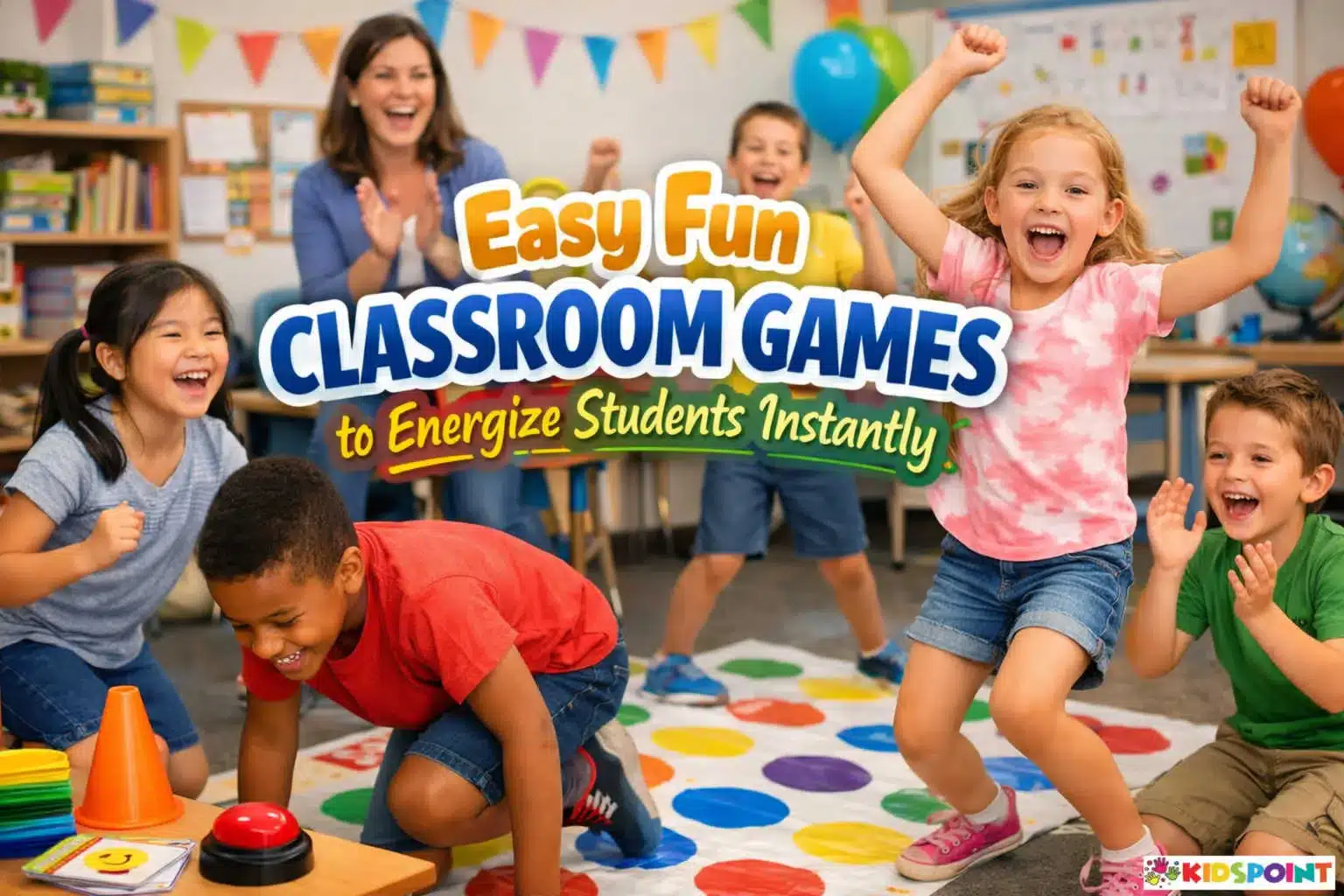
Keeping students energized and engaged in the classroom can be a daily challenge for teachers. Long lessons, heavy subjects, and routine schedules can quickly drain students’ attention and enthusiasm. That’s where fun classroom games come in. These quick, easy, and interactive activities can instantly boost energy levels, improve focus, and create a positive learning environment.
At The Kids Point, we believe that learning should always be exciting and enjoyable. Classroom games are not just about fun—they play a powerful role in improving memory, teamwork, communication, and critical thinking skills. In this comprehensive guide, we’ll explore a variety of easy classroom games that can instantly energize students of all ages.
Why Classroom Games Are Important
Before diving into the games, it’s important to understand why they matter.
Boosts Student Engagement
Games break the monotony of traditional teaching and capture students’ attention. When students are actively involved, they are more likely to retain information.
Improves Focus and Concentration
Short games act as mental refreshers. They help students reset their minds and return to lessons with better concentration.
Encourages Social Interaction
Classroom games promote teamwork and communication, helping students build stronger relationships with their peers.
Reduces Stress and Anxiety
Fun activities create a relaxed atmosphere where students feel comfortable participating without fear of making mistakes.
Enhances Learning Outcomes
Many games can be adapted to reinforce academic concepts, making learning more effective and enjoyable.
Quick Warm-Up Games to Start the Day
Would You Rather?
Ask students fun and thought-provoking questions like:
- Would you rather fly or be invisible?
- Would you rather live in space or underwater?
This game encourages speaking skills and helps students feel more comfortable in class.
Two Truths and a Lie
Each student shares two true facts and one false statement about themselves. Others guess which one is the lie.
Benefits:
- Builds communication skills
- Encourages creativity
- Helps students get to know each other
High-Energy Movement Games
Simon Says
A classic game that gets students moving while improving listening skills.
How to Play:
- The teacher gives commands starting with “Simon says.”
- Students follow only if the phrase begins with “Simon says.”
Skills Developed:
- Listening
- Focus
- Quick decision-making
Freeze Dance
Play music and let students dance. When the music stops, they must freeze.
Why It Works:
- Releases physical energy
- Improves self-control
- Adds excitement to the classroom
Jump In, Jump Out
Students stand in a circle and follow simple movement instructions.
Example:
- “Jump in”
- “Jump out”
- “Turn around”
This game is great for younger students and helps improve coordination.
Brain Boosting Games for Quick Thinking
Rapid Fire Questions
Ask students quick questions related to lessons or general knowledge.
Example:
- What is 5 + 7?
- Name a country starting with “B.”
Benefits:
- Enhances recall speed
- Reinforces learning
- Builds confidence
Word Association Game
Start with a word, and each student must say a related word quickly.
Example:
- Teacher: “Sun”
- Student: “Light”
- Next: “Bright”
This improves vocabulary and quick thinking.
Alphabet Game
Pick a category (animals, fruits, countries), and students must name items in alphabetical order.
Example:
- A – Apple
- B – Banana
- C – Cherry
This game is both educational and engaging.
Team-Based Classroom Games
Quiz Relay
Divide students into teams. Each team answers questions in turns.
How It Helps:
- Encourages teamwork
- Promotes healthy competition
- Reinforces subject knowledge
Pictionary
Students draw a word while their teammates guess it.
Skills Developed:
- Creativity
- Communication
- Visual learning
Charades
Students act out a word or phrase without speaking while others guess.
This game is excellent for:
- Building confidence
- Improving body language skills
- Encouraging participation
Quiet Yet Engaging Games
Silent Ball
Students pass a ball without speaking. If someone talks or drops the ball, they’re out.
Benefits:
- Encourages discipline
- Improves focus
- Helps calm the classroom
Spot the Difference
Provide two similar images and ask students to find differences.
Why It Works:
- Enhances observation skills
- Encourages attention to detail
Creative and Imaginative Games
Story Building
Start a story with one sentence. Each student adds a new sentence.
Example:
- “Once upon a time, there was a magical school…”
This activity:
- Boosts creativity
- Improves storytelling skills
- Encourages collaboration
Draw and Pass
Each student starts a drawing and passes it to the next person to continue.
Benefits:
- Encourages creativity
- Builds teamwork
- Creates fun and unexpected results
Subject-Based Learning Games
Math Bingo
Use numbers or equations instead of traditional bingo calls.
Example:
- Teacher says “5 + 5”
- Students mark “10” on their cards
Spelling Bee Challenge
Turn spelling practice into a fun competition.
Why It Works:
- Improves spelling
- Builds confidence
- Encourages healthy competition
Science Quiz Game
Ask simple science questions in a game format.
Example:
- What planet is known as the Red Planet?
This reinforces classroom learning in a fun way.
Icebreaker Games for New Classes
Name Chain
Each student says their name along with a word starting with the same letter.
Example:
- “Happy Hasan”
- “Jolly Jannat”
This helps students remember names easily.
Find Someone Who…
Give students a list of traits:
- Find someone who has a pet
- Find someone who likes math
Students interact and learn about each other.
Tips for Using Classroom Games Effectively
Keep It Short and Simple
Games should be quick (5–10 minutes) to maintain their energizing effect.
Match the Game to the Age Group
Younger children enjoy movement games, while older students may prefer strategy or quiz-based games.
Connect Games to Learning Goals
Whenever possible, align games with lesson objectives.
Encourage Participation
Make sure every student gets a chance to join in.
Maintain Classroom Control
Set clear rules to ensure games remain fun and not chaotic.
When to Use Classroom Games
Timing is everything. Use games strategically for maximum impact:
- At the beginning of class to warm up
- During transitions between lessons
- After long lectures to refresh minds
- At the end of class as a reward
Benefits of Energizing Games in Long-Term Learning
Regular use of classroom games leads to:
- Better student attendance
- Increased motivation
- Improved academic performance
- Stronger teacher-student relationships
Students begin to associate learning with enjoyment, which fosters a lifelong love for education.
Common Questions About Classroom Games
What are classroom games?
Classroom games are fun and interactive activities designed to engage students while supporting learning.
How long should classroom games last?
Most classroom games should last between 5 to 10 minutes to keep students energized without losing focus on lessons.
Can classroom games improve learning?
Yes, they help improve memory, focus, teamwork, and understanding of academic concepts.
Are classroom games suitable for all age groups?
Yes, games can be adapted for different age groups by adjusting difficulty and activity type.
When is the best time to use classroom games?
They work best at the start of class, during breaks, or after long lessons to refresh students’ minds.
Final Thoughts
Classroom games are more than just a break from routine—they are powerful tools that transform the learning experience. By incorporating easy and fun activities into your daily teaching, you can create a lively, engaging, and productive classroom environment.
At The Kids Point, we encourage educators and parents to embrace creative teaching methods that make learning enjoyable and meaningful. Whether it’s a quick movement game, a brain teaser, or a team challenge, these activities can instantly energize students and make every lesson memorable.
Start small, experiment with different games, and watch your classroom come alive with energy, laughter, and learning!