

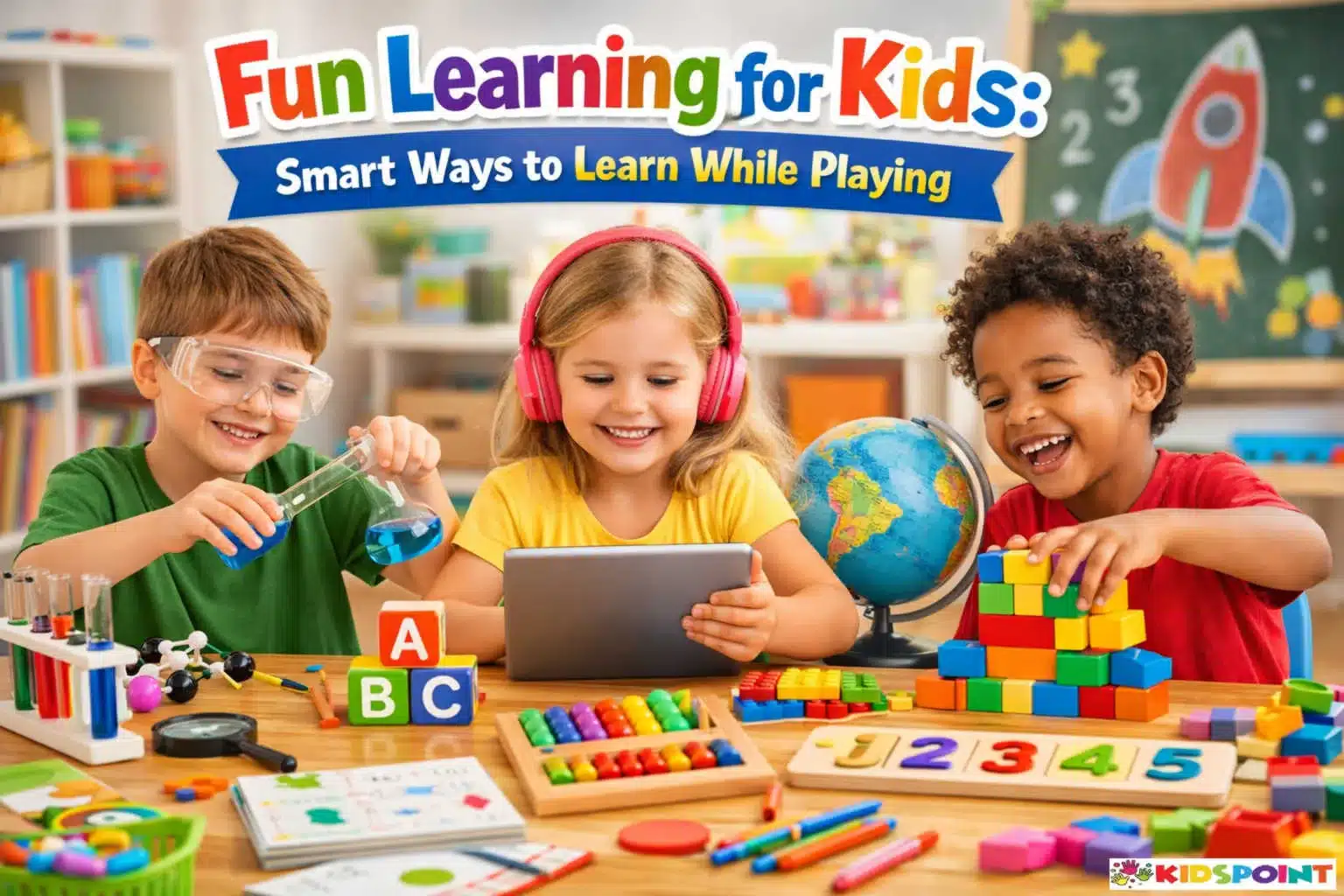
Learning doesn’t have to be boring or stressful—especially for children. In fact, the most effective learning often happens when kids are having fun. When play and education come together, children naturally become more curious, engaged, and motivated. This approach, often called “fun learning,” helps kids develop essential skills while enjoying the process.
At The Kids Point, we believe that every child deserves a joyful and meaningful learning experience. This guide explores smart, creative, and practical ways to help kids learn while playing—whether at home, in the classroom, or outdoors.
Why Fun Learning Matters for Kids
Children are naturally playful. Their brains are wired to explore, imagine, and experiment. When learning is combined with play, it aligns perfectly with how kids develop.
Key Benefits of Fun Learning
Improves Memory and Retention
Kids remember things better when they enjoy the activity. A fun experience creates stronger mental connections.
Boosts Creativity and Imagination
Play encourages kids to think outside the box and come up with new ideas.
Builds Social Skills
Group games and interactive activities teach cooperation, communication, and teamwork.
Reduces Learning Pressure
Fun learning removes fear and anxiety, making children more confident.
Encourages Lifelong Learning
Kids who enjoy learning are more likely to stay curious and motivated as they grow.
The Science Behind Learning Through Play
Research shows that play-based learning supports brain development. When kids play, multiple areas of the brain are activated, improving cognitive, emotional, and physical skills.
There are different types of play that support learning:
- Structured Play: Guided activities with rules (e.g., board games)
- Unstructured Play: Free play where kids explore independently
- Guided Play: A mix of both, where adults support but don’t control
Each type plays an important role in a child’s development.
Smart Ways to Make Learning Fun
Let’s explore practical and effective strategies to combine learning with play.
Turn Everyday Activities into Learning Moments
Learning doesn’t always require special tools. Everyday routines can become powerful teaching opportunities.
Examples:
- Counting fruits while shopping (math skills)
- Reading labels together (language skills)
- Cooking together (science and measurement)
Tip: Ask questions like “What do you think will happen next?” to spark curiosity.
Use Educational Games
Games are one of the best ways to make learning exciting. They provide instant feedback and keep kids engaged.
Types of Educational Games:
- Board games (strategy and math)
- Puzzle games (problem-solving)
- Word games (vocabulary building)
Popular Ideas:
- Memory matching games
- Alphabet bingo
- Math card games
Incorporate Technology Wisely
Digital tools can enhance learning when used correctly.
Smart Uses of Technology:
- Educational apps
- Interactive videos
- Online quizzes
Tips for Parents:
- Set screen time limits
- Choose age-appropriate content
- Engage with your child during screen time
Encourage Creative Arts and Crafts
Art is a powerful learning tool that enhances creativity and fine motor skills.
Fun Activities:
- Drawing and painting
- DIY crafts
- Clay modeling
Learning Benefits:
- Improves focus
- Enhances imagination
- Builds hand-eye coordination
Make Learning Physical
Kids learn better when they move. Physical activities improve both brain function and health.
Examples:
- Jumping while counting numbers
- Acting out stories
- Treasure hunts with clues
Why It Works:
Movement increases blood flow to the brain, helping kids think better.
Storytelling and Role-Playing
Stories make learning memorable. Role-playing adds excitement and deeper understanding.
Ideas:
- Act out a favorite story
- Pretend to be a teacher, doctor, or explorer
- Create your own stories together
Skills Developed:
- Language skills
- Emotional intelligence
- Confidence
Outdoor Learning Adventures
Nature offers endless learning opportunities.
Outdoor Activities:
- Nature walks
- Gardening
- Observing animals and plants
Learning Outcomes:
- Science awareness
- Environmental understanding
- Physical fitness
Learning Through Music and Dance
Music makes learning fun and engaging.
Activities:
- Singing alphabet songs
- Dancing to rhythm-based games
- Creating simple musical instruments
Benefits:
- Improves memory
- Enhances listening skills
- Builds coordination
Puzzle and Problem-Solving Challenges
Puzzles are excellent for developing logical thinking.
Types of Puzzles:
- Jigsaw puzzles
- Sudoku (for older kids)
- Maze games
Skills Gained:
- Critical thinking
- Patience
- Focus
Encourage Curiosity with Questions
Instead of giving answers, encourage kids to think.
Ask Questions Like:
- “Why do you think this happens?”
- “What would happen if we try this?”
- “Can you find another way to do it?”
This builds independent thinking and problem-solving skills.
Age-Based Fun Learning Ideas
Different age groups require different approaches.
Toddlers (Ages 2–4)
Focus: Sensory play and basic skills
Activities:
- Color sorting
- Shape matching
- Simple songs and rhymes
Preschoolers (Ages 4–6)
Focus: Language and social skills
Activities:
- Storytelling
- Role-playing
- Basic counting games
Early School Age (Ages 6–9)
Focus: Problem-solving and creativity
Activities:
- Board games
- Science experiments
- Creative writing
Older Kids (Ages 9+)
Focus: Critical thinking and independence
Activities:
- Strategy games
- Coding games
- DIY projects
Creating a Fun Learning Environment at Home
Your home environment plays a big role in how kids learn.
Tips to Set Up a Learning Space
- Keep it colorful and inviting
- Provide easy access to books and toys
- Create a balance between play and study
- Encourage independence
Common Mistakes to Avoid
Even with good intentions, some mistakes can reduce the effectiveness of fun learning.
Overloading Activities
Too many activities can overwhelm kids.
Forcing Fun
If a child isn’t interested, don’t push too hard.
Ignoring the Child’s Interests
Follow what your child enjoys.
Too Much Screen Time
Balance digital and physical activities.
The Role of Parents and Teachers
Adults play a key role in making learning enjoyable.
What You Can Do
- Be patient and supportive
- Celebrate small achievements
- Participate in activities
- Encourage exploration
We emphasize that guidance—not control—is the key to effective learning.
Blending Education and Entertainment
The best learning experiences combine both education and entertainment—often called “edutainment.”
Examples:
- Learning apps with games
- Educational cartoons
- Interactive storytelling
This approach keeps kids engaged while helping them learn naturally.
Long-Term Impact of Fun Learning
Fun learning doesn’t just help in childhood—it shapes the future.
Children who learn through play tend to:
- Develop stronger problem-solving skills
- Become more creative thinkers
- Show better emotional intelligence
- Have a positive attitude toward education
Frequently Asked Questions (FAQs)
What is fun learning for kids?
Fun learning is an approach that combines education with play, making learning enjoyable and engaging for children.
Why is learning through play important?
It helps improve memory, creativity, and social skills while reducing stress and increasing motivation.
How can I make learning fun at home?
Use games, storytelling, creative activities, and everyday tasks to teach new concepts.
Are educational apps effective for kids?
Yes, when used in moderation and chosen carefully, they can enhance learning.
What age is best for fun learning?
Fun learning is effective for all ages, but it is especially important during early childhood development.
Final Thoughts
Fun learning is not just a trend—it’s a powerful approach that transforms how children experience education. By combining play with learning, kids develop essential life skills while enjoying every moment.
Whether it’s through games, storytelling, outdoor adventures, or creative activities, the possibilities are endless. The key is to keep things engaging, flexible, and child-centered.
At The Kids Point, we believe that when learning feels like play, children don’t just gain knowledge—they build confidence, creativity, and a lifelong love for discovery.