

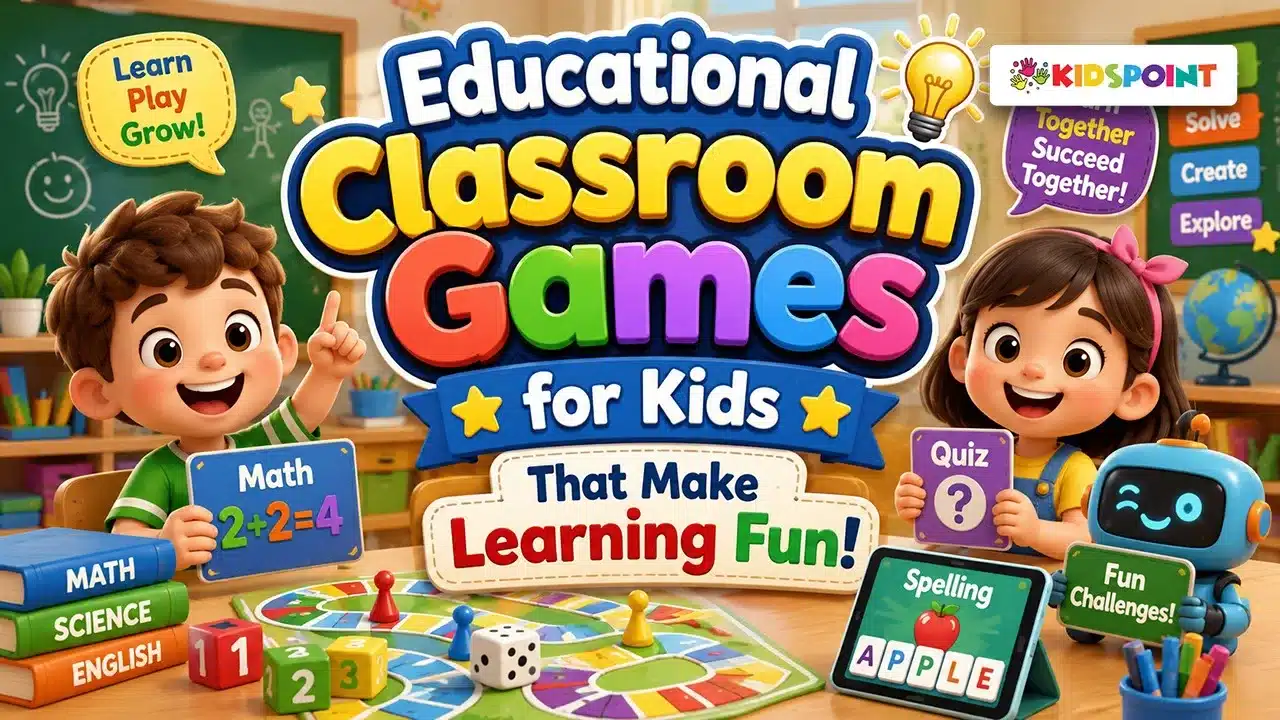
In today’s modern learning environment, teachers and parents are constantly looking for ways to make lessons more engaging and effective. One of the most powerful methods is using educational classroom games for kids, which transform traditional lessons into interactive and enjoyable experiences. These games not only help children understand academic concepts better but also improve social skills, creativity, and critical thinking.
This article explores a complete guide to using classroom games for kids, including benefits, types of activities, implementation strategies, and subject-based ideas. Whether you are a teacher, homeschool parent, or preschool educator, you will discover practical and research-backed ideas to make learning fun and impactful. We will also share expert tips and real classroom examples that align with modern educational best practices and Google’s helpful content guidelines.
Why Educational Classroom Games for Kids Matter in Modern Learning
Educational games have become an essential part of modern teaching because they align with how children naturally learn best through interaction, exploration, and play. Studies show that students retain up to 75% more information when learning is interactive compared to passive instruction.
Classroom games for kids help bridge the gap between theory and practice by turning abstract concepts into real-world experiences. For example, math becomes more exciting when students solve puzzles in teams, and language learning improves through storytelling games. These activities also reduce classroom boredom and increase participation among shy or less confident students.
In addition, educational games support multiple learning styles, including visual, auditory, and kinesthetic learners. This makes them highly effective for diverse classrooms where students have different abilities and learning preferences.
Key Benefits of Educational Classroom Games for Kids
Using fun classroom activities for kids offers several educational and developmental benefits that go beyond academics. These advantages make games an essential part of any teaching strategy.
Improved Engagement and Focus
Games naturally capture children’s attention. When students are actively involved, they are less likely to get distracted and more likely to stay focused on the lesson.
Better Academic Performance
Interactive learning helps students understand complex concepts more easily. For example, science experiments or math puzzles make abstract topics more understandable.
Development of Social Skills
Many classroom games require teamwork, communication, and cooperation. This helps children develop empathy, leadership, and conflict-resolution skills.
Encourages Creativity and Critical Thinking
Games often involve problem-solving and decision-making, which enhances cognitive development and encourages innovative thinking.
Reduces Learning Stress
Play-based learning creates a relaxed environment where children feel comfortable making mistakes and learning from them without pressure.
Popular Types of Educational Classroom Games for Kids
There are many types of classroom games that teachers can use depending on their lesson objectives and student age group. Each type offers unique benefits and learning outcomes.
1. Memory and Matching Games
These games improve concentration and cognitive skills. Students match words with meanings, numbers with equations, or pictures with descriptions.
2. Quiz and Trivia Games
Quiz-based activities are excellent for revising lessons. Teachers can organize team competitions to make learning more exciting.
3. Role-Playing Games
Role-playing helps children understand real-world situations. For example, students can act as shopkeepers, scientists, or historical figures.
4. Puzzle and Problem-Solving Games
These games develop logical thinking and analytical skills. They include crosswords, riddles, and math challenges.
5. Physical Movement Games
Games like “Simon Says” or educational scavenger hunts help students learn while staying physically active.
How to Implement Classroom Games Effectively
To get the best results from classroom games for kids, teachers need to plan and structure activities carefully. Proper implementation ensures that games remain educational rather than just entertainment.
Start by defining clear learning objectives for each game. Decide what concept or skill students should learn from the activity. Next, choose age-appropriate games that match the students’ developmental level.
It is also important to set rules and instructions clearly before starting. This helps maintain discipline and ensures smooth participation. Teachers should also balance fun and learning by connecting every activity to a specific lesson outcome.
Finally, always include reflection time after each game. This allows students to discuss what they learned and how they can apply it in real-life situations.
Subject-Wise Educational Classroom Game Ideas
Different subjects can benefit from customized game-based learning approaches. Below are practical examples for core subjects.
Mathematics Games
Math becomes fun when students solve puzzles, play number bingo, or compete in mental math challenges. These activities improve speed and accuracy in calculations.
Science Games
Science learning can include experiments, classification games, and interactive quizzes. Students can explore topics like plants, weather, and human biology through hands-on activities.
Language Arts Games
Word-building games, storytelling circles, and grammar challenges help students improve vocabulary, reading, and writing skills.
Social Studies Games
Map-based challenges, history role-play, and cultural trivia games make social studies more engaging and memorable.
These subject-based activities ensure that learning is both structured and enjoyable, making educational classroom games for kids highly effective across all academic areas.
Practical Tips for Teachers and Parents
Implementing classroom games successfully requires creativity and consistency. Here are some expert tips to maximize results:
- Keep instructions simple and easy to understand
- Use group activities to encourage teamwork
- Rotate games regularly to avoid repetition
- Adjust difficulty levels based on student performance
- Use rewards or recognition to motivate participation
- Integrate digital tools when appropriate for interactive learning
These strategies help maintain long-term engagement and ensure that students remain excited about learning every day.
Classroom Management During Educational Games
While games are fun, maintaining classroom discipline is essential. Teachers should establish clear boundaries before starting any activity. Assigning roles such as team leaders, scorekeepers, or time managers helps maintain order.
It is also important to ensure that all students are included. No child should feel left out during activities. Teachers should monitor group dynamics and encourage positive behavior throughout the session.
Proper classroom management ensures that educational games remain productive and aligned with learning goals.
Frequently Asked Questions (FAQs)
What are educational classroom games for kids?
Educational classroom games for kids are interactive activities designed to teach academic concepts through play, making learning more engaging and effective.
Why are classroom games important in education?
They improve engagement, enhance understanding, develop social skills, and make learning more enjoyable for students of all ages.
Can classroom games improve academic performance?
Yes, studies show that interactive learning through games helps students retain information better and improves overall academic performance.
What age group benefits most from classroom games?
All age groups benefit, but preschool and elementary students gain the most as they learn best through play-based methods.
How often should teachers use classroom games?
Teachers can use games several times a week depending on the subject and lesson plan to maintain engagement and reinforce learning.
Educational games are a powerful tool for modern teaching that transforms traditional classrooms into interactive learning environments. By using educational classroom games for kids, teachers and parents can improve academic performance, build social skills, and create a positive learning experience that children enjoy.
From math puzzles to storytelling games, these activities make education more meaningful and memorable. When used effectively, they help children develop a lifelong love for learning.
For more expert resources, activity ideas, and learning tools, explore The Kids Point and discover engaging educational content designed to support children’s growth and development.