

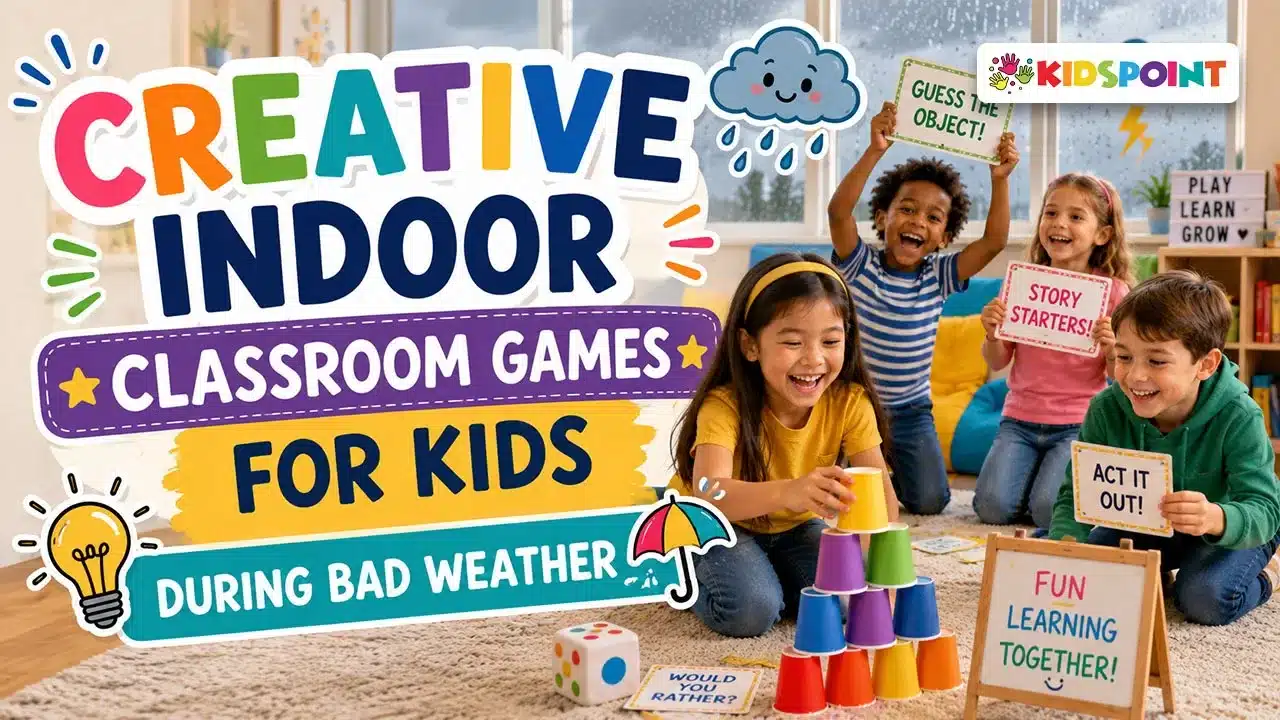
When bad weather strikes, teachers and parents often struggle to keep children engaged, active, and learning indoors. This is where indoor classroom games for kids become a powerful solution. These games not only prevent boredom but also support cognitive development, teamwork, creativity, and emotional well-being.
In this comprehensive guide, we will explore a variety of classroom games for kids that are fun, educational, and easy to organize even in limited indoor spaces. Whether you are a teacher managing a classroom or a parent guiding home learning, these ideas will help you turn any rainy or snowy day into an exciting learning experience.
Why Indoor Classroom Games Are Important for Kids
Indoor activities are more than just a way to pass time. They play a crucial role in child development, especially during bad weather when outdoor play is not possible.
Cognitive and Emotional Development Benefits
Indoor games help children improve problem-solving skills, memory, and decision-making abilities. Many educational classroom games for kids also promote emotional intelligence by encouraging patience, cooperation, and empathy.
For example, memory-based games like “Match the Card” or storytelling games help children sharpen focus while enjoying the learning process. According to child development experts, structured play improves attention span by up to 30 percent in early learners.
Social Skills and Teamwork Building
Indoor classroom games encourage children to interact, communicate, and collaborate. Group-based activities such as team quizzes or relay storytelling help students learn the value of teamwork.
These interactions build confidence and reduce social anxiety, especially in younger children or preschoolers who are still developing communication skills.
Physical Activity Indoors
Even inside a classroom, children need movement. Games like indoor obstacle courses or “Simon Says” keep kids physically active, helping improve coordination and reduce restlessness during long indoor hours.
Best Creative Indoor Classroom Games for Kids
Here are some of the most engaging and easy-to-implement indoor classroom games for kids that teachers can use during bad weather.
1. Classroom Treasure Hunt Game
A treasure hunt is one of the most exciting indoor games for kids. Teachers can hide clues around the classroom, leading students to a final reward.
This game improves:
- Critical thinking skills
- Team collaboration
- Reading comprehension
You can adjust difficulty levels based on age groups, making it suitable for preschoolers as well as older children.
2. Silent Ball Challenge
In this game, students pass a soft ball silently across the classroom. If someone drops the ball or makes noise, they are out.
Benefits include:
- Focus improvement
- Self-control development
- Better listening skills
This is one of the simplest yet most effective classroom games for kids that requires no preparation.
3. Story Chain Game
The teacher starts a story with one sentence, and each student adds a line to continue the story. This creative activity encourages imagination and language development.
Why it works:
- Enhances vocabulary
- Builds storytelling ability
- Encourages creativity
It is also one of the most popular educational classroom games for kids for improving communication skills.
4. Indoor Pictionary
Pictionary is a drawing and guessing game that is perfect for indoor learning environments. Students draw words while others guess what it is.
Skills developed:
- Creative thinking
- Visual communication
- Vocabulary enhancement
You can use topic-based words like animals, weather, or school objects to make it more educational.
5. Freeze Dance Learning Game
Play music and let students dance. When the music stops, they must freeze in place. Add learning elements by asking a question when they freeze.
Example:
“Name a fruit that starts with A”
“Solve a simple math question”
This combines fun with learning and keeps energy levels high indoors.
6. Memory Tray Game
Place several objects on a tray, show them to students for 30 seconds, and then cover it. Ask them to recall as many items as possible.
This improves:
- Observation skills
- Memory retention
- Attention to detail
It is highly recommended for preschoolers and early learners.
7. Classroom Bingo Challenge
Create bingo cards with educational themes such as numbers, vocabulary words, or shapes. Students mark answers as they learn during the session.
Benefits:
- Reinforces learning concepts
- Encourages participation
- Keeps students engaged for longer periods
How to Choose the Right Indoor Classroom Games
Selecting the right game depends on age, group size, and learning objectives.
Consider Age Appropriateness
Younger children benefit from simple movement-based games, while older students can handle strategy or quiz-based activities.
Focus on Learning Goals
Always align games with educational outcomes. For example:
- Vocabulary building games for language lessons
- Math-based games for numerical skills
- Memory games for cognitive development
Classroom Space and Resources
Some games require minimal space and no materials, while others need printed cards or props. Choose based on what is available in your classroom.
Tips to Make Indoor Classroom Games More Effective
To maximize engagement and learning outcomes, teachers should follow these expert tips:
- Set clear rules before starting the game
- Encourage participation from every student
- Keep games short and dynamic to maintain attention
- Rotate activities to avoid repetition
- Reward participation to boost motivation
These strategies ensure that indoor classroom games for kids remain both fun and educational.
Benefits of Educational Classroom Games for Kids
Using structured play in classrooms offers long-term benefits that go beyond entertainment.
Improved Academic Performance
Studies show that students who regularly participate in interactive learning games perform better in reading and math assessments.
Better Classroom Behavior
Games help reduce boredom-related disruptions and improve discipline naturally.
Increased Motivation to Learn
When learning feels like play, children are more eager to participate and absorb information.
Frequently Asked Questions (FAQs)
What are the best indoor classroom games for kids during bad weather?
Some of the best options include treasure hunts, Pictionary, memory tray games, silent ball, and storytelling activities.
How do indoor classroom games help children learn?
They improve memory, focus, teamwork, creativity, and communication while making learning enjoyable and interactive.
Are indoor classroom games suitable for preschoolers?
Yes, many educational classroom games for kids such as memory games, freeze dance, and simple matching activities are perfect for preschoolers.
How long should indoor classroom games last?
Most games should last between 10 to 20 minutes to maintain attention and keep students engaged effectively.
Can indoor games improve academic performance?
Yes, research shows that interactive learning activities significantly enhance understanding and retention of academic concepts.
What materials are needed for indoor classroom games?
Many games require minimal or no materials. Common items include paper, markers, flashcards, and soft balls.
Indoor learning does not have to be boring or repetitive, even on the rainiest or coldest days. With the right indoor classroom games for kids, teachers and parents can transform any indoor setting into a dynamic, engaging, and educational environment.
From memory challenges to storytelling and movement-based games, these activities support holistic child development while keeping learning fun and interactive.
At The Kids Point, we believe every child deserves a joyful learning experience, no matter the weather outside. Explore more creative learning ideas at The Kids Point and make every classroom moment count.