

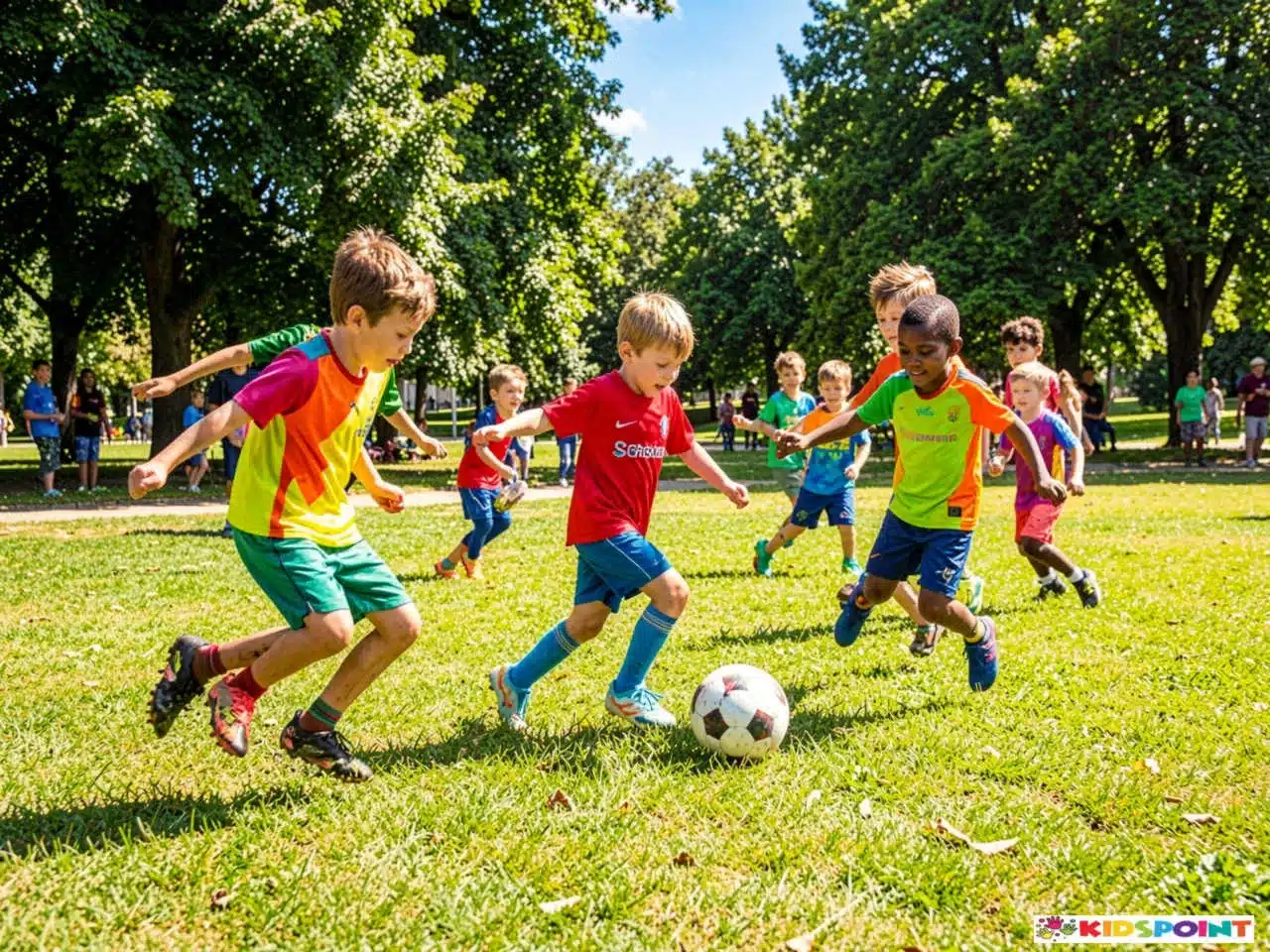
Soccer is one of the most exciting and beneficial activities for children. It combines movement, teamwork, creativity, and healthy competition into a fun experience that kids of all ages enjoy. While traditional soccer matches are always entertaining, children often learn and improve faster when practice feels like play. That is where soccer games become especially valuable. Instead of repetitive drills that may become boring, soccer games keep children active, engaged, and eager to participate.
At The Kids Point, we understand the importance of making learning fun. Kids naturally absorb skills better when they are enjoying themselves. Soccer games not only help children improve technical abilities such as dribbling, passing, and shooting, but they also encourage communication, confidence, and social interaction.
Whether you’re a parent planning outdoor activities, a coach organizing team practice, or a teacher searching for engaging physical education ideas, these soccer games can turn ordinary practice sessions into exciting adventures.
Why Soccer Games Are Important for Kids
Before diving into specific games, it helps to understand why game-based learning is so effective.
Children often lose interest in repetitive routines. Games introduce excitement, goals, and challenges that encourage participation. Through soccer games, kids can develop:
- Ball control and dribbling skills
- Passing accuracy
- Shooting techniques
- Speed and agility
- Teamwork abilities
- Strategic thinking
- Coordination and balance
- Confidence and sportsmanship
The biggest advantage is that children focus on having fun rather than feeling pressured to perform.
Sharks and Minnows
This classic soccer game is a favorite among young players and is excellent for improving dribbling skills.
How to Play
Select one or two children to act as sharks. The remaining players become minnows and each gets a soccer ball.
The minnows line up on one side of the field and must dribble their soccer balls to the opposite side while avoiding the sharks in the middle.
If a shark kicks a player’s ball away or steals possession, that player becomes a shark in the next round.
Skills Developed
- Dribbling under pressure
- Ball control
- Quick decision-making
- Agility
Why Kids Love It
Children enjoy the excitement of avoiding capture and often become highly motivated to improve their dribbling speed.
Red Light, Green Light Soccer Version
This game adds a soccer twist to a classic childhood activity.
How to Play
One person stands at the far end of the field acting as the traffic controller.
Players begin on the opposite side with soccer balls.
When “Green Light” is called, kids dribble forward. When “Red Light” is shouted, everyone must stop immediately and freeze their ball.
Players who continue moving must return to the starting line.
The first child to reach the finish line wins.
Skills Developed
- Ball control
- Listening skills
- Coordination
- Stopping techniques
Why Kids Love It
Kids enjoy the suspense and challenge of stopping suddenly.
Soccer Relay Races
Relay races bring energy and excitement to any soccer session.
How to Play
Divide children into teams.
Create a course using cones and obstacles. Players dribble through the course and return before the next teammate begins.
You can add challenges such as:
- Dribble using only the right foot
- Dribble using only the left foot
- Move backward through cones
- Perform a skill move before returning
Skills Developed
- Speed
- Coordination
- Dribbling accuracy
- Team cooperation
Why Kids Love It
Children enjoy the competitive aspect and cheering for teammates.
Knockout Soccer
Knockout is one of the most exciting soccer games for groups.
How to Play
Create a playing area and give each player a soccer ball.
The goal is to protect your own ball while trying to knock other players’ balls out of the area.
Players who lose their balls are eliminated or can complete a challenge to re-enter.
The last player remaining wins.
Skills Developed
- Ball protection
- Spatial awareness
- Defensive skills
- Quick reactions
Why Kids Love It
The game creates nonstop action and excitement.
Cone Treasure Hunt
Kids love activities involving collecting and searching.
How to Play
Scatter colored cones or small objects around the playing field.
Children dribble their soccer balls around the area and collect one item at a time before returning it to their team’s base.
The team with the most collected treasures wins.
Skills Developed
- Dribbling control
- Speed
- Decision-making
- Team strategy
Why Kids Love It
The treasure-hunt concept transforms soccer practice into an adventure.
Soccer Bowling
Soccer bowling introduces a unique challenge that combines aiming and kicking accuracy.
How to Play
Set up plastic bottles or cones like bowling pins.
Children stand several feet away and attempt to knock down the targets by kicking their soccer balls.
Different point values can be assigned depending on difficulty.
Skills Developed
- Shooting accuracy
- Kicking technique
- Focus
- Precision
Why Kids Love It
Kids enjoy seeing the pins fall and trying to beat their previous scores.
Capture the Soccer Ball
This game combines traditional capture-the-flag rules with soccer.
How to Play
Split players into two teams.
Each team protects soccer balls placed in a designated zone.
Players attempt to steal balls from the opposing team and bring them back without being tagged.
Skills Developed
- Teamwork
- Speed
- Strategy
- Ball handling
Why Kids Love It
The combination of chasing, defending, and teamwork creates constant excitement.
Musical Soccer Balls
This game works particularly well for younger children.
How to Play
Place soccer balls in a circle, with one fewer ball than the number of players.
Play music while children move around the balls.
When the music stops, players race to gain control of a ball.
The child without a ball sits out or completes a fun challenge.
Skills Developed
- Reaction speed
- Ball control
- Awareness
Why Kids Love It
Music adds energy and unpredictability.
Soccer Obstacle Course
Obstacle courses challenge children while keeping them entertained.
How to Play
Create stations involving different activities:
- Dribble through cones
- Jump over small hurdles
- Pass through targets
- Shoot into a goal
- Run around markers
Players complete the course as quickly as possible.
Skills Developed
- Agility
- Coordination
- Endurance
- Technical skills
Why Kids Love It
Kids enjoy moving through different challenges rather than repeating one task.
Numbers Soccer
This game combines teamwork with quick reactions.
How to Play
Divide children into two teams and assign each player a number.
When a number is called, those players run onto the field and compete for the ball.
Multiple numbers can be called at once for added excitement.
Skills Developed
- Reaction time
- Communication
- Game awareness
- Team play
Why Kids Love It
Children enjoy the surprise of hearing their numbers called.
Clean the Backyard Soccer
This game creates energetic movement and friendly competition.
How to Play
Divide the field into two halves.
Place several soccer balls in each half.
Teams attempt to kick as many balls as possible into the opposing side before time runs out.
When the whistle blows, the side with fewer balls wins.
Skills Developed
- Kicking power
- Passing
- Speed
- Teamwork
Why Kids Love It
Fast action and constant movement keep everyone involved.
Freeze Dribble
Freeze Dribble is simple but highly effective.
How to Play
Players dribble freely around the field while a coach calls commands.
Commands may include:
- Freeze
- Change direction
- Use left foot only
- Speed up
- Slow down
Players who make mistakes complete a fun challenge.
Skills Developed
- Ball control
- Listening skills
- Coordination
Why Kids Love It
The changing instructions keep children alert and entertained.
Tips for Making Soccer Games More Fun
To maximize enjoyment and learning, consider these helpful suggestions:
Keep Instructions Simple: Children learn faster when rules are easy to understand.
Rotate Games Frequently: Switching activities prevents boredom and maintains excitement.
Encourage Everyone: Focus on participation and effort rather than only winning.
Adjust Difficulty Levels: Modify games based on children’s ages and skill levels.
Include Rewards: Small rewards such as stickers or certificates can increase motivation.
Benefits of Outdoor Soccer Play
Outdoor soccer activities provide advantages beyond physical fitness.
Children who participate regularly often experience:
- Stronger muscles and bones
- Better cardiovascular health
- Improved concentration
- Reduced screen time
- Enhanced social skills
- Increased confidence
- Better emotional well-being
Outdoor play also gives children opportunities to enjoy fresh air and connect with friends.
Frequently Asked Questions (FAQs)
What age is best for kids to start playing soccer?
Children can begin learning basic soccer skills as early as 3–5 years old through fun and age-appropriate games.
Why are soccer games important during practice?
Soccer games make practice more enjoyable and help kids improve important skills like dribbling, teamwork, and coordination.
How long should a kids’ soccer practice session last?
Most young children benefit from practice sessions lasting between 30 and 60 minutes.
Can kids play soccer games at home?
Yes, many soccer games can be played in backyards, parks, or other open spaces with simple equipment.
What equipment is needed for kids soccer games?
Basic equipment includes a soccer ball, cones or markers, comfortable clothing, and appropriate footwear.
Soccer practice does not have to feel like hard work. The most successful training sessions for children often look like play because fun naturally encourages learning. Games transform ordinary drills into memorable experiences that children genuinely enjoy.
At The Kids Point, we believe children thrive when education, sports, and creativity come together. These soccer games provide the perfect combination of skill development and outdoor entertainment, helping kids stay active while building confidence and teamwork abilities.
Whether in a backyard, school playground, park, or sports field, these activities can create exciting moments that children will remember long after the game ends. The more fun kids have during practice, the more likely they are to develop a lasting love for soccer and healthy outdoor activity.