

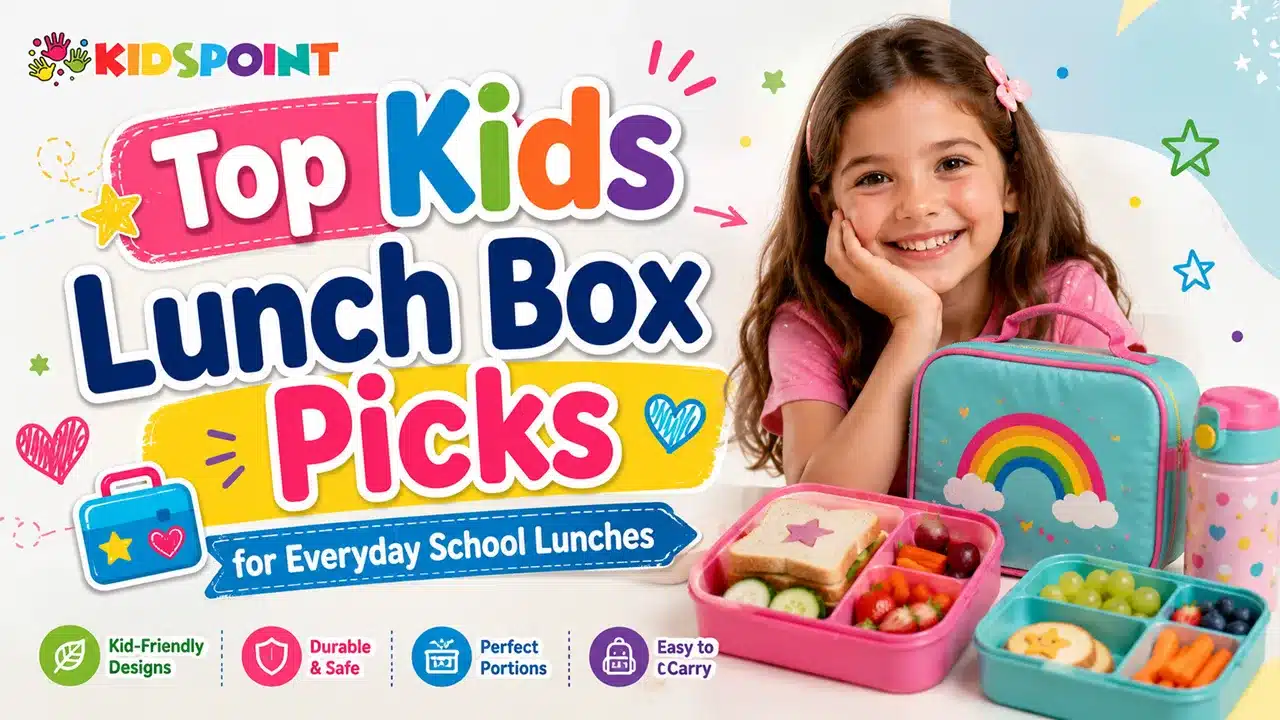
Packing a school lunch every day can sometimes feel like a small challenge. Parents want a lunch box that is practical, easy to clean, durable, and comfortable for children to carry. Kids, meanwhile, often care about colors, designs, compartments, and whether the lunch box makes it easy to enjoy their favorite foods.
The right lunch box can make school mornings easier while helping children become more independent with their meals. A good lunch box should fit comfortably into a school bag, keep different foods organized, and be simple enough for children to open and close without constant help.
At The Kids Point, we believe everyday routines can become valuable learning opportunities. Choosing and using a lunch box can help children practice organization, responsibility, independence, and healthy eating habits.
In this guide, we’ll explore some of the best types of kids’ lunch boxes for everyday school lunches and explain what parents should consider before choosing one.
Why Choosing the Right Kids’ Lunch Box Matters
A lunch box is something a child may use almost every school day, so small details can make a big difference.
A well-designed lunch box can help keep food organized and make lunchtime less stressful. When children can easily recognize where their different foods are stored, they may feel more comfortable managing their lunch independently.
A good lunch box can also help parents create a variety of meals without needing multiple containers that take up too much space.
When shopping for a school lunch box, consider:
- Size and capacity
- Number of compartments
- Ease of opening and closing
- Durability
- Ease of cleaning
- Material and construction
- Leak resistance
- Weight
- Design and appearance
- Compatibility with the child’s school bag
The “best” lunch box is not necessarily the biggest or most expensive option. It is the one that works well for the child’s daily routine.
1. Bento-Style Lunch Boxes
Bento-style lunch boxes are popular because they often include multiple sections for different foods.
Instead of placing everything together, parents can separate fruits, vegetables, sandwiches, snacks, and other lunch items.
This design can make meals more visually appealing and help children see the different foods available to them.
Bento boxes can also reduce the need for several small disposable bags or containers, depending on the design.
When choosing one, check whether the compartments are appropriately sized for the foods your child usually takes to school. A lunch box with too many tiny sections may not always be practical.
2. Insulated Lunch Bags
An insulated lunch bag is another useful choice for school days. These bags are designed to provide an additional layer of insulation around food containers.
Many insulated lunch bags are lightweight and come in child-friendly designs. Some have handles or adjustable straps that make them easier to carry.
An insulated bag can also provide enough room for a lunch container, water bottle, and a few snacks.
If you choose an insulated lunch bag, remember that insulation alone does not guarantee food safety. Follow appropriate food-storage practices and use suitable cold packs when necessary.
3. Stainless Steel Lunch Boxes
Stainless steel lunch boxes are known for their durability and reusable design.
They can be a practical choice for families looking for a lunch container that can withstand frequent use. Stainless steel is also easy to wipe and clean when used appropriately.
Some stainless steel lunch boxes include separate compartments or removable containers, making it easier to organize different foods.
Parents should check the manufacturer’s care instructions because not every stainless steel lunch box is designed for the same cleaning methods or appliances.
4. Lightweight Plastic Lunch Boxes
Lightweight plastic lunch boxes can be convenient for younger children because they are generally easy to carry.
Many children’s lunch boxes are available in colorful designs featuring animals, patterns, or other child-friendly themes.
When choosing a plastic lunch box, look for products designed specifically for food use and follow the manufacturer’s safety and care instructions.
A lightweight option can be especially useful for children who already carry books, notebooks, water bottles, and other school supplies.
5. Leak-Resistant Lunch Boxes
For foods with sauces, yogurt, dips, or other moist ingredients, leak resistance can be an important feature.
A lunch box with a secure seal can help reduce the chance of food leaking into a school bag.
However, parents should always check how the product is intended to be used. Some containers are leak-resistant rather than completely leakproof, and certain foods may require separate sealed containers.
Before sending a new lunch box to school, test it at home. This simple step can help parents identify whether the closure works properly.
6. Lunch Boxes With Removable Compartments
Flexibility can be helpful when children’s lunch preferences change from day to day.
Lunch boxes with removable containers or adjustable sections allow parents to customize the internal space.
For example, one day the box might hold a sandwich, fruit, and vegetables. On another day, a larger section could be used for pasta or another suitable meal.
Removable components can also make cleaning easier because individual parts can be washed separately.
7. Lunch Boxes With Easy-Open Lids
A lunch box may look great, but if a child cannot open it independently, it may not be the most practical choice.
Younger children may benefit from simple closures that require minimal strength and coordination.
Before purchasing a lunch box, consider your child’s ability to open clips, zippers, buttons, or other fasteners.
If possible, let your child try the lunch box before buying it. Independence at lunchtime can be much easier when children can manage their own containers.
8. Lunch Bags With Extra Storage
Some lunch bags include additional pockets for napkins, utensils, small snacks, or other lunchtime essentials.
These extra compartments can help children keep their lunch supplies organized.
However, avoid choosing a bag that becomes unnecessarily bulky. A compact design may be more convenient for a school environment where children already have limited storage space.
Think about what your child actually needs each day before selecting a bag with numerous pockets.
9. Lunch Boxes Designed for Small Portions
Younger children may not need a large lunch box.
A smaller lunch box can make it easier to pack portions that match the child’s appetite while keeping the overall bag lightweight.
Parents can include a combination of suitable foods from different food groups while considering the child’s preferences and school schedule.
The goal is not to fill every available space. A manageable lunch that the child can comfortably eat can be more useful than an oversized box.
10. Fun and Personalized Lunch Boxes
Children are often more interested in using items they like.
A lunch box featuring a favorite color, animal, pattern, or playful design can make the daily routine more enjoyable.
Some families also choose personalized labels or name tags to help identify their child’s lunch box.
Encouraging children to participate in choosing their lunch box can give them a sense of ownership. It also creates an opportunity to talk about taking care of personal belongings.
What to Look for in a School Lunch Box
With so many choices available, parents can use a simple checklist before purchasing.
Size
The lunch box should fit comfortably inside the child’s school bag without taking up too much room.
Durability
School lunch boxes are often carried around, placed on tables, and opened and closed repeatedly. A sturdy design can be helpful for everyday use.
Easy Cleaning
Look for designs that are easy to wash and dry. Complicated parts and difficult-to-reach areas can make daily cleaning more time-consuming.
Secure Closures
A reliable closure can help keep the lunch box shut during transportation.
Compartments
Consider whether compartments match the foods your child usually takes to school.
Weight
Remember that the lunch box is only one part of what a child carries. A lightweight option may be preferable, especially for younger children.
Child-Friendly Design
Children should be able to use the lunch box comfortably. Easy-open features can encourage independence.
How to Pack a Better School Lunch
Choosing a good lunch box is only one part of the process. How the lunch is packed also matters.
Try to include a variety of suitable foods while considering your child’s preferences and any school food policies.
A simple lunch might include:
- A main meal or sandwich
- Fresh fruit
- Vegetables
- A suitable snack
- Water or another appropriate drink
You can vary the choices throughout the week to prevent lunches from becoming repetitive.
Children can also participate in simple decisions. For example, you might let them choose between two fruit options or decide which sandwich filling they would like.
Giving children limited choices can help them feel involved without making the morning routine overwhelming.
Make Lunch Packing Part of the Morning Routine
Packing lunch does not always have to be a task completed entirely by parents.
Age-appropriate participation can help children develop responsibility.
Younger children might choose between two snacks or place packaged items into their lunch box. Older children may be able to help organize the entire lunch with appropriate supervision.
This simple routine can teach children that preparing for school involves planning and taking care of their belongings.
Keep Food and Lunch Boxes Clean
Lunch boxes should be cleaned regularly according to the manufacturer’s instructions.
Food residue can build up in corners, seals, and compartments, so parents should pay attention to areas that are easy to overlook.
After school, encourage children to bring their lunch boxes back home rather than leaving them in their school bag.
Parents can then empty leftover food and clean the lunch box appropriately.
If a lunch container becomes damaged, develops cracks, or no longer closes securely, consider replacing it.
Avoid Overpacking
It can be tempting to fill a lunch box with lots of different foods, but more food does not always mean a better lunch.
Overpacking can make the lunch box heavier and may result in uneaten food.
Instead, consider what your child realistically eats during the school day. Packing manageable portions can reduce waste and make the lunch easier for children to handle.
Involve Kids in Choosing Their Lunch Box
Children can learn valuable decision-making skills when they participate in choosing their school supplies.
When selecting a lunch box, ask your child to compare a few appropriate options. Talk about practical features such as size, compartments, cleaning, and how easily they can open it.
You can then allow them to choose a design they like within those practical limits.
This approach balances parental guidance with children’s independence.
Lunch Box Mistakes to Avoid
Even a good lunch box may not work well if it is unsuitable for the child’s routine.
Avoid choosing one that:
- Is too large for the school bag
- Is difficult for the child to open
- Has more compartments than necessary
- Is too heavy when filled
- Is difficult to clean
- Does not close securely
- Does not suit the child’s typical meals
It is also a good idea to test new lunch boxes at home before sending them to school.
The best kids’ lunch box is one that fits naturally into a child’s everyday school routine. Bento-style containers, insulated lunch bags, stainless steel options, lightweight designs, and easy-open lunch boxes can all be useful depending on the child’s age, preferences, and needs.
Parents should focus on practical features such as size, durability, cleaning, secure closures, and ease of use rather than choosing a lunch box based only on appearance.
Most importantly, make children part of the process. Choosing, organizing, and caring for a lunch box can become a simple opportunity to teach independence, responsibility, and organization.
With the right lunch box and a little planning, everyday school lunches can become easier and more enjoyable for the whole family.
Discover More Kids’ Learning and Activity Ideas From The Kids Point
At The Kids Point, we are committed to creating engaging, informative, and age-appropriate resources that help children learn, explore, and have fun.
From educational articles and exciting activities to creative projects and interactive ideas, our content is designed to encourage curiosity, imagination, and lifelong learning.
Visit The Kids Point today to discover more helpful ideas for kids and families. You can also join our community and become part of our journey to make learning fun and inspiring for children everywhere.
Frequently Asked Questions About Kids’ Lunch Boxes
1. What is the best type of lunch box for kids?
The best lunch box depends on the child’s age, eating habits, and school routine. Bento-style boxes, insulated lunch bags, stainless steel containers, and lightweight plastic lunch boxes can all be useful options.
2. Are bento lunch boxes good for school?
Yes. Bento lunch boxes can be convenient because they separate different foods into compartments. They can help keep meals organized and may reduce the need for several separate containers.
3. What size lunch box should a child use?
The lunch box should be large enough to hold the child’s usual school meal without becoming unnecessarily heavy or difficult to fit into their school bag. Younger children often benefit from a compact design.
4. What features should I look for in a kids’ lunch box?
Important features include an appropriate size, durable construction, secure closures, easy cleaning, suitable compartments, manageable weight, and a design the child can open and use independently.
5. Are insulated lunch bags better for school lunches?
Insulated lunch bags can be useful for helping maintain food temperature when used with appropriate food-storage practices and suitable cold packs when needed. Parents should follow food-safety guidance and the manufacturer’s instructions.
6. How can I keep my child’s lunch box clean?
Empty the lunch box after school and clean it according to the manufacturer’s instructions. Pay special attention to seals, corners, compartments, and other areas where food residue can collect.
7. Should children help pack their own lunch?
Age-appropriate participation can help children develop independence and organizational skills. Younger children can choose between suitable options or help place items into the lunch box, while older children may be able to handle more of the process with appropriate supervision.
8. How can I choose a lunch box my child will actually use?
Consider your child’s preferences along with practical requirements. Let them choose from a few suitable options based on design, color, or pattern while you focus on size, durability, cleaning, and ease of use.
9. How can I prevent a lunch box from becoming too heavy?
Choose a lightweight lunch box, avoid oversized containers, and pack only the amount of food your child is likely to eat during the school day. A compact design can help keep the overall school bag more manageable.