

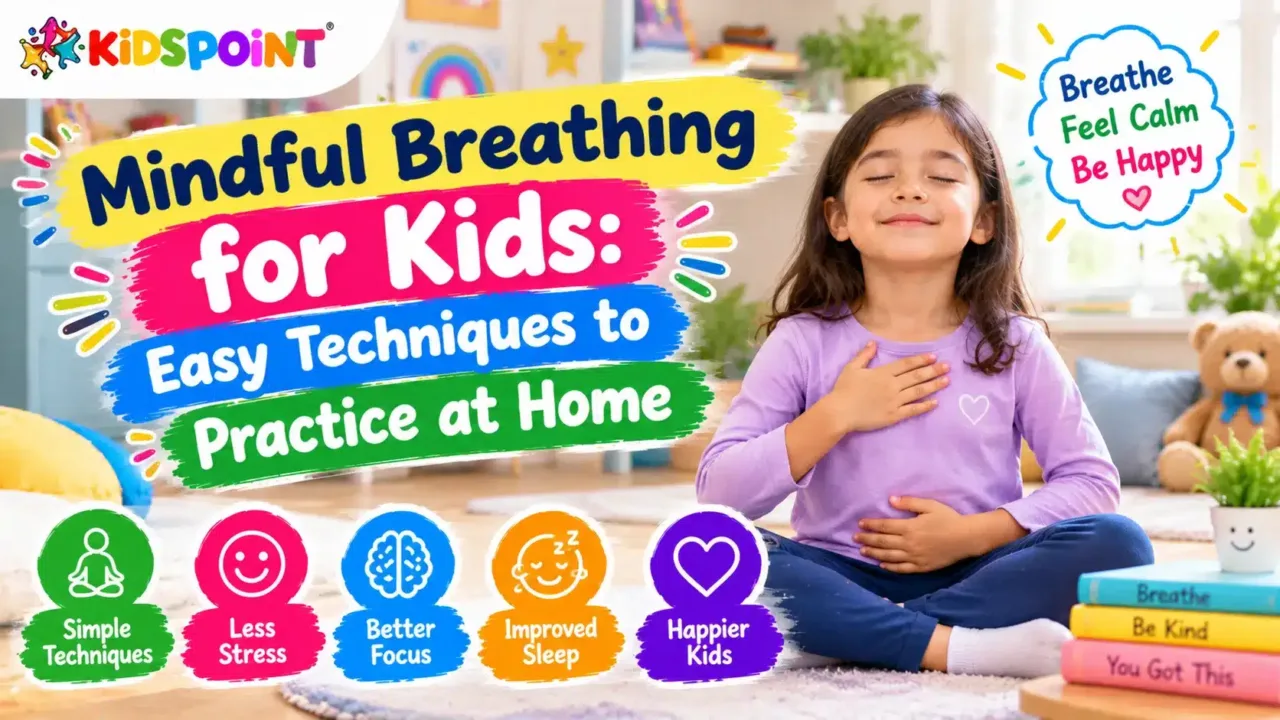
Children experience many emotions throughout the day. They may feel excited about a game, frustrated by homework, nervous about a new experience, disappointed when something doesn’t go their way, or simply overwhelmed by everything happening around them.
Learning simple ways to pause and pay attention to breathing can give children a useful tool for moments when they need to slow down and reconnect with the present.
Mindful breathing for kids doesn’t need to be complicated. It can be as simple as noticing how the air moves in and out, pretending to smell a flower, or slowly blowing imaginary bubbles.
The goal isn’t to make children sit perfectly still or force them to relax. Instead, mindful breathing introduces children to the idea of noticing what is happening in their bodies and surroundings. With regular, playful practice, breathing activities can become a familiar part of quiet time, bedtime routines, classroom transitions, or family activities.
In this guide, we’ll explore easy breathing techniques for children, tips for introducing mindfulness at home, and ways to make practice enjoyable for different ages.
What Is Mindful Breathing?
Mindful breathing means deliberately paying attention to breathing.
Rather than changing the breath dramatically, children can simply notice:
- The feeling of breathing in
- The feeling of breathing out
- How the belly or chest moves
- The sensation of air around the nose or mouth
- The rhythm of breathing
- What they hear while sitting quietly
For children, mindfulness works best when it feels approachable and playful.
Instead of saying, “Sit down and meditate,” parents can say:
“Let’s take three slow breaths together.”
That small activity can introduce children to the basic concept without making it feel like another task.
Why Teach Mindful Breathing to Children?
Mindful breathing can become a simple way for children to practice paying attention and noticing their internal experiences.
Encourages Awareness
Children can learn to notice how their bodies feel at different moments.
Supports Focus
Short breathing activities can provide a quiet pause before homework, reading, meals, or another activity.
Creates a Calm Routine
A few minutes of slow, comfortable breathing can become part of a predictable routine.
Builds Emotional Awareness
Breathing practice can encourage children to recognize when they feel excited, frustrated, worried, or overwhelmed.
Encourages Self-Regulation Skills
With adult guidance, children can learn different ways to pause before reacting to a situation.
It’s important to remember that mindful breathing is a simple wellness activity, not a replacement for professional support when a child needs it.
12 Easy Mindful Breathing Exercises for Kids
1. Flower and Candle Breathing
This is one of the easiest techniques for younger children.
Ask your child to imagine holding a flower.
Step 1: Slowly breathe in as if smelling the flower.
Step 2: Imagine a candle in front of you.
Step 3: Slowly breathe out as if gently blowing toward the candle.
Repeat several comfortable breaths.
This technique gives children an easy visual explanation of slow breathing.
Make It Fun
Use pretend flowers and candles, or ask children to draw them before practicing.
2. Belly Breathing
Belly breathing encourages children to notice movement around their abdomen.
Have your child sit or lie comfortably.
Place a soft toy or lightweight cushion on their belly if appropriate.
Ask them to notice how it gently rises and falls as they breathe.
The focus should be on observing rather than forcing the belly to move in a particular way.
Helpful Phrase
“Watch your teddy slowly go up and down.”
This can make the exercise more engaging for younger children.
3. Balloon Breathing
Ask children to imagine that their belly is a balloon.
As they breathe in, imagine the balloon gently becoming bigger.
As they breathe out, imagine the balloon becoming smaller.
There is no need to make the breath extremely deep. Keep the breathing comfortable and natural.
Why Kids Like It
The balloon image turns an abstract breathing exercise into an imaginative game.
4. Five-Finger Breathing
This technique combines breathing with movement.
Ask your child to hold one hand open.
Using the index finger of the opposite hand, slowly trace around each finger.
As they move up one side of a finger, they can breathe in. As they move down the other side, they can breathe out.
Continue around the hand.
This activity combines touch, movement, and breathing, which can make it easier for children to maintain attention.
5. Bunny Breaths
Bunny breathing adds a playful element.
Ask children to imagine they are little rabbits exploring a garden.
They can take a couple of small, gentle sniffs through the nose, followed by a comfortable breath out.
Don’t encourage repeated rapid breathing or make the activity strenuous. Keep it short and playful.
You can finish by pretending the bunny has found a carrot.
6. Hot Chocolate Breathing
Imagine holding a cup of hot chocolate.
First, pretend to smell the delicious drink.
Then imagine gently blowing across the top to cool it.
Breathe in gently through the nose and breathe out slowly and comfortably.
This can be particularly useful during quiet family routines.
Try Adding Imagination
Ask:
- “What flavor is your hot chocolate?”
- “Does it have marshmallows?”
- “Is it warm or cool now?”
The questions can turn a short breathing exercise into a creative mindfulness activity.
7. Counting Breaths
For older children, counting breaths can provide a simple focus point.
Ask your child to notice their breathing while silently counting each comfortable breath.
For example:
In and out = one breath.
Continue for five breaths, then gradually increase if the child enjoys it.
There is no need to reach a particular number.
If counting makes a child uncomfortable or frustrated, return to simply noticing the breath.
8. Stuffed Animal Breathing
Give your child a favorite stuffed animal.
Have them place it gently on their belly while lying comfortably.
Invite them to watch the toy move slightly with each breath.
This activity can make breathing visible and concrete for younger children.
It can also work nicely as part of a bedtime routine.
9. Rainbow Breathing
Rainbow breathing combines imagination with slow, comfortable breaths.
Ask children to imagine a rainbow appearing across the sky.
They can choose a color for each breath.
For example:
- Red
- Orange
- Yellow
- Green
- Blue
- Purple
With each breath, imagine moving to the next color.
Children can also draw a rainbow afterward and write or draw something they noticed during the activity.
10. Teddy Bear Breathing
Place a small, lightweight stuffed animal on the child’s belly while they are comfortably lying down.
Ask them to watch the teddy bear gently move as they breathe.
Instead of telling the child to take huge breaths, encourage them to breathe normally and notice the movement.
This makes the activity observational rather than performance-based.
11. Listening and Breathing
Mindful breathing doesn’t have to focus exclusively on the breath.
Ask children to sit comfortably and notice three sounds around them.
Then ask them to notice their breathing.
They might hear:
- A clock
- Birds
- A fan
- People talking
- Outdoor sounds
This exercise combines breathing with mindful listening.
12. One-Minute Breathing Break
Sometimes the simplest activity is the easiest to maintain.
Ask your child to stop for one minute.
- Sit comfortably.
- Notice the breath.
- Notice the body.
- Notice sounds.
Then return to the next activity.
A one-minute practice can be easier for children than expecting them to participate in a long mindfulness session.
How to Introduce Mindful Breathing at Home
Children often respond better when adults make mindfulness feel like a shared activity rather than an instruction.
Start Small
Begin with one or two minutes.
There is no need for a long session.
Practice When Everyone Is Calm
It’s easier to learn a new skill during a peaceful moment than to introduce it for the first time during a stressful situation.
Try practicing:
- After waking up
- Before homework
- After school
- Before bedtime
- During quiet family time
Practice Together
Parents can participate instead of simply telling children what to do.
Try saying:
“Let’s take three slow breaths together.”
Children often learn by watching adults.
Keep Expectations Flexible
Some children may enjoy sitting quietly. Others may prefer movement, imagination, drawing, or short activities.
Mindfulness doesn’t have to look exactly the same for every child.
Mindful Breathing for Different Age Groups
Preschoolers
Young children often enjoy imaginative activities.
Try:
- Flower and candle breathing
- Balloon breathing
- Stuffed animal breathing
- Hot chocolate breathing
- Animal-themed breathing games
Keep activities short and playful.
Elementary-Age Children
School-age children may enjoy:
- Five-finger breathing
- Counting breaths
- Rainbow breathing
- Mindful listening
- One-minute breathing breaks
You can explain the activity in slightly more detail while still keeping it simple.
Older Children
Older children may prefer less imaginative techniques.
They can experiment with:
- Quiet breath observation
- Counting breaths
- Mindful pauses
- Body awareness
- Short guided mindfulness sessions
Allow them to choose techniques they find comfortable and useful.
When Can Kids Practice Mindful Breathing?
One advantage of breathing activities is that they can fit into many parts of the day.
Morning
A few comfortable breaths can provide a quiet start to the day.
Before School
A short breathing activity can become part of the transition from home to school.
Homework Time
A brief pause can separate playtime from focused work.
After Active Play
Children can sit comfortably and notice their breathing returning to its usual rhythm.
Before Bed
A simple breathing exercise can become part of a quiet bedtime routine.
During Family Time
Parents and children can practice together for a minute or two.
The activity doesn’t have to happen at a fixed time. Consistency matters more than perfection.
Make Mindful Breathing Fun
Children don’t need to treat mindfulness as serious or formal.
You can turn it into a game.
Use Imagination
Pretend to smell flowers, cool hot chocolate, blow bubbles, or inflate balloons.
Add Drawing
After breathing practice, ask children to draw what they imagined.
Use Toys
Stuffed animals can make breathing exercises more visual.
Create a Breathing Jar
Decorate a jar with colorful paper. Add simple breathing activities written on cards. Children can choose one when they want a quiet activity.
Make a Family Challenge
Instead of rewarding children for “perfect” breathing, create a family routine where everyone takes a short mindful pause together.
The purpose is to build familiarity, not pressure.
Common Mistakes to Avoid
Mindful breathing should be comfortable and voluntary.
Avoid forcing children to participate when they don’t want to.
Don’t tell children that they must take extremely deep breaths or hold their breath for long periods.
Avoid turning mindfulness into a punishment.
For example, saying, “You’re misbehaving, so you have to do breathing exercises,” can create a negative association.
Instead, present breathing as one optional tool children can explore.
If a child becomes dizzy, uncomfortable, short of breath, or distressed during a breathing activity, stop the exercise and allow them to return to their normal breathing. If breathing difficulties or other concerning symptoms occur, seek appropriate medical advice.
Combine Breathing With Other Mindful Activities
Mindful breathing can be part of a larger mindfulness routine.
Try combining it with:
Mindful walking: Notice each step and the surrounding environment.
Mindful drawing: Focus on colors, shapes, and movements.
Mindful listening: Pay attention to sounds without judging them.
Nature observation: Look at leaves, clouds, flowers, or insects from a safe distance.
Gratitude moments: After breathing, name one thing you’re thankful for.
These activities can help children explore different ways of paying attention to the present moment.
Benefits of Practicing Together
When parents practice alongside their children, breathing activities can become a shared experience.
It creates an opportunity to pause together rather than making mindfulness something children must do alone.
Parents can model simple language:
- “I notice my shoulders feel relaxed.”
- “I’m paying attention to my breathing.”
- “I hear birds outside.”
This shows children that adults also take moments to pause and notice what’s happening around them.
Final Thoughts
Mindful breathing for kids can be simple, playful, and accessible. Children don’t need complicated meditation routines to begin learning about breath awareness. A pretend flower, a stuffed animal, a rainbow, or one quiet minute can be enough to introduce the concept.
The most important thing is to keep activities age-appropriate, comfortable, flexible, and free from pressure. Let children explore different techniques and discover which ones they enjoy.
With regular practice, mindful breathing can become one small part of a child’s daily routine for pausing, noticing, and reconnecting with the present moment.
Whether you’re practicing before bedtime, after school, before homework, or simply during a quiet family moment, these simple activities can turn an ordinary breath into an opportunity for awareness and connection.
Frequently Asked Questions
1. What is mindful breathing for kids?
Mindful breathing for kids is a simple practice where children pay attention to their breathing in a comfortable and intentional way. It can involve noticing the breath, imagining blowing bubbles, smelling a flower, or watching a stuffed animal move gently with each breath.
2. At what age can children start mindful breathing?
Children can explore simple breathing-awareness activities from a young age when the activities are adapted to their developmental level. Younger children often respond well to playful imagery, while older children may enjoy quieter breath-awareness exercises.
3. What is the easiest breathing exercise for kids?
Flower and candle breathing is one of the easiest techniques. Children imagine smelling a flower while breathing in gently and then pretend to blow out a candle while breathing out comfortably.
4. How long should kids practice mindful breathing?
There is no single required duration. Young children may start with a few breaths or one minute. Older children may choose to practice for several minutes if they are comfortable and interested.
5. Can mindful breathing help children focus?
Mindful breathing provides a short opportunity to pause and pay attention to one thing. It can be incorporated into routines before activities that require attention, such as reading or homework.
6. Can kids practice mindful breathing before bed?
Yes. Simple, comfortable breathing activities can be included as part of a quiet bedtime routine. Stuffed animal breathing, flower breathing, or simply noticing the breath can be easy options.
7. Should parents force children to practice breathing exercises?
No. Mindful breathing works best as a voluntary, supportive activity. Parents can invite children to participate and demonstrate the exercise rather than forcing them to practice.
8. What should I do if my child feels uncomfortable during a breathing exercise?
Stop the activity and allow the child to return to their normal breathing. Avoid encouraging forced or prolonged breathing patterns. If a child experiences concerning breathing symptoms, seek appropriate medical advice.
9. How can I make breathing exercises fun for kids?
Use imagination, toys, stories, drawing, and games. Pretending to smell flowers, blow bubbles, cool hot chocolate, or inflate a balloon can make breathing activities more engaging.
10. Can mindful breathing be combined with other activities?
Yes. Children can combine breathing awareness with mindful walking, drawing, listening, nature observation, or simple gratitude activities. This can create a broader mindfulness routine that suits their interests.
Discover More Fun Learning Activities With The Kids Point
At The Kids Point, we believe children learn and grow through curiosity, creativity, exploration, and meaningful activities. Our team of passionate educators, writers, and parents creates engaging stories, educational articles, interactive games, and activities designed to be age-appropriate, enriching, and enjoyable for children. Explore The Kids Point for more ideas that bring learning and fun together, and join our community to discover more ways to support children’s learning and creativity.