

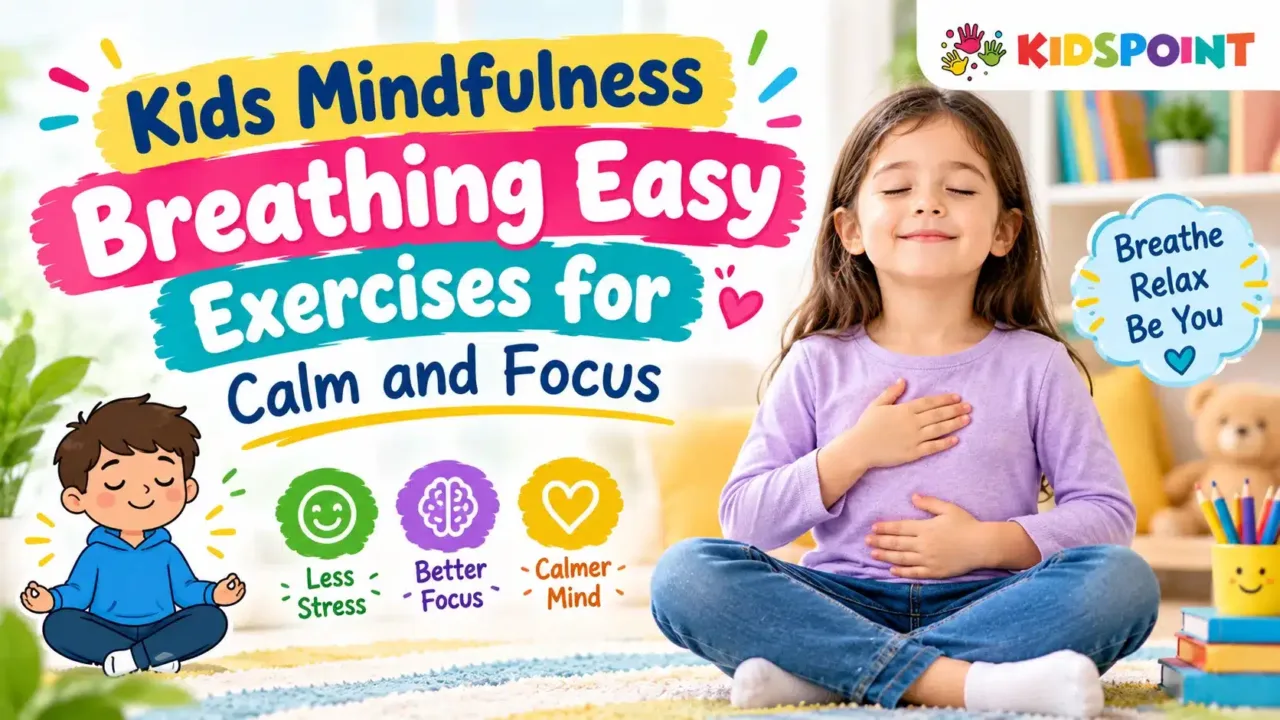
Children experience many emotions throughout the day. They may feel excited before a school activity, frustrated when something does not go their way, nervous about meeting new people, or overwhelmed by a busy environment. Learning simple ways to pause and notice what is happening can help children develop greater awareness of their thoughts, feelings, and bodies.
Kids mindfulness breathing is one simple activity families and educators can introduce as part of a broader mindfulness routine. It does not require special equipment, complicated instructions, or a lot of time. A few quiet moments of comfortable breathing can give children an opportunity to slow down and pay attention to the present moment.
Mindful breathing should be presented as a fun skill rather than something children are forced to do. The goal is not to make a child perfectly calm or eliminate difficult emotions. Instead, breathing activities can give children another tool they can try when they want a quiet moment, a transition activity, or an opportunity to reconnect with themselves.
What Is Mindful Breathing for Kids?
Mindful breathing means paying gentle attention to the natural process of breathing.
Children might notice:
- The feeling of air moving in and out
- Their belly or chest moving
- The sound of breathing
- The sensation around their nose or mouth
- The rhythm of their breath
- What changes when they become distracted
Mindfulness does not require children to empty their minds. Thoughts and feelings will naturally come and go.
A child can simply notice that their attention wandered and gently bring it back to their breathing.
Why Teach Children Mindful Breathing?
Mindful breathing can be a simple way to introduce children to mindfulness and self-awareness.
Encourages Present-Moment Awareness
Children can become absorbed in what happened earlier or what they expect to happen next. Focusing briefly on breathing gives them an opportunity to pay attention to what is happening right now.
Creates a Quiet Pause
A short breathing activity can provide a peaceful transition between activities.
For example, children might practice a few comfortable breaths before starting homework, after returning from outdoor play, or before a bedtime story.
Helps Children Notice Their Feelings
Breathing activities can encourage children to recognize physical sensations associated with different emotions.
A child might notice that their breathing feels different when they are excited compared with when they are sitting quietly.
This awareness can become part of learning how to recognize emotions.
Builds a Mindfulness Habit
Mindfulness does not have to involve long sessions. Short, playful activities can introduce children to the idea of stopping, noticing, and paying attention.
Important Safety Tips Before Starting
Breathing exercises for children should always be comfortable and age-appropriate.
Children should never be pressured to hold their breath or continue a breathing activity if they feel uncomfortable.
Keep these guidelines in mind:
- Encourage natural, comfortable breathing.
- Avoid competitive breath-holding.
- Stop if a child feels dizzy, uncomfortable, or distressed.
- Do not force children to close their eyes.
- Let children sit, stand, or lie down comfortably.
- Keep activities short for younger children.
- Make participation optional when appropriate.
If a child has a respiratory condition or another health concern that affects breathing, parents should ask a qualified healthcare professional about suitable activities.
Easy Kids Mindfulness Breathing Exercises
The following activities are designed to make mindful breathing simple and playful.
1. Belly Breathing With a Stuffed Animal
Have a child lie comfortably on their back and place a small stuffed animal on their belly.
Ask them to notice how the toy gently moves as they breathe naturally.
You can say:
“Let’s see if your little friend can go for a gentle ride as you breathe.”
There is no need to make the breaths unusually deep. The activity is simply about noticing movement.
This can work well as a quiet bedtime or relaxation activity.
2. Smell the Flower, Blow the Candle
Pretend there is a flower in one hand and a birthday candle in the other.
Invite the child to imagine smelling the flower with a comfortable breath in and gently blowing toward the pretend candle as they breathe out.
Keep the exercise relaxed rather than emphasizing a particular number of seconds.
The imaginary objects make the activity easy for younger children to understand.
3. Bubble Breathing
If you have bubbles available, let children watch how gently blowing changes the bubbles.
For a mindfulness activity, children can pause before blowing and notice their breathing.
You can ask:
- “What does your breath feel like before you blow?”
- “What happens when you blow gently?”
This turns a familiar play activity into an opportunity for observation.
Always supervise young children around bubble solution and other small materials.
4. Hand-on-Belly Breathing
Ask children to place one hand gently on their belly.
Invite them to notice whether their hand moves slightly as they breathe.
There is no need to force the belly outward or make exaggerated breaths.
The purpose is simply to help children connect their attention with a physical sensation.
5. Counting Comfortable Breaths
For children who enjoy numbers, counting breaths can provide a simple focus point.
Ask them to notice one comfortable breath, then another, and continue for a small number of breaths.
If they lose count, that is completely fine. They can simply start again.
The activity is about noticing, not getting the “right” number.
6. Rainbow Breathing
Imagine a rainbow with several colors.
Choose one color and invite the child to notice a comfortable breath while imagining the color.
Then move to another color.
- For example:
- “Let’s imagine red.”
- “Now let’s imagine orange.”
- “Now yellow.”
Children can create their own rainbow colors and images.
This combines imagination with mindful attention.
7. Teddy Bear Breathing
Have the child sit comfortably and hold a favorite teddy bear or soft toy.
Ask them to notice their breathing while holding the toy.
They can imagine that the teddy bear is quietly breathing too.
This can be especially helpful for younger children who find abstract mindfulness instructions difficult to understand.
8. Dragon Breathing
For a playful variation, children can imagine that they are friendly dragons.
They can take a comfortable breath and then slowly pretend to blow out a gentle stream of dragon air.
The activity should remain playful rather than encouraging forceful breathing.
Afterward, ask the child what they noticed.
9. Listening to the Breath
Instead of watching the breath, invite children to listen.
Can they hear a soft sound as they breathe?
Can they notice when the sound changes?
This can be practiced for a few quiet breaths.
It is an excellent reminder that mindfulness can involve different senses.
10. Breathing With a Visual Shape
Draw a simple shape such as a circle.
Invite the child to slowly trace the shape with their finger while paying attention to their natural breathing.
They can move around the shape once and then pause.
The visual element can give children something concrete to focus on.
11. Stuffed Animal Calm Corner
Create a small mindfulness corner with a comfortable cushion, favorite stuffed animals, books, or simple visual prompts.
When children want a quiet break, they can sit there and practice a few comfortable breaths.
This should not be used as a punishment or isolation space. It can instead be presented as a welcoming place to pause.
12. Nature Breathing
Take mindful breathing outdoors.
Children can sit quietly and notice their breathing while also paying attention to sounds around them.
Ask them to notice:
- Birds
- Leaves
- Wind
- Insects
- Clouds
- Nearby sounds
The activity combines breathing awareness with observation of the natural environment.
Mindful Breathing for Different Age Groups
Not every child will respond to the same activity.
Ages 3–5
Keep activities very short and playful.
Use pretend games such as flowers, candles, bubbles, animals, and stuffed toys.
Avoid lengthy explanations.
Ages 6–8
Children can begin exploring simple counting, sensory awareness, and short guided activities.
Use colorful imagery and stories to maintain interest.
Ages 9–12
Older children may enjoy more structured mindfulness activities.
They can experiment with noticing their breathing during transitions, homework breaks, or quiet time.
Teens
Teenagers may prefer less playful approaches.
They can try quiet breath awareness, short mindfulness pauses, or breathing observations before studying or during everyday transitions.
Remember that children and teens have individual preferences. Let them discover which approaches feel comfortable.
When Can Kids Practice Mindful Breathing?
Mindfulness breathing can fit into many parts of a child’s routine.
- Before School: A few quiet moments can provide a gentle transition into the morning.
- Before Homework: Children can pause and notice their breathing before beginning a challenging task.
- After Active Play: A short quiet activity can provide a transition from energetic movement to a calmer activity.
- During Family Time: Families can practice a few breaths together before dinner, reading, or another shared activity.
- Before Bed: Simple breathing awareness can become part of a peaceful bedtime routine.
How Parents Can Make Mindfulness Fun
Children are more likely to participate when mindfulness feels like an enjoyable activity rather than another assignment.
Try using:
- Storytelling
- Stuffed animals
- Imagination
- Drawing
- Nature
- Music
- Simple games
- Colorful visual prompts
Parents can also participate. Children often learn by watching adults.
Instead of saying, “You need to calm down,” try inviting them to join you for a short breathing activity.
Mindful Breathing at School
Teachers can incorporate short breathing activities into classroom transitions.
For example, a teacher might invite students to sit comfortably and notice three natural breaths before beginning a lesson.
Mindfulness activities can also be paired with classroom routines such as:
- Morning meetings
- Quiet reading
- Transition periods
- After recess
- Before creative activities
The activity should be inclusive and optional where appropriate. Children should never be embarrassed for choosing not to participate.
Common Mistakes to Avoid
Forcing a Child to Participate
Mindfulness works best as an invitation rather than a command.
Making Children Hold Their Breath
Breath-holding is unnecessary for simple mindfulness practice.
Expecting Instant Calm
A breathing exercise does not guarantee that a child will immediately feel calm.
The purpose is to practice awareness.
Making Activities Too Long
Young children can lose interest quickly. Short activities are often easier to incorporate into daily routines.
Correcting Every Breath
There is no need to constantly tell children how to breathe. Encourage comfortable, natural breathing and gentle attention.
Create a Simple Mindfulness Routine
A family mindfulness routine does not need to be complicated.
Try this five-minute structure:
- Minute 1: Sit comfortably and notice the surroundings.
- Minute 2: Pay attention to natural breathing.
- Minute 3: Notice how the body feels.
- Minute 4: Listen for nearby sounds.
- Minute 5: Choose one thing you appreciate about the moment.
Children can adapt this routine according to their age and preferences.
Frequently Asked Questions
1. What is mindfulness breathing for kids?
Mindfulness breathing is a simple activity where children gently pay attention to their natural breathing. They may notice the movement of their belly or chest, the feeling of air, or the sound of breathing.
2. What are the benefits of mindfulness breathing for children?
Mindful breathing can give children opportunities to practice present-moment awareness, notice physical sensations, and develop self-awareness. It can also provide a quiet transition between activities.
3. What is an easy breathing exercise for young children?
“Smell the flower, blow the candle” is a simple option. Children imagine smelling a flower with a comfortable breath in and gently blowing toward a pretend candle as they breathe out.
4. How long should kids practice mindful breathing?
There is no required length. Younger children may benefit from very short activities lasting a few breaths, while older children may choose to practice for several minutes.
5. Should children hold their breath during mindfulness exercises?
No. Breath-holding is unnecessary for basic mindful breathing. Children should be encouraged to breathe comfortably and stop if they feel uncomfortable.
6. Can parents practice mindfulness breathing with children?
Yes. Practicing together can make the activity more approachable and enjoyable. Parents can model comfortable breathing and participate without expecting children to perform perfectly.
7. Can mindfulness breathing be used in the classroom?
Yes. Teachers can introduce brief, age-appropriate breathing activities during transitions, morning routines, quiet reading, or other suitable moments. Participation should be handled respectfully and inclusively.
8. What if my child does not want to participate?
Do not force them. Mindfulness can be introduced through other activities, such as listening to sounds, observing nature, drawing, or noticing body sensations. Children have different preferences.
9. Can mindfulness breathing help children focus?
Mindful breathing gives children an opportunity to practice directing their attention toward one simple experience. It can be used as a brief transition before activities that require attention.
10. Is mindful breathing suitable for every child?
Many children can try simple, comfortable mindfulness activities, but individual needs differ. Children should never be forced to participate, and parents should seek professional guidance when a child has a health condition that affects breathing or when an activity causes discomfort.
Make Mindful Learning Fun With The Kids Point
At The Kids Point, we believe every child deserves a safe and inspiring place to explore, learn, and grow. Our team of educators, writers, and parents creates engaging resources, activities, stories, and educational ideas that encourage curiosity, creativity, and joyful learning. Explore The Kids Point for more child-friendly learning resources and family activities. Parents and educators can also join our community to discover more ways to make everyday learning fun and meaningful.