

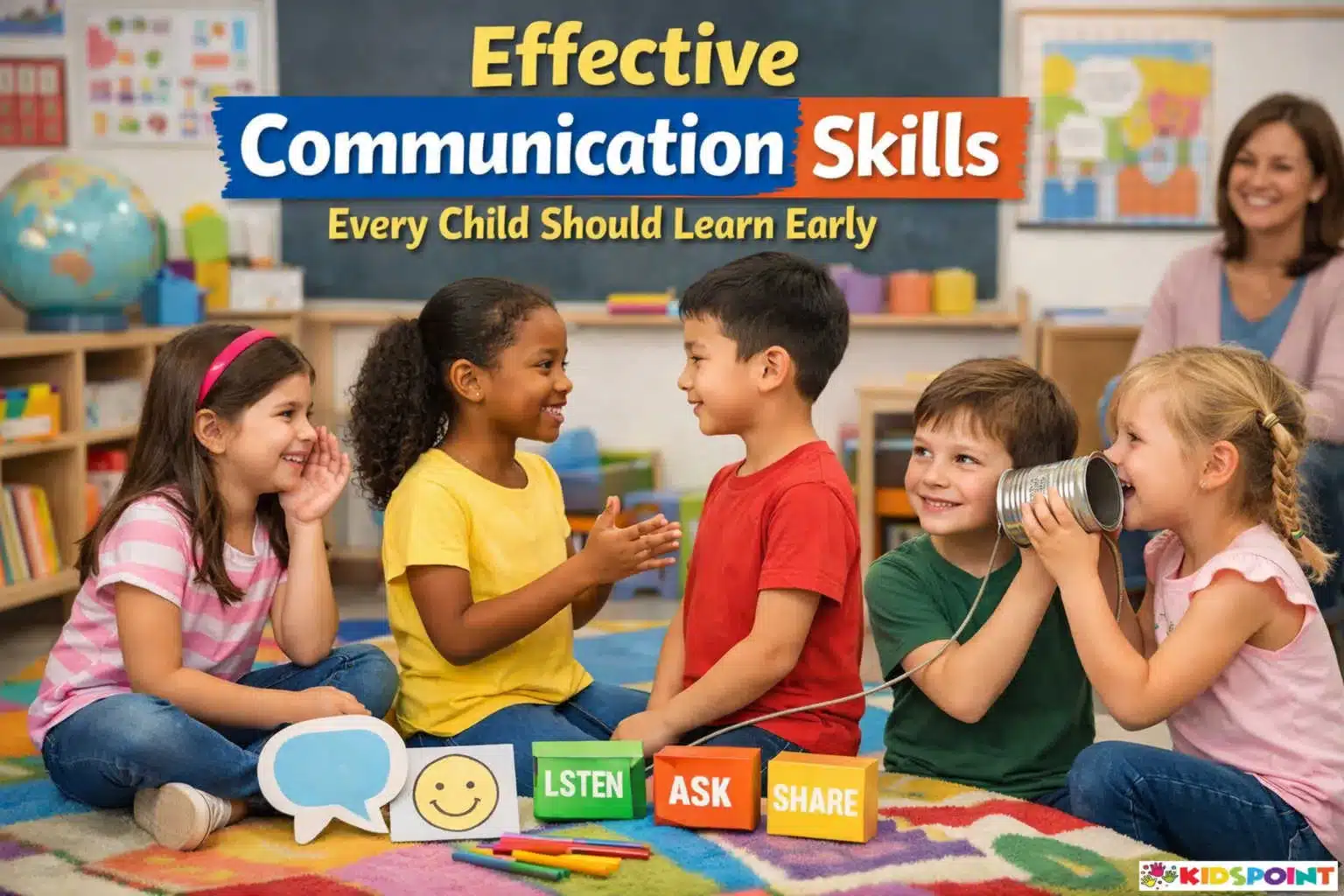
Communication is one of the most essential life skills a child can develop. From expressing emotions to building friendships and succeeding academically, effective communication forms the foundation of a child’s overall growth. Teaching children how to communicate clearly, respectfully, and confidently from an early age equips them with tools that benefit them throughout their lives.
At The Kids Point, we believe that strong communication skills are just as important as academic success. When children learn to express themselves effectively, they become more confident, empathetic, and socially capable individuals. This guide explores the most important communication skills every child should learn early and offers practical ways parents and educators can nurture them.
Why Communication Skills Matter for Children
Communication is more than just talking. It involves listening, understanding, interpreting non-verbal cues, and responding appropriately. Children who develop strong communication skills early tend to:
- Build better relationships with peers and adults
- Perform better in school
- Handle conflicts more effectively
- Express their thoughts and emotions clearly
- Develop empathy and emotional intelligence
Without these skills, children may struggle with frustration, misunderstandings, and social challenges. Early development ensures a smoother path into adolescence and adulthood.
Core Communication Skills Every Child Should Learn
Active Listening
Active listening is the ability to fully focus, understand, and respond thoughtfully to what someone else is saying.
Why it matters:
Children who listen well are better learners and build stronger relationships.
How to teach it:
- Encourage eye contact during conversations
- Teach children not to interrupt
- Ask them to repeat or summarize what they heard
- Model good listening behavior yourself
Activity idea:
Play a “listening game” where you give simple instructions and ask your child to follow them step by step.
Clear Expression of Thoughts
Children should learn how to express their ideas, needs, and opinions clearly and confidently.
Why it matters:
Clear expression reduces frustration and helps children feel heard and understood.
How to teach it:
- Encourage children to use complete sentences
- Ask open-ended questions like “How did that make you feel?”
- Give them time to speak without rushing
Tip:
Avoid correcting every mistake immediately; instead, focus on encouraging confidence.
Understanding Non-Verbal Communication
Communication is not only about words. Body language, facial expressions, and tone of voice play a huge role.
Why it matters:
Children who understand non-verbal cues can better interpret emotions and social situations.
How to teach it:
- Point out facial expressions in stories or real-life situations
- Play games like “Guess the Emotion”
- Discuss how tone changes meaning
Emotional Expression
Children need to learn how to express their feelings appropriately.
Why it matters:
Healthy emotional expression prevents behavioral issues and builds emotional intelligence.
How to teach it:
- Teach emotion words like happy, sad, angry, and frustrated
- Encourage children to talk about their feelings
- Validate their emotions instead of dismissing them
Example:
Instead of saying “Don’t cry,” say “I understand you’re upset. Let’s talk about it.”
Empathy and Understanding Others
Empathy is the ability to understand and share the feelings of others.
Why it matters:
Empathy builds strong relationships and reduces conflicts.
How to teach it:
- Discuss how others might feel in different situations
- Encourage sharing and kindness
- Use storytelling to explore different perspectives
Asking Questions
Curiosity and questioning are key parts of effective communication.
Why it matters:
Children who ask questions learn better and engage more deeply with others.
How to teach it:
- Encourage “why” and “how” questions
- Praise curiosity
- Respond patiently to their inquiries
Turn-Taking in Conversations
Conversations involve both speaking and listening in turns.
Why it matters:
Turn-taking teaches respect and improves social interactions.
How to teach it:
- Practice conversations at home
- Use games that require taking turns
- Gently remind children not to interrupt
Confidence in Speaking
Confidence allows children to express themselves without fear.
Why it matters:
Confident communicators are more likely to succeed in school and social settings.
How to teach it:
- Encourage public speaking through storytelling
- Praise effort, not perfection
- Avoid criticizing or mocking their attempts
Respectful Communication
Children must learn to communicate politely and respectfully.
Why it matters:
Respect builds positive relationships and social harmony.
How to teach it:
- Teach polite words like “please,” “thank you,” and “sorry”
- Model respectful behavior
- Correct disrespectful language calmly
Conflict Resolution Skills
Disagreements are a natural part of life. Children should learn how to handle them constructively.
Why it matters:
Conflict resolution prevents aggression and builds problem-solving skills.
How to teach it:
- Teach children to express their feelings calmly
- Encourage finding solutions together
- Role-play conflict scenarios
Role of Parents in Developing Communication Skills
Parents are a child’s first and most influential teachers. The way you communicate at home shapes your child’s communication style.
Key strategies:
- Spend quality time talking with your child daily
- Be a good role model
- Listen without judgment
- Encourage open conversations
Daily habit idea:
Have a “talk time” where your child shares something about their day.
Role of Teachers and Schools
Schools play a crucial role in refining communication skills.
How teachers can help:
- Encourage group discussions
- Use interactive learning methods
- Provide opportunities for presentations
- Create a safe environment for expression
Fun Activities to Build Communication Skills
Storytelling Sessions
Ask children to create and tell stories. This improves vocabulary and confidence.
Role-Playing Games
Act out real-life scenarios like ordering food or resolving conflicts.
Show and Tell
Let children present an object and talk about it.
Reading Together
Reading enhances language skills and understanding.
Communication Board Games
Games that involve talking, explaining, or guessing can be very helpful.
Common Challenges and How to Overcome Them
Shyness
- Encourage small group interactions
- Praise efforts
- Avoid forcing participation
Limited Vocabulary
- Read regularly
- Introduce new words daily
- Use simple explanations
Screen Overuse
- Limit screen time
- Encourage face-to-face conversations
Lack of Confidence
- Provide positive reinforcement
- Create safe spaces for expression
Long-Term Benefits of Early Communication Skills
Children who develop strong communication skills early are more likely to:
- Excel academically
- Build meaningful relationships
- Become confident leaders
- Handle challenges effectively
- Succeed in their careers
These skills are not just for childhood—they shape the entire future of a child.
How To Support Communication Development
We emphasize the importance of communication in a child’s development journey. Through engaging content, educational activities, and practical parenting tips, we aim to:
- Help parents teach essential life skills
- Provide fun learning ideas for children
- Promote emotional and social development
- Encourage interactive learning experiences
Our goal is to make learning both meaningful and enjoyable for children of all ages.
Common Questions Parents Ask About Kids’ Communication Skills
At what age should children start learning communication skills?
Children begin developing communication skills from infancy. However, structured learning and guidance can start as early as toddler years (2–3 years old).
How can parents improve their child’s communication at home?
Parents can encourage open conversations, actively listen, read together, and model clear and respectful communication in daily interactions.
What are signs of poor communication skills in children?
Common signs include difficulty expressing thoughts, not listening, frequent misunderstandings, shyness, or frustration during conversations.
How do games help in building communication skills?
Games promote interaction, turn-taking, listening, and expression in a fun and engaging way, making learning natural and enjoyable.
Can shy children develop strong communication skills?
Yes, with patience, encouragement, and a supportive environment, shy children can gradually build confidence and become effective communicators.
Final Thoughts: Building a Strong Communication Foundation
Effective communication is a lifelong skill that begins in early childhood. By teaching children how to listen, express themselves, and understand others, we prepare them for success in every aspect of life.
The process doesn’t require perfection—it requires patience, consistency, and encouragement. Small daily efforts can lead to significant improvements over time.
At The Kids Point, we believe that every child deserves the opportunity to be heard, understood, and confident in their voice. By nurturing communication skills early, we empower children to connect with the world around them in meaningful and positive ways.