

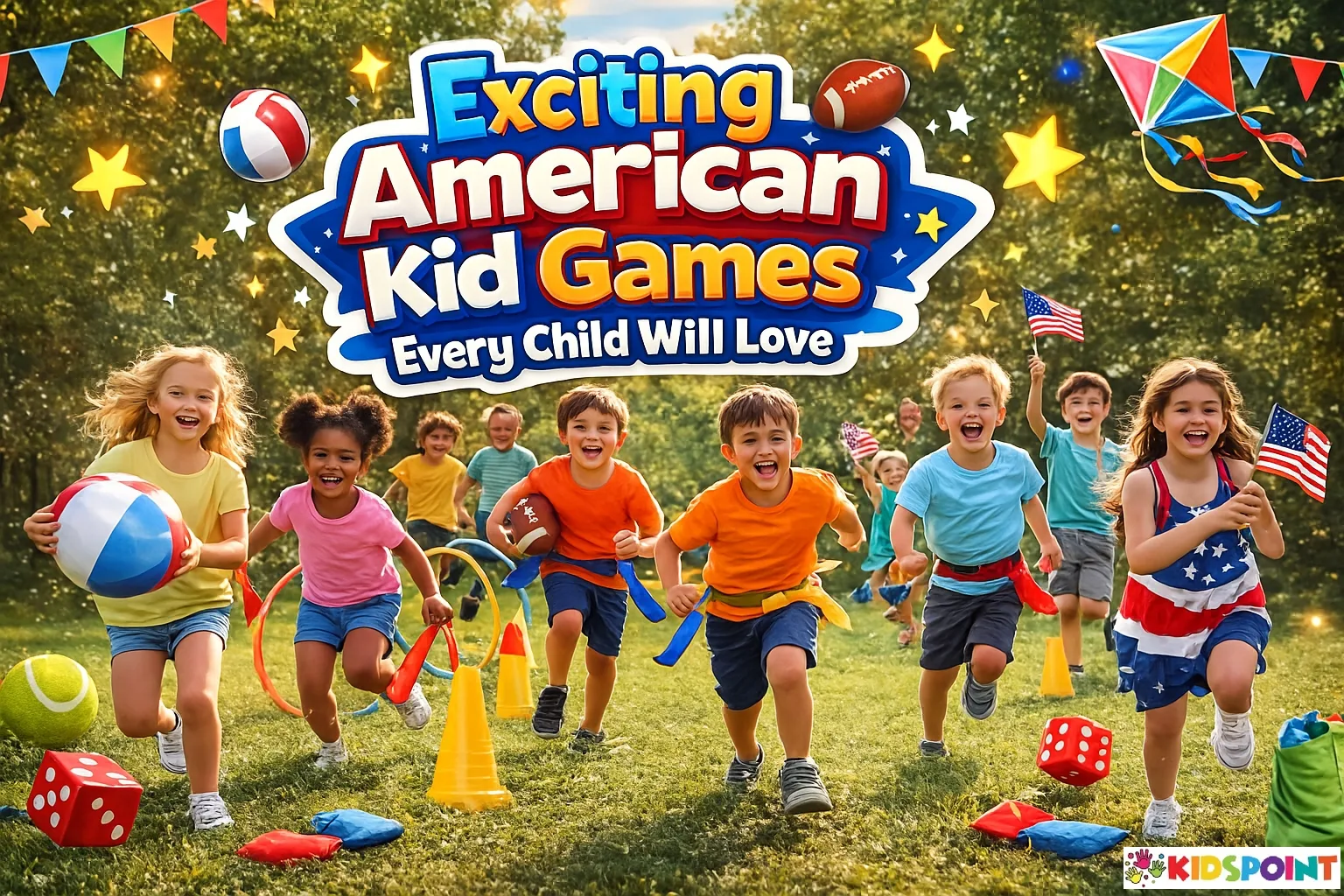
Games have always played a vital role in childhood, helping kids grow physically, socially, and emotionally. In the United States, traditional and modern children’s games reflect creativity, teamwork, and fun—all wrapped into memorable experiences. From classic outdoor activities passed down through generations to modern indoor games that encourage strategic thinking, American kid games are loved worldwide.
At The Kids Point, we believe games are more than just playtime—they are powerful tools for learning, bonding, and personal growth. In this guide, we explore exciting American kid games every child will love, highlighting their benefits, rules, and why they remain favorites among kids of all ages.
Why Games Matter in Child Development
Before diving into specific games, it’s important to understand why games are essential for kids:
- Build physical strength and coordination
- Improve communication and teamwork
- Encourage problem-solving and creativity
- Develop emotional resilience
- Boost confidence and leadership skills
American kids’ games often blend fun with learning, making them ideal for homes, schools, camps, and community events.
Classic Outdoor American Games
Tag (Freeze Tag, Shadow Tag, TV Tag)
Tag is one of the most iconic American playground games. Simple rules and endless variations make it universally appealing.
How to Play: One child is “it” and tries to tag others. Once tagged, players may freeze, switch roles, or follow variation rules.
Why Kids Love It:
- Fast-paced and exciting
- Encourages running and agility
- Easy to adapt for any age
Skills Developed: Speed, coordination, social interaction
Hide and Seek
Hide and Seek has been a staple of American childhood for generations.
How to Play: One player counts while others hide. The seeker tries to find everyone.
Why Kids Love It:
- Thrilling suspense
- Encourages creativity in hiding spots
- Works indoors or outdoors
Skills Developed: Spatial awareness, patience, strategy
Red Light, Green Light
This classic game teaches listening skills and self-control.
How to Play: One child calls out “Green Light” to let players move and “Red Light” to make them stop.
Why Kids Love It:
- Easy to understand
- Funny moments when players freeze
- Great for groups
Skills Developed: Focus, balance, impulse control
Hopscotch
Hopscotch is a fun mix of physical play and number recognition.
How to Play: Players toss a marker and hop through numbered squares on one foot.
Why Kids Love It:
- Simple and active
- Can be played solo or in groups
- Combines movement with learning
Skills Developed: Balance, counting, coordination
Popular American Team Games
Dodgeball
Dodgeball is a favorite in American schools and summer camps.
How to Play: Players throw balls to eliminate opponents while dodging incoming throws.
Why Kids Love It:
- Fast-paced action
- Encourages teamwork
- Builds excitement
Skills Developed: Reflexes, teamwork, strategic thinking
Kickball
Kickball is similar to baseball but easier for younger kids.
How to Play: Players kick a rubber ball instead of hitting it with a bat.
Why Kids Love It:
- Simple rules
- Inclusive for all skill levels
- Great for large groups
Skills Developed: Coordination, cooperation, confidence
Capture the Flag
Capture the Flag is an adventurous outdoor game often played at camps.
How to Play: Two teams protect their flag while trying to capture the opponent’s flag.
Why Kids Love It:
- Feels like a real-life adventure
- Encourages teamwork and strategy
- Ideal for outdoor spaces
Skills Developed: Leadership, communication, problem-solving
Fun Indoor American Games
Musical Chairs
Musical Chairs is a party favorite across America.
How to Play: Players walk around chairs while music plays. When the music stops, they must sit.
Why Kids Love It:
- Fun music
- Silly competition
- Great for parties
Skills Developed: Listening skills, reaction time
Simon Says
Simon Says is a classic listening and movement game.
How to Play: Players follow commands only if they begin with “Simon says.”
Why Kids Love It:
- Funny mistakes
- Simple yet challenging
- Encourages focus
Skills Developed: Attention, listening, self-control
Charades for Kids
Charades helps kids express creativity and imagination.
How to Play: Players act out words or phrases without speaking.
Why Kids Love It:
- Encourages creativity
- Lots of laughter
- Perfect for family game nights
Skills Developed: Communication, creativity, confidence
Modern American Games for Kids
Board Games (Candy Land, Connect Four, Sorry!)
American board games have become household staples.
Why Kids Love Them:
- Colorful designs
- Easy-to-follow rules
- Fun family bonding time
Skills Developed: Turn-taking, patience, problem-solving
Video Games Designed for Kids
Many American-made video games focus on learning and creativity.
Popular Examples:
- Minecraft (creative building)
- Animal Crossing (social skills)
- Educational apps
Benefits:
- Encourages creativity
- Improves digital literacy
- Enhances problem-solving
We recommend balancing screen time with physical play for healthy development.
Playground Favorites in the USA
Monkey Bars
Monkey bars are a staple of American playgrounds.
Benefits:
- Builds upper body strength
- Improves coordination
- Encourages persistence
Swings
Swinging is a calming yet joyful activity for kids.
Benefits:
- Enhances balance
- Provides sensory input
- Boosts emotional regulation
Slides and Climbing Structures
These playground features promote bravery and exploration.
Benefits:
- Builds confidence
- Encourages physical activity
- Enhances motor skills
Games for Learning and Education
Spelling Bee Games
Inspired by American spelling competitions, these games improve language skills.
Skills Developed: Vocabulary, confidence, memory
Math Relay Games
Fun math games turn learning into play.
Skills Developed: Quick thinking, teamwork, numeracy
Science-Based Play Activities
Simple experiments turned into games inspire curiosity.
Skills Developed: Critical thinking, creativity
Inclusive Games for All Abilities
American kids’ games are increasingly designed to include children of all abilities.
Examples:
- Parachute games
- Cooperative board games
- Sensory-friendly activities
We strongly support inclusive play that ensures every child feels valued and involved.
Tips for Choosing the Right Game for Your Child
- Consider your child’s age and interests
- Balance physical and mental activities
- Encourage group play for social development
- Choose games that promote positive values
- Ensure safety and age-appropriate rules
How Parents and Teachers Can Encourage Play
- Set aside daily playtime
- Participate in games with children
- Rotate games to keep excitement alive
- Praise effort, not just winning
Play becomes more meaningful when adults actively support it.
The Role of Games in American Culture
Games reflect American values such as teamwork, creativity, and fair play. From schoolyards to family living rooms, these activities create lifelong memories and help children build essential life skills.
Everything You Need to Know About Kids’ Games
What are the most popular American games for kids?
Some popular American kid games include Tag, Hide and Seek, Kickball, Dodgeball, and Capture the Flag.
Are American kid games suitable for all age groups?
Yes, many American games can be easily adjusted to suit toddlers, preschoolers, and older children.
Do these games help with child development?
Absolutely. These games improve physical fitness, teamwork, problem-solving, and social skills.
Can American kid games be played indoors?
Yes, games like Simon Says, Musical Chairs, Charades, and board games are perfect for indoor play.
How can parents encourage kids to play more games?
Parents can set regular playtimes, join in the games, and offer a variety of fun, age-appropriate activities.
Final Thoughts on American Kid Games
American kid games offer a perfect blend of fun, learning, and social development. Whether it’s running freely in a game of Tag, thinking strategically in Capture the Flag, or bonding over a board game night, these activities shape childhood in meaningful ways.
At The Kids Point, we encourage parents, teachers, and caregivers to embrace these exciting American kid games as tools for growth, joy, and connection. When children play, they don’t just have fun—they learn how to navigate the world with confidence, kindness, and creativity.