

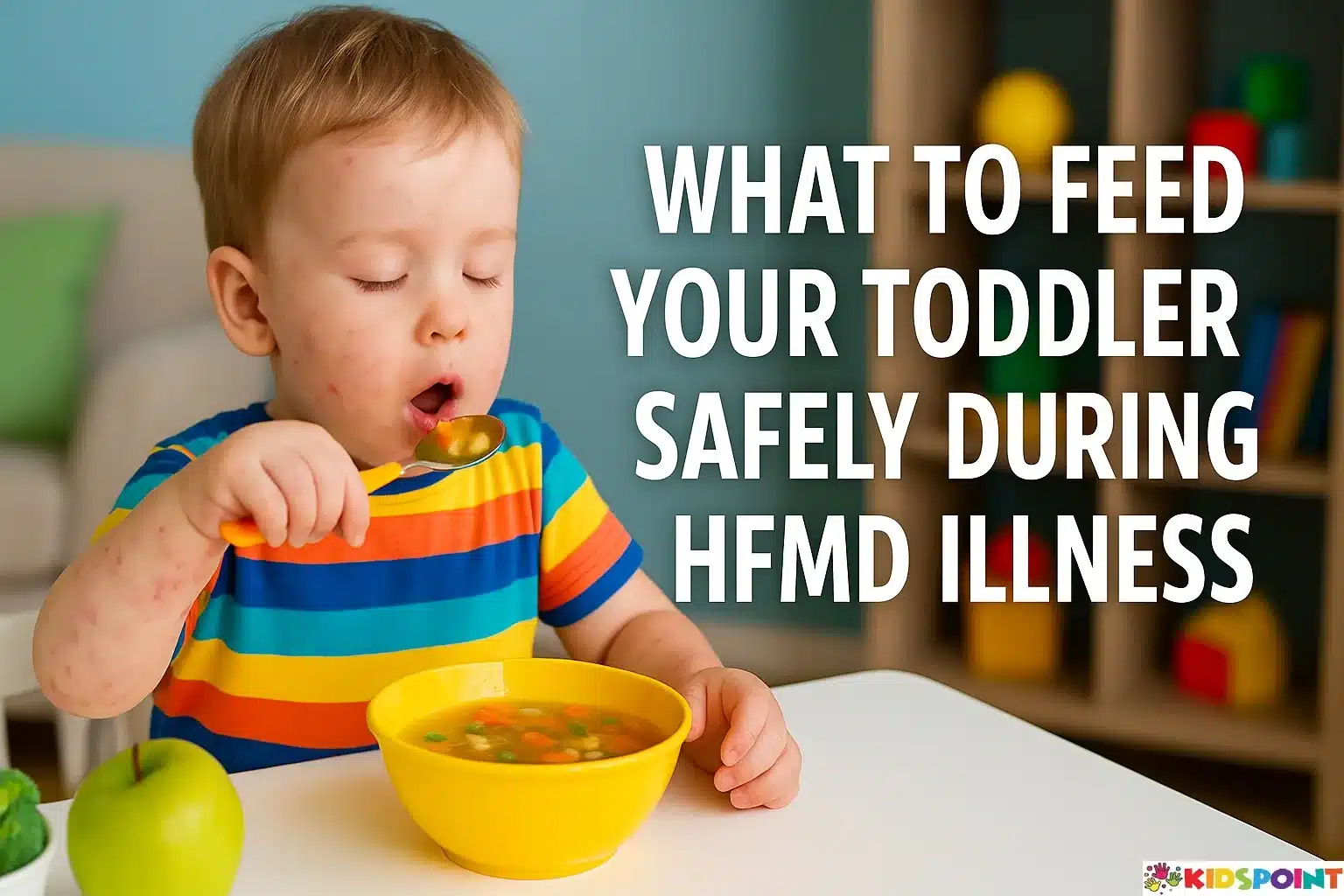
Hand, Foot, and Mouth Disease (HFMD) is one of the most common viral infections affecting toddlers and young children. While it usually clears on its own within 7–10 days, the journey can be uncomfortable for little ones—especially due to the painful mouth sores that make chewing and swallowing difficult. As a parent, your biggest concern quickly becomes: “What can my toddler safely eat during HFMD?”
This comprehensive guide from The Kids Point will help you understand what foods are safe, soothing, and nutritious for your toddler during HFMD, along with what to avoid, hydration tips, feeding strategies, and day-by-day recovery guidance.
Understanding HFMD and Why Food Choice Matters
HFMD is caused by viruses like coxsackievirus and enterovirus. The hallmark symptoms include:
- Small red spots or blisters on the hands, feet, and mouth
- Fever
- Sore throat
- Irritability
- Reduced appetite
- Painful swallowing due to mouth ulcers
Because mouth sores can become extremely sensitive, toddlers often refuse food. This makes it important to offer soft, non-irritating, cool, and nutrient-rich options to maintain their energy and hydration levels.
Food alone won’t cure HFMD, but the right foods make recovery faster and more comfortable.
Best Foods to Feed Your Toddler During HFMD
Below are safe, soothing food categories that help nourish your toddler while minimizing mouth pain.
Cooling, Soft Foods to Soothe Mouth Sores
Cold and soft-textured foods reduce inflammation and numb discomfort temporarily. These are typically the easiest for HFMD-affected toddlers to tolerate.
Yogurt: Cold, smooth, and rich in probiotics. Choose plain or mild flavors.
Applesauce: Naturally sweet, gentle on the mouth, and easy to swallow.
Smoothies (Non-citrus): Use banana, mango, apple, oatmeal, and yogurt. Avoid acidic fruits like oranges or pineapples.
Fruits Purées: Examples: pear purée, banana purée, mango purée.
Ice Cream or Sorbet (occasionally): Provides relief and calories—choose low-sugar options.
Chilled Custards or Pudding: Soft, creamy, and comforting.
Soft Carbohydrates for Energy
Carbohydrates help maintain your toddler’s energy levels when they’re not eating much.
Mashed Potatoes: Warm (not hot), creamy, and filling.
Oatmeal or Porridge: Make it runny and mild; avoid rough textures.
Soft Rice or Khichdi (Bangladeshi-style): A great staple—gentle, easy to chew, and nutritious.
Soft Boiled Pasta: Overcook slightly to make it extra soft.
Rice Cereal or Semolina Porridge: Mild, smooth, and toddler friendly.
Protein-Rich Foods for Strength
During HFMD, protein is essential for healing tissues and maintaining strength.
Eggs (Soft-Boiled or Scrambled Very Soft): Easy to chew and swallow.
Mashed Lentils (Dal): Packed with protein and very soothing when thin and runny.
Soft-Boiled Chicken (Finely Shredded)
Offer small, tender pieces. Avoid spicy broths.
Tofu: Soft, mild, and easy to digest.
Yogurt-Based Smoothies: Add soft fruits like banana to boost protein content.
Hydrating Liquids and Soups
Hydration is critical because HFMD often reduces appetite and increases the risk of dehydration.
Water (room temperature or cool): Small, frequent sips throughout the day.
Oral Rehydration Solutions (ORS): Especially helpful if appetite is low.
Coconut Water: Natural electrolytes, mild flavor.
Clear Broths: Chicken, vegetable, or lentil broth—serve warm but not hot.
Milk (if tolerated): Some toddlers prefer chilled milk for relief.
Foods to Avoid During HFMD
Certain foods can irritate mouth sores or worsen your toddler’s discomfort. Avoid them until the healing is complete.
Acidic Foods
These sting open sores and cause pain.
Avoid:
- Orange, lemon, pineapple, grapefruit
- Tomatoes and tomato-based sauces
- Citrus juices
Spicy or Salty Foods
Anything spicy or heavily salted can worsen inflammation.
Avoid:
- Chips
- Pickles
- Spicy curries
- Salty snacks
Crunchy or Hard Foods
These scrape the mouth and cause irritation.
Avoid:
- Crackers
- Toast
- Fried foods
- Popcorn
- Toasted bread
Hot Foods
High temperatures intensify pain from mouth blisters.
Avoid:
- Hot soups
- Hot rice
- Freshly cooked items not cooled down
Sugary Snacks
While not dangerous, they slow healing and irritate the mouth.
Avoid:
- Candy
- Chocolates
- Sugary biscuits
- Lollipops
Best Feeding Strategies During HFMD
Feeding a toddler during HFMD can be stressful. These strategies will help ease the process.
Offer Small, Frequent Portions
Instead of three large meals, provide 6–8 small, soothing meals throughout the day.
Keep Foods Mild and Neutral
Toddlers with HFMD prefer bland tastes.
Use a Straw or Sippy Cup
Helpful for avoiding mouth sores while drinking.
Let Your Toddler Choose
Offer two options at a time. Letting them pick reduces stress and increases the chance of eating.
Serve Foods Slightly Chilled
The cooler temperature numbs soreness and encourages better intake.
Don’t Force Feed
This can worsen irritability. Instead, focus on fluids and small portions.
Maintain Proper Hygiene
Wash hands before meals to avoid spreading the virus to other family members.
Sample Meal Plan for Toddlers with HFMD
Here is a gentle, easy-to-follow meal plan during peak illness.
Morning
- Chilled banana smoothie (no citrus)
- OR soft oatmeal with milk
Late Morning Snack
- Applesauce
- OR chilled yogurt
Lunch
- Khichdi (very soft)
- OR mashed potatoes with shredded soft chicken
Afternoon Snack
- Fruit purée (pear/banana)
- OR custard
Evening
- Soft lentil soup or vegetable broth
- OR overcooked pasta with mild broth
Night
- Warm milk
- OR thin semolina porridge
Signs Your Toddler Isn’t Eating or Drinking Enough
Seek medical advice if you notice:
- Fewer than 3 wet diapers in 24 hours
- Crying without tears
- Dry lips or tongue
- Unusual sleepiness
- Rapid breathing
- Extreme irritability
Hydration is more important than solid food in the first few days of HFMD.
When to Consult a Doctor
While HFMD is usually mild, contact your pediatrician if:
- High fever lasts more than 3 days
- Your toddler refuses all fluids
- Mouth sores worsen
- There are breathing difficulties
- You notice dehydration signs
- Symptoms last more than 10 days
Day-by-Day Feeding Timeline During HFMD
Understanding how appetite changes throughout the illness helps you plan better meals.
Day 1–3: Peak Discomfort
- Mouth sores are painful
- Fever reduces appetite
- Prioritize liquids: ORS, water, broth, smoothies
Day 4–6: Slow Improvement
- Mouth sores begin healing
- Toddler may start accepting soft foods
- Introduce mashed potatoes, oatmeal, khichdi
Day 7–10: Appetite Returns
- Gradually return to normal foods
- Avoid spicy or crunchy foods for a few more days
Recovery Tips for Faster Healing
- Keep your toddler well-hydrated.
- Offer chilled foods frequently.
- Let them rest as much as possible.
- Keep fingernails trimmed to avoid blister scratching.
- Clean toys, surfaces, and bedding regularly to prevent the spread of infection.
Common Questions Parents Ask About HFMD Feeding
What foods are best for toddlers with HFMD?
Soft, cool foods like yogurt, applesauce, smoothies, khichdi, and mashed potatoes are easiest and most soothing.
Can my toddler drink milk during HFMD?
Yes. Most toddlers tolerate milk well. Serve it chilled to help soothe mouth sores.
What foods should be avoided during HFMD?
Avoid acidic, spicy, salty, crunchy, and very hot foods as they irritate mouth sores.
How do I keep my toddler hydrated?
Offer frequent sips of water, ORS, coconut water, clear soups, or smoothies throughout the day.
When should I see a doctor?
Seek medical help if there are dehydration signs, reduced urination, high fever beyond 3 days, or refusal to drink fluids.
Final Thoughts on Safely Feeding Toddlers During HFMD
Feeding a toddler during HFMD can be challenging, but with patience, the right food selection, and proper care, recovery becomes much smoother. Focus on cool, soft, mild foods and plenty of fluids to keep your child nourished and comfortable. Remember—not eating much for a few days is normal during HFMD, but hydration is essential.
At The Kids Point, our goal is to help parents make informed, safe decisions when their children are sick. With thoughtful meal choices and gentle feeding strategies, your toddler will be back to normal in no time.