

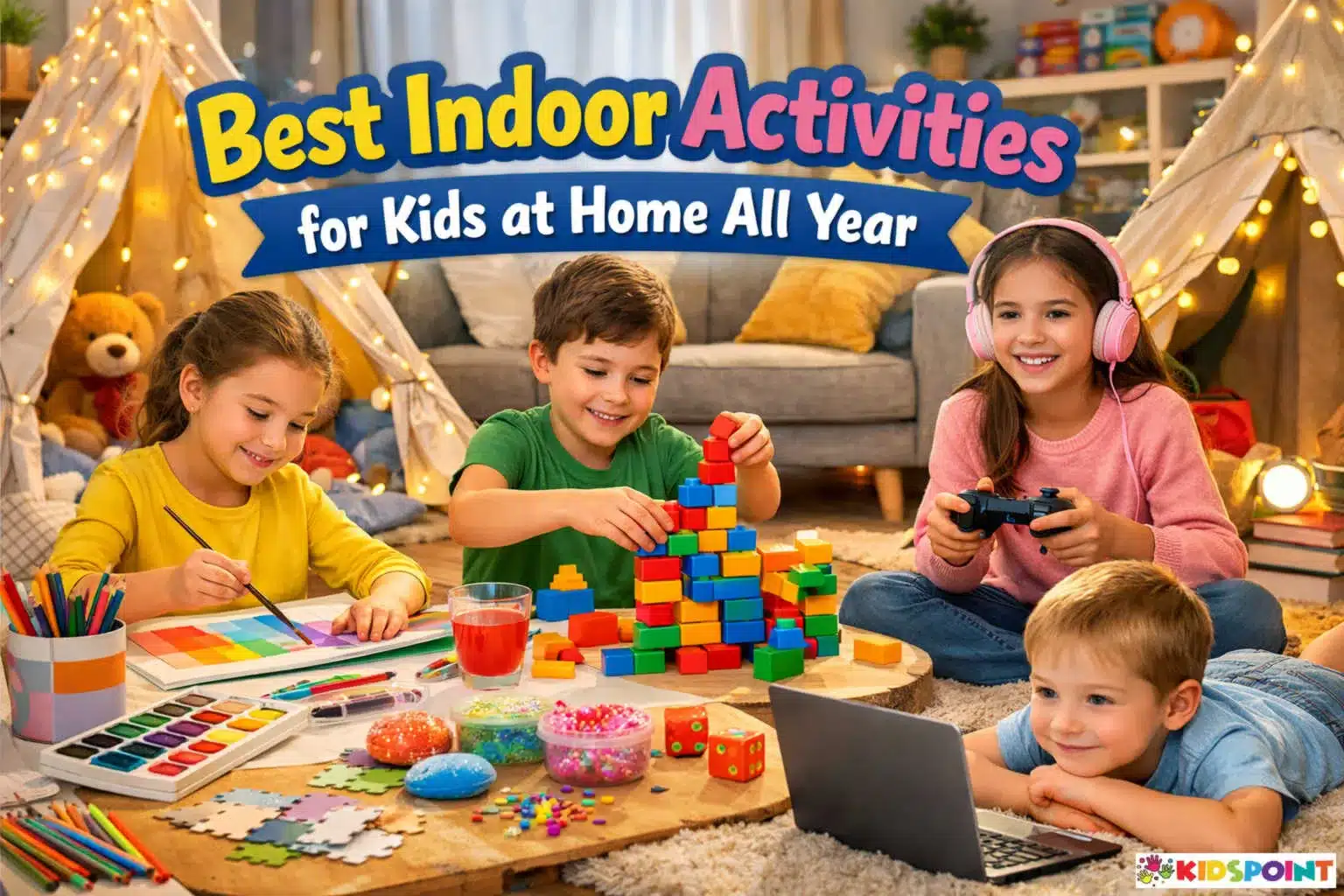
Keeping children happily engaged at home throughout the year can sometimes feel challenging—especially during long summer afternoons, rainy days, or chilly winter evenings. Parents often look for creative, educational, and safe indoor activities that not only entertain children but also support their overall development.
At The Kids Point, we believe that every moment at home can become an opportunity for learning, creativity, and bonding. With the right ideas and a little preparation, your home can transform into a space filled with imagination, discovery, and meaningful fun.
Why Indoor Activities Matter for Child Development
Indoor activities are more than just ways to pass the time. They play a vital role in shaping a child’s development. Both structured and unstructured activities at home can improve:
- Problem-solving skills
- Creativity and imagination
- Communication abilities
- Fine and gross motor skills
- Emotional regulation
- Focus and attention span
Whether you have a curious toddler or an energetic school-aged child, indoor activities provide safe and enriching opportunities to learn and grow.
Creative Arts and Crafts Activities
Arts and crafts are timeless indoor favorites. They encourage creativity, patience, and fine motor development.
DIY Craft Projects
Simple materials like paper, glue, scissors, markers, and crayons can inspire endless creativity. Try:
- Paper plate animals
- Handprint art
- Greeting card making
- Seasonal decorations
Allow children to explore their ideas freely instead of always following step-by-step instructions. Open-ended creativity builds confidence and imagination.
Painting and Drawing Sessions
Set up a small art station at home. Let children experiment with:
- Watercolors
- Finger painting
- Sketching
- Chalk drawing on paper
Displaying their artwork builds self-esteem and motivates them to keep creating.
Origami and Paper Folding
Origami strengthens concentration and hand-eye coordination. Start with simple shapes like boats and airplanes before moving on to more detailed designs.
Educational Indoor Activities
Learning at home does not have to feel like school. When presented creatively, it becomes exciting and enjoyable.
Reading and Storytelling Time
Create a cozy reading corner with pillows and good lighting. Reading improves vocabulary, imagination, and comprehension skills.
You can:
- Take turns reading aloud
- Act out story characters
- Create alternative endings
Storytelling without books also strengthens creativity and language development.
Puzzle Solving and Brain Games
Puzzles are excellent for cognitive growth. Choose age-appropriate options such as:
- Jigsaw puzzles
- Sudoku for kids
- Word searches
- Logic challenges
These activities develop patience, strategic thinking, and problem-solving skills.
Educational Board Games
Board games promote family bonding and teach valuable thinking skills. Classics like
- Monopoly
- Scrabble
- Candy Land
help children practice math, spelling, counting, and social interaction.
Indoor Physical Activities
Children need regular movement—even indoors. Physical activity supports coordination, strength, and overall health.
Indoor Obstacle Course
Create a simple obstacle course using chairs, cushions, and safe household items. Crawling under tables or jumping between pillows improves balance and gross motor skills.
Dance Sessions
Play upbeat music and let kids dance freely. You can also introduce simple choreographed routines to improve coordination and rhythm.
Kids Yoga
Yoga enhances flexibility, focus, and mindfulness. Teach basic poses like tree pose, butterfly pose, and cat-cow stretch to encourage calmness and body awareness.
STEM-Based Indoor Activities
STEM (Science, Technology, Engineering, and Mathematics) activities inspire curiosity and innovation.
Simple Science Experiments
Try easy home experiments such as:
- Baking soda and vinegar reactions
- Growing crystals
- Making homemade slime
- Floating and sinking tests
These hands-on experiences encourage scientific thinking and observation skills.
Building Challenges
Provide building materials like blocks, magnetic tiles, or cardboard boxes. Challenge children to build bridges, towers, or dream houses to improve engineering skills and creativity.
Beginner Coding Games
Introduce child-friendly coding platforms to develop logical thinking and problem-solving abilities in a fun and interactive way.
Dramatic Play and Imaginative Games
Pretend play supports emotional intelligence and creativity.
Dress-Up and Role Play
Let children pretend to be doctors, teachers, chefs, or superheroes. Role play helps them understand real-world responsibilities and improves communication skills.
Puppet Shows
Create puppets from socks or paper bags. Encourage children to write scripts and perform their own shows.
Indoor Treasure Hunt
Hide clues around the house and create a simple treasure map. This activity builds excitement and critical thinking skills.
Quiet and Calm Activities
Some days call for slower, more relaxing activities.
Coloring Time
Coloring improves focus, creativity, and fine motor skills. Provide themed coloring books or printable sheets based on animals, nature, or space.
Journaling
Encourage children to write about their day or draw their feelings. Journaling strengthens emotional awareness and communication.
Listening to Audiobooks
Audiobooks and child-friendly podcasts improve listening skills, vocabulary, and concentration.
Cooking and Kitchen Activities
Cooking together teaches life skills and introduces math and science concepts in practical ways.
Baking Simple Recipes
Prepare easy recipes like cookies, cupcakes, fruit salads, or sandwiches. Children learn measuring, following instructions, and teamwork.
Decorating Snacks
Allow kids to decorate cupcakes or create fun shapes using fruits and vegetables. This encourages creativity and healthy eating habits.
Indoor Activities for Toddlers
Toddlers benefit from sensory-rich and exploratory play.
Sensory Bins
Fill containers with rice, beans, or sand. Add scoops and small toys for exploration. This enhances sensory development and fine motor skills.
Sorting Games
Sort objects by color, size, or shape to build early math and cognitive skills.
Music and Movement
Sing nursery rhymes and encourage actions that match the lyrics to support language development and coordination.
Indoor Activities for School-Aged Kids
Older children often need more structured and challenging activities.
DIY Science Projects
Encourage independent science experiments with supervision to build confidence and curiosity.
Creative Writing
Ask children to write short stories, poems, or comic strips. This strengthens literacy and imagination.
Home Art Exhibitions
Let children organize their artwork and host a small exhibition for family members. This builds pride and presentation skills.
Rainy Day Indoor Ideas
Rainy days can be perfect for cozy family fun:
- Build a blanket fort
- Organize a family game night
- Create a mini indoor picnic
- Watch an educational documentary together
These activities make gloomy weather feel exciting and special.
Winter Indoor Engagement
Cold weather often means more time inside. Consider:
- Winter-themed crafts
- Reading challenges
- Indoor yoga sessions
- Baking seasonal treats
Keeping children mentally and physically active during winter helps prevent boredom and excessive screen time.
Tips for Successful Indoor Activities
To make indoor activities enjoyable and stress-free:
- Keep materials organized and accessible.
- Rotate toys and games regularly to maintain interest.
- Encourage independence while offering guidance.
- Set reasonable screen-time limits.
- Participate alongside your child whenever possible.
A balanced routine that mixes active, creative, and quiet activities keeps children engaged throughout the year.
How To Support Families
We understand that parents want meaningful, safe, and educational experiences for their children. That is why we share practical parenting advice, activity ideas, and learning strategies that help transform everyday home moments into valuable growth opportunities.
Our goal is to support families in creating nurturing environments where children thrive academically, emotionally, and socially.
Common Questions Parents Ask
How long should indoor activities last for kids?
Most preschoolers stay engaged for 15–30 minutes, while school-aged kids can focus for 30–60 minutes depending on the activity.
How can I reduce screen time with indoor activities?
Offer a variety of hands-on options like crafts, puzzles, reading, and building games to naturally shift attention away from screens.
What are the best indoor activities for mixed-age siblings?
Board games, treasure hunts, art projects, and simple science experiments work well for different age groups.
How do I keep my child interested in indoor activities year-round?
Rotate toys and materials regularly, introduce seasonal themes, and allow children to choose activities based on their interests.
Are indoor physical activities enough for daily exercise?
Yes, activities like dance, obstacle courses, and kids yoga can provide healthy movement when outdoor play isn’t possible.
Making Every Season Meaningful at Home
Indoor activities are not just alternatives to outdoor play—they are essential building blocks for lifelong skills. From arts and crafts to STEM challenges, reading sessions to movement games, each activity contributes to development.
By offering a variety of experiences throughout the year, you encourage curiosity, confidence, and creativity in your child. With thoughtful planning and consistent engagement, your home can become a dynamic learning space in every season.