

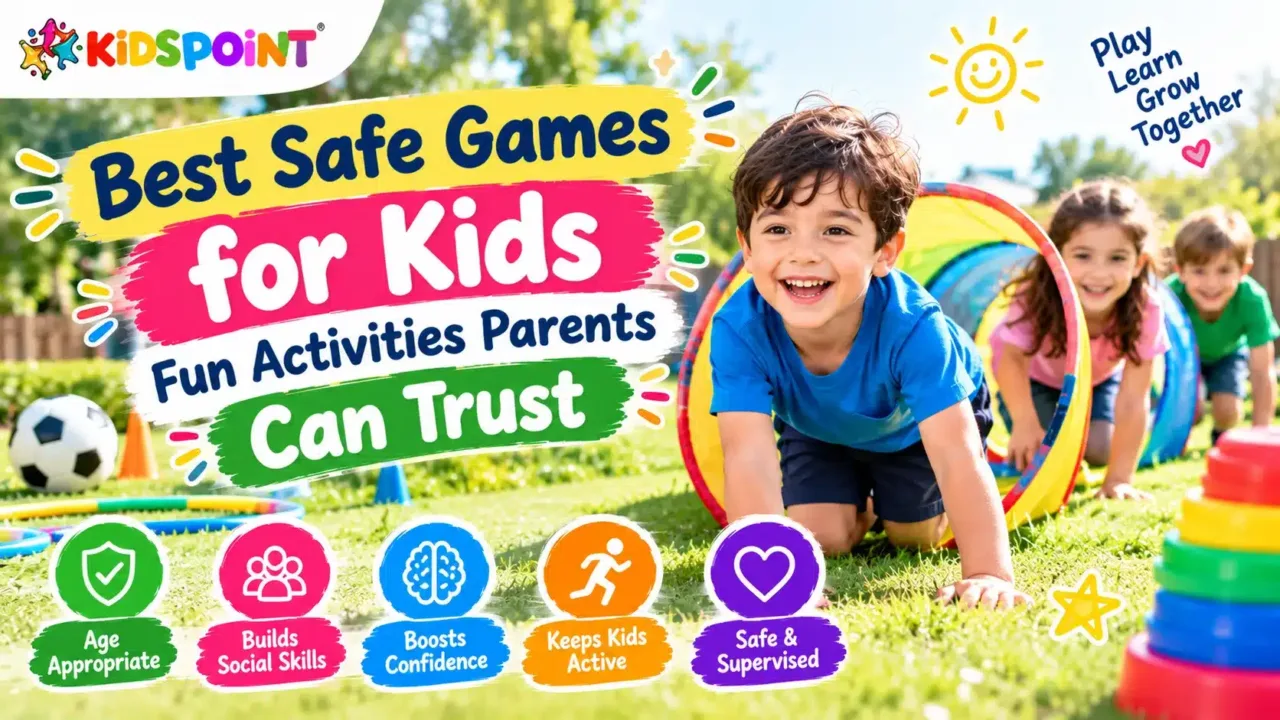
Play is one of the most important ways children explore the world. Through games, kids can develop physical coordination, communication skills, creativity, problem-solving abilities, confidence, and independence. However, parents naturally want to know that the games their children play are appropriate for their age and environment.
The good news is that safe games for kids do not have to be boring. With the right activities, children can run, think, imagine, cooperate, and laugh while parents feel more comfortable about their play environment.
From simple indoor games to supervised outdoor activities, there are plenty of options for children of different ages and abilities. The key is choosing games that match a child’s developmental stage, using safe equipment, setting clear rules, and providing appropriate supervision.
In this guide, we’ll explore fun and practical games that parents can trust while also sharing simple safety tips for making playtime more enjoyable.
What Makes a Game Safe for Kids?
Before choosing an activity, it helps to understand what makes a game suitable for children. A safe game should be appropriate for the child’s age, physical abilities, environment, and level of supervision.
Some important factors include:
- Age-appropriate rules and challenges
- Safe and stable playing surfaces
- Equipment that is suitable for children
- Enough space to move without unnecessary hazards
- Clear instructions
- Appropriate adult supervision when needed
- Rules that discourage dangerous pushing, hitting, or rough behavior
- Materials that are non-toxic and designed for children’s use
Safety does not mean removing every challenge from play. Children can still explore, compete, experiment, and take reasonable age-appropriate risks while learning how to make good decisions.
15 Best Safe Games for Kids
1. Simon Says
Simon Says is a classic game that requires almost no equipment.
One child or adult becomes “Simon” and gives instructions such as:
- “Simon says touch your toes.”
- “Simon says clap your hands.”
- “Simon says turn around.”
Players should only follow an instruction when it begins with “Simon says.”
This game encourages listening, attention, memory, and body awareness. It can easily be played indoors or outdoors as long as children have enough room to move safely.
Safety Tip
Keep movements simple and avoid instructions that involve climbing, jumping from heights, or moving into unsafe areas.
2. Freeze Dance
Freeze dance combines music and movement in a fun way.
Play music while children dance. When the music stops, everyone freezes. Start the music again, and the dancing continues.
This activity can help children practice:
- Balance
- Coordination
- Listening
- Body control
- Rhythm
- Self-regulation
Safety Tip
Use a clear, uncluttered area and encourage children to keep enough space between one another.
3. Treasure Hunt
A treasure hunt can turn an ordinary room, backyard, or classroom into an exciting adventure.
Hide safe objects in easy-to-reach places and provide children with simple clues. Younger children can look for colors, shapes, or familiar objects, while older kids can solve short riddles.
Treasure hunts encourage observation, memory, reading, teamwork, and problem-solving.
Safety Tip
Keep all hiding places at ground level. Avoid areas near stairs, roads, water, electrical equipment, or unstable furniture.
4. Indoor Scavenger Hunt
An indoor scavenger hunt is particularly useful when weather prevents outdoor play.
Create a list such as:
- Something blue
- Something soft
- Something round
- A favorite book
- Something that starts with the letter B
Children can search for the objects and check them off their lists.
Why Kids Love It
It turns everyday household objects into part of a game and encourages children to observe their surroundings.
Safety Tip
Don’t include objects that are sharp, fragile, very small, or otherwise unsuitable for the child’s age.
5. Balloon Volleyball
Balloon volleyball provides the excitement of a ball game with a softer object.
Use a balloon as the “ball” and create an imaginary net or use a low, safe divider. Children try to keep the balloon from touching their side.
The game supports hand-eye coordination, movement, and cooperation.
Safety Tip
Supervise younger children around balloons and remove broken balloon pieces immediately.
6. Follow the Leader
Follow the Leader is simple, flexible, and great for groups.
One child or adult becomes the leader while everyone else copies their movements. The leader might:
- March
- Clap
- Walk slowly
- Stretch
- Pretend to be an animal
- Move like a robot
Children can take turns being the leader.
This game encourages creativity, confidence, observation, and physical activity.
7. Animal Walks
Animal walks invite children to pretend they are different animals.
For example:
- Hop like a rabbit
- Walk slowly like a turtle
- Stretch like a cat
- Waddle like a penguin
- Stomp like an elephant
This is an imaginative way to get children moving.
Safety Tip
Use movements that suit the child’s age and ability. Avoid slippery surfaces and crowded areas.
8. Red Light, Green Light
This classic outdoor game is excellent for practicing listening and stopping on command.
One person is the caller. When they say “green light,” children move forward. When they say “red light,” everyone stops.
Older children can enjoy adding additional commands, such as yellow light for walking slowly.
Safety Tip
Play in a safe, enclosed area away from traffic, driveways, ponds, and other hazards.
9. Nature I-Spy
Nature I-Spy is a calm and educational game that works well outdoors.
A parent or teacher can say:
“I spy something green.”
Children look around and try to identify the object.
You can make the game more educational by asking children to find:
- Different leaf shapes
- Flowers
- Rocks
- Birds
- Clouds
- Natural textures
Safety Tip
Teach children to observe nature without touching unknown plants, insects, or animals.
10. Sidewalk Chalk Games
Sidewalk chalk can create many different games.
Children can draw:
- Hopscotch
- Number paths
- Alphabet trails
- Mazes
- Shapes
- Roads for toy cars
- Simple obstacle patterns
Chalk activities combine creativity with movement and learning.
Safety Tip
Choose a dry, level surface away from traffic. Make sure the area is suitable for walking and playing.
11. Puzzle Race
Puzzle races can be played individually or in teams.
Give children age-appropriate puzzles and see who can complete them first. You can also turn the activity into a cooperative challenge where everyone works together to finish one large puzzle.
This game develops:
- Problem-solving
- Concentration
- Visual reasoning
- Patience
- Teamwork
Safety Tip
Choose puzzle pieces that are appropriate for the child’s age and keep small pieces away from children who may put objects in their mouths.
12. Building Challenge
Building games allow children to create structures using safe materials such as large building blocks, cardboard boxes, or age-appropriate construction toys.
Try challenges like:
- Build the tallest tower.
- Make a house for a toy.
- Build a bridge.
- Create a pretend city.
- Make a vehicle.
The activity encourages creativity and engineering-style thinking.
Safety Tip
Use stable, child-appropriate materials. Avoid allowing children to climb on structures they build.
13. Storytelling Circle
Not every safe game needs to involve running.
In a storytelling circle, one person begins a story with a sentence. Each player adds another sentence until the group creates a complete story.
For example:
“One morning, a tiny dragon opened the door…”
The next child continues the adventure.
This game supports language development, imagination, listening, and communication.
Safety Tip
There are no special physical hazards, making this a useful quiet-time activity for many settings.
14. Memory Matching Game
Memory games are easy to play at home or in a classroom.
Place matching cards face down. Children take turns turning over two cards at a time. If they find a matching pair, they keep it or follow the rules you’ve established.
You can also create homemade cards using:
- Animals
- Colors
- Shapes
- Letters
- Numbers
Safety Tip
Use appropriately sized cards and supervise younger children when games contain small pieces.
15. Obstacle Course on the Ground
A simple obstacle course can be an exciting outdoor or indoor activity when designed carefully.
Children might:
- Walk around cones
- Step over a low line
- Crawl through a large cardboard box
- Toss a soft ball into a basket
- Walk along a marked path
The goal is to create movement challenges without introducing unnecessary height or instability.
Safety Tip
Keep obstacles low and stable. Avoid elevated platforms, slippery surfaces, sharp objects, and unstable furniture.
Safe Indoor Games for Kids
Indoor games are especially useful during rainy days, very hot or cold weather, or when outdoor space isn’t available.
Some easy choices include:
- Simon Says
- Freeze Dance
- Storytelling
- Memory matching
- Indoor scavenger hunts
- Building challenges
- Drawing games
- Puzzles
- Charades
- Musical games
Parents can make these activities even more engaging by connecting them to learning. For example, a scavenger hunt can include letters, numbers, colors, or shapes.
The best indoor games generally use an uncluttered space and avoid activities that encourage children to run near furniture, glass, stairs, or other household hazards.
Safe Outdoor Games for Kids
Outdoor play gives children more room to move and explore.
Good options include:
- Red Light, Green Light
- Nature I-Spy
- Sidewalk chalk
- Follow the Leader
- Simple relay games
- Beanbag toss
- Bubble games
- Nature scavenger hunts
- Ground-level obstacle courses
Before starting, check the area for hazards such as broken objects, sharp materials, traffic, standing water, unstable equipment, or excessive heat.
Educational Games Can Be Safe and Fun
Safe games can also support children’s learning.
Parents and educators can turn ordinary games into educational experiences.
For example:
- Math: Count objects during a scavenger hunt or create a number-based obstacle course.
- Language: Use storytelling games, word searches, rhyming challenges, or letter hunts.
- Science: Look for different natural objects and discuss their characteristics.
- Art: Create sidewalk chalk drawings or design homemade game boards.
- Social skills: Use cooperative games where children have to communicate and work together.
Learning does not always have to feel like a lesson. When children are interested and engaged, games can naturally encourage curiosity.
How Parents Can Make Games Safer
Even simple activities benefit from thoughtful preparation.
Check the Playing Area
Look around before starting. Remove obvious hazards and make sure children have enough space.
Choose Age-Appropriate Activities
A game suitable for a school-age child may not be suitable for a toddler. Consider physical abilities, attention span, understanding of rules, and the materials involved.
Explain the Rules
Simple rules can prevent confusion and reduce unsafe behavior. Tell children what they can do and what they should avoid.
Use Suitable Equipment
Choose equipment designed for children when possible. Inspect items regularly for damage.
Supervise When Needed
Young children often require close supervision. Older children may be able to manage certain activities more independently, but supervision should still match the activity and environment.
Teach Children to Stop When Something Feels Unsafe
Children should know that they can pause a game if something feels uncomfortable, confusing, or dangerous.
Why Safe Games Matter for Children’s Development
Safe play provides more than entertainment.
Physical Development
Movement games can help children practice balance, coordination, body control, and general physical skills.
Cognitive Development
Puzzles, memory games, scavenger hunts, and building activities encourage children to think, remember, compare, and solve problems.
Social Development
Group games teach children how to cooperate, communicate, take turns, and handle different outcomes.
Emotional Development
Games can help children practice patience, confidence, flexibility, and self-control.
Creativity
Pretend games, storytelling, drawing activities, and building challenges give children opportunities to create their own ideas.
What About Competitive Games?
Competition isn’t automatically unsafe or inappropriate. Many children enjoy friendly competitions, races, and challenges.
However, adults can help keep competitive games positive by emphasizing:
- Fair play
- Taking turns
- Respect
- Encouragement
- Following rules
- Accepting different outcomes
For younger children, cooperative games may sometimes be easier because the focus is on completing a challenge together rather than defeating another player.
The goal should be to make play enjoyable rather than making winning the only measure of success.
How to Choose the Right Game for Your Child
There isn’t one perfect game for every child.
When choosing an activity, consider:
- Age: Is the game developmentally appropriate?
- Interests: Does your child enjoy movement, creativity, puzzles, stories, or exploration?
- Space: Do you have a safe indoor or outdoor area?
- Equipment: Are the required materials appropriate and in good condition?
- Group size: Is it better for one child, a small group, or the whole family?
- Supervision: How closely does the activity need to be supervised?
A game that matches a child’s interests and abilities is more likely to be enjoyable and successful.
Frequently Asked Questions
1. What are the safest games for kids?
Some safe games for kids include Simon Says, Freeze Dance, storytelling, memory matching, scavenger hunts, nature I-Spy, sidewalk chalk games, and age-appropriate building activities. The safest choice depends on the child’s age, abilities, environment, and required supervision.
2. What games can kids play indoors safely?
Children can play many indoor games, including puzzles, Simon Says, storytelling games, memory matching, charades, drawing challenges, building activities, and indoor scavenger hunts. Clear space and age-appropriate materials can help create a safer environment.
3. Are outdoor games safe for young children?
Outdoor games can be safe when children play in an appropriate environment with suitable supervision. Adults should check the area for hazards and choose activities that match children’s ages and physical abilities.
4. How can I make children’s games safer?
Check the playing area, remove obvious hazards, use age-appropriate equipment, explain rules clearly, provide appropriate supervision, and choose activities that match the child’s abilities.
5. What are good safe games for toddlers?
Simple activities such as supervised movement games, music and dancing, large building blocks, simple matching activities, and age-appropriate sensory play can be good choices. Avoid games containing small pieces that could be unsafe for young children.
6. Can educational games also be safe?
Yes. Educational games such as puzzles, memory games, counting activities, scavenger hunts, storytelling, and building challenges can combine learning with safe, enjoyable play.
7. Are competitive games appropriate for children?
Competitive games can be appropriate when they are age-appropriate and focused on fair play. Adults can encourage children to take turns, follow rules, respect others, and handle different outcomes positively.
8. What should parents consider before choosing a game?
Parents should consider the child’s age, physical and developmental abilities, interests, available space, equipment, group size, and supervision requirements.
9. What are safe games that require no equipment?
Simon Says, Follow the Leader, Freeze Dance, storytelling, animal walks, charades, and Red Light, Green Light can require little or no equipment, depending on how they are played.
10. Why is safe play important for children?
Safe play gives children opportunities to move, explore, communicate, solve problems, express creativity, and develop social and emotional skills while reducing avoidable hazards in their environment.
Bring More Fun and Learning Into Every Day With The Kids Point
At The Kids Point, we believe children learn best when curiosity and fun come together. Our team of passionate educators, writers, and parents creates engaging stories, activities, educational articles, and interactive resources designed with children’s interests and developmental needs in mind. Safety, educational value, creativity, and inclusivity are at the heart of what we do. Explore The Kids Point for more ideas that can help children explore, learn, and grow through enjoyable activities, and join our community to continue the journey with us.