

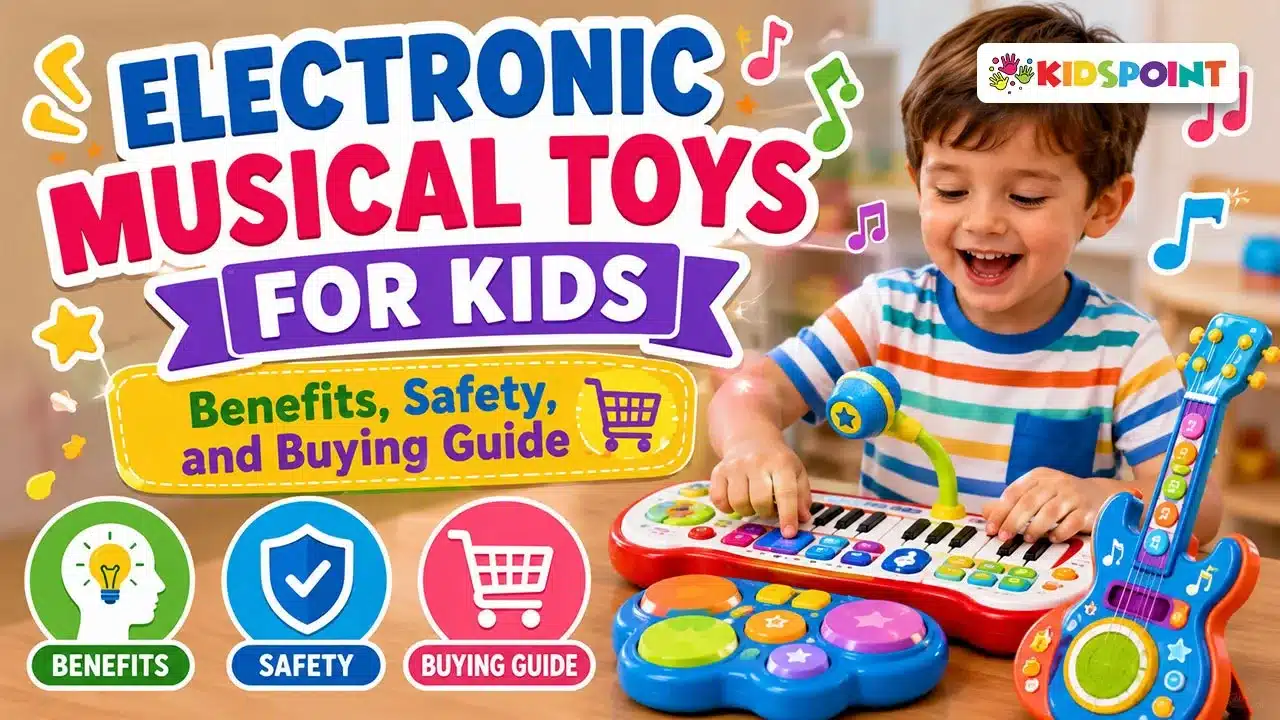
In today’s digital learning era, electronic musical toys for kids are becoming an essential part of early childhood development. These toys not only entertain children but also introduce them to rhythm, sound recognition, creativity, and basic musical skills from an early age. Parents across the USA are increasingly choosing music-based learning tools because they combine fun with education in a powerful way.
This guide will help you understand everything about electronic musical toys for kids, including their benefits, safety considerations, types, and how to choose the best option. Whether you are a parent, preschool teacher, or caregiver, this article will help you make informed decisions that support your child’s growth and learning journey.
What Are Electronic Musical Toys for Kids?
Electronic musical toys for kids are interactive play instruments designed to produce sounds, melodies, and rhythms using electronic components. Unlike traditional toys, these devices often include features like pre-recorded songs, touch-sensitive keys, flashing lights, and multiple sound effects to engage children more effectively.
These toys range from mini keyboards and electronic drums to interactive guitars and sound boards. Many modern versions also come with learning modes that teach kids about musical notes, patterns, and coordination.
In simple terms, they are educational musical tools that make learning music easy, enjoyable, and accessible for young children. They help bridge the gap between playtime and structured learning, allowing kids to explore sound in a creative and hands-on way.
Benefits of Electronic Musical Toys for Kids
The growing popularity of electronic musical toys for kids is backed by their strong developmental benefits. These toys are more than just entertainment; they play a key role in shaping cognitive, emotional, and social skills in early childhood.
One of the biggest benefits is cognitive development. Studies show that children exposed to music early tend to have better memory, improved problem-solving skills, and enhanced attention span. Musical interaction stimulates both sides of the brain, helping kids process information more efficiently.
Another major advantage is emotional expression. Music allows children to express feelings they may not yet be able to put into words. This improves emotional intelligence and helps reduce stress or anxiety in young learners.
Additionally, these toys improve motor skills. Pressing keys, tapping drums, or interacting with touch-sensitive panels enhances hand-eye coordination and fine motor development. Over time, children become more confident in their physical and sensory abilities.
Social skills also improve when kids play music together. Group play encourages sharing, teamwork, and communication. This is especially useful in preschool and early school environments.
Key benefits include:
- Enhances creativity and imagination
- Improves memory and concentration
- Strengthens motor and coordination skills
- Encourages emotional expression
- Builds early music appreciation
Types of Electronic Musical Toys for Kids
There are many types of electronic musical toys for kids available in the market today, each designed for different age groups and learning levels. Understanding these types helps parents choose the most suitable option.
One popular type is the electronic keyboard. These keyboards often come with light-up keys, demo songs, and learning modes that guide children step-by-step. They are perfect for introducing basic musical concepts.
Electronic drum sets are another favorite. They allow kids to explore rhythm and beats in a fun, energetic way. Many drum sets include adjustable volume settings and headphone support for quieter practice.
Interactive musical mats are ideal for toddlers. These large floor mats produce sounds when stepped on, making them great for physical activity combined with sound learning.
There are also electronic guitars and string instruments designed for kids. These toys often include buttons that simulate chords and melodies, helping children understand string instruments in a simplified way.
Other examples include:
- Musical learning tablets
- Sound effect boards
- Singing microphones for kids
- Animal-themed sound toys
Each of these options falls under the category of best musical instruments for kids, depending on age and learning goals.
Safety Considerations for Parents
When choosing electronic musical toys for kids, safety should always be a top priority. Since these toys are designed for young children, it is important to ensure they meet proper safety standards and are age-appropriate.
First, check for non-toxic materials. Children often put toys in their mouths, so materials should be BPA-free and safe for long-term use. Always look for certified safety labels when purchasing.
Second, consider volume control features. Loud sounds can potentially affect a child’s hearing over time. Good-quality musical toys include adjustable volume settings or headphone options.
Third, inspect battery compartments. They should be securely closed with screws to prevent accidental access. Loose batteries can be dangerous if swallowed.
Additionally, choose toys with smooth edges and durable construction to prevent injuries during play.
Safety checklist:
- BPA-free and child-safe materials
- Adjustable sound levels
- Secure battery compartments
- Age-appropriate design
- Durable and non-breakable parts
By following these precautions, parents can ensure a safe and enjoyable musical experience for their children.
How to Choose the Best Electronic Musical Toys for Kids
Selecting the right electronic musical toys for kids requires careful consideration of several factors. Not all toys are created equal, so making an informed choice can greatly improve your child’s learning experience.
Start by considering the child’s age. Younger children need simpler toys with fewer buttons and softer sounds, while older kids can handle more complex instruments with learning features.
Next, look at educational value. The best toys are those that teach rhythm, notes, or coordination while keeping the child engaged. Many modern toys include interactive learning modes that are highly effective.
Durability is another important factor. Kids tend to play roughly, so choose toys made from strong materials that can withstand regular use.
Also, consider portability. Lightweight and compact toys are easier for children to carry and use anywhere, whether at home or during travel.
Buying guide tips:
- Match toy complexity with age group
- Choose toys with educational features
- Prioritize durability and safety
- Look for adjustable sound settings
- Select trusted brands with good reviews
By following these steps, parents can confidently choose the most suitable educational musical toys for kids.
Educational Impact of Musical Toys
Electronic musical toys for kids play a significant role in early education. They support structured learning while keeping the experience fun and engaging. Music-based learning is widely used in preschool education because it helps children understand patterns, sequences, and rhythm naturally.
These toys also support language development. Listening to songs and repeating lyrics improves vocabulary and pronunciation skills. In addition, rhythm-based activities strengthen mathematical thinking by introducing concepts like timing, counting, and patterns.
Teachers and child development experts often recommend musical play as part of daily learning routines because it enhances focus and classroom participation.
Overall, these toys create a balanced environment where education and entertainment work together effectively.
Maintenance and Usage Tips
To ensure long-lasting performance of electronic musical toys for kids, proper maintenance is important. Regular cleaning helps keep the toy hygienic and safe for use.
Always use a soft, dry cloth to clean surfaces. Avoid using water directly on electronic parts. Replace batteries when needed and store toys in a dry place to prevent damage.
Encourage children to use toys responsibly. Teaching them how to handle instruments carefully builds discipline and respect for their belongings.
Frequently Asked Questions (FAQs)
Are electronic musical toys for kids safe for toddlers?
Yes, most electronic musical toys for kids are designed with child safety standards, including non-toxic materials and volume control features.
What age is best for musical toys?
Children as young as 1 year old can use simple musical toys, while more advanced electronic instruments are suitable for ages 3 and above.
Do musical toys help with learning development?
Yes, they improve cognitive skills, memory, coordination, and early language development in children.
What are the best musical instruments for kids?
Popular options include electronic keyboards, drum pads, musical mats, and interactive sound boards.
Can electronic musical toys improve creativity?
Absolutely. They encourage children to explore sounds, create rhythms, and express themselves creatively.
Electronic musical toys for kids are powerful learning tools that combine entertainment with education. They help children develop cognitive abilities, emotional expression, creativity, and motor skills while keeping them engaged in fun activities.
By choosing the right toy based on age, safety, and educational value, parents can significantly support their child’s early development. Whether at home or in preschool, these toys create a strong foundation for lifelong learning and musical appreciation.
At The Kids Point, we are committed to helping parents find high-quality educational and fun resources for children. Explore more learning ideas and products at The Kids Point to support your child’s growth journey today.