

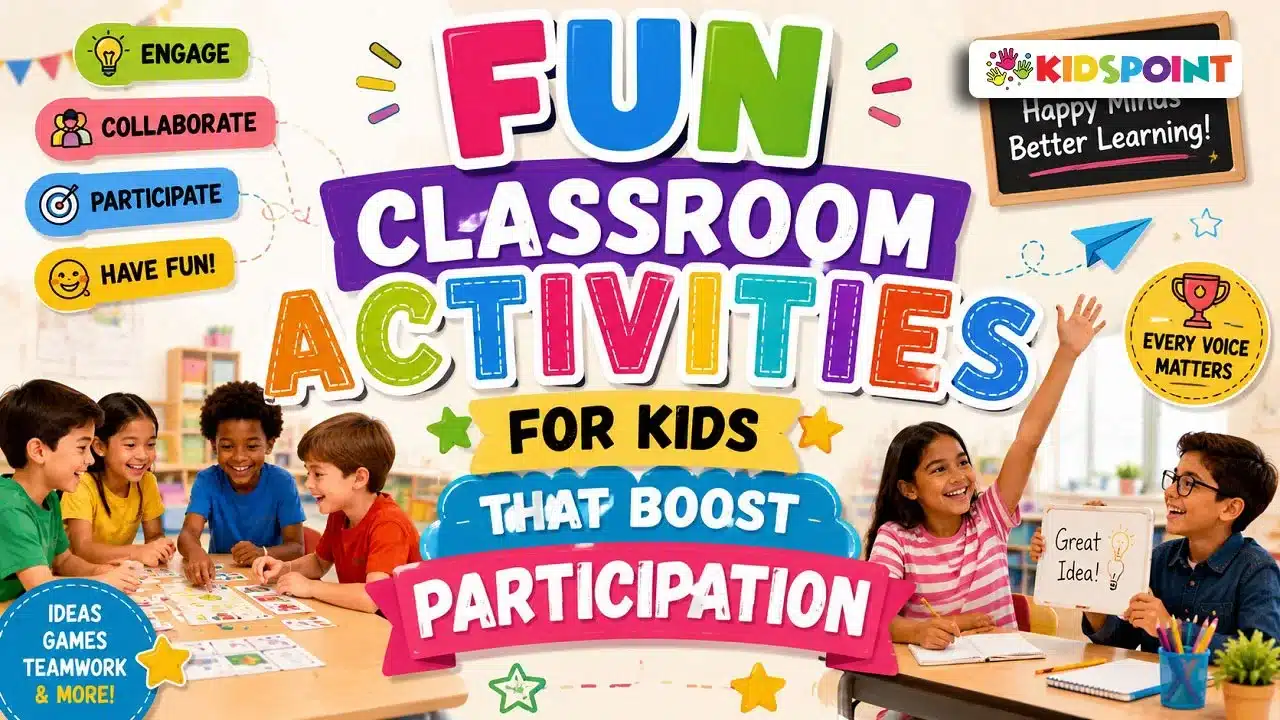
Creating an engaging learning environment is essential for modern education, especially when it comes to maintaining student attention and participation. Teachers and parents are constantly searching for fun classroom activities for kids that not only entertain but also improve focus, collaboration, and learning outcomes. When children are actively involved in lessons, they retain information better and develop stronger social and cognitive skills.
This article explores a wide range of classroom activities for kids designed to boost participation in meaningful ways. Whether you are a teacher in a preschool, elementary school, or homeschooling environment, you will discover practical strategies, creative ideas, and expert-backed insights to make learning more interactive. From classroom games for kids to group-based challenges, we will cover everything needed to transform a traditional classroom into an exciting learning space.
Why Fun Classroom Activities for Kids Matter in Modern Education
In today’s education system, passive learning is no longer enough. Children learn best when they are actively engaged in the process. Fun classroom activities for kids play a key role in building curiosity and motivation. These activities are not just “break time games” but structured learning tools that improve comprehension and participation.
Research in child development shows that interactive learning improves memory retention by up to 75% compared to lecture-based methods. When students participate in hands-on tasks, they develop problem-solving abilities, communication skills, and teamwork naturally.
Some key reasons why these activities matter include:
- Encouraging active participation instead of passive listening
- Improving emotional engagement in lessons
- Helping children understand complex topics easily
- Supporting different learning styles (visual, auditory, kinesthetic)
- Reducing classroom boredom and distraction
By integrating structured play into lessons, teachers create a balanced environment where learning feels natural and enjoyable.
Benefits of Classroom Games for Kids and Interactive Learning
Using classroom games for kids is one of the most effective ways to enhance participation. These games are not only fun but also deeply educational when designed properly. They encourage teamwork, healthy competition, and critical thinking.
One of the biggest benefits is improved focus. When children are engaged in a game-based learning activity, their attention span increases significantly. They are more likely to absorb information without feeling pressured.
Additional benefits include:
- Improved social skills: Kids learn how to communicate and collaborate
- Better academic performance: Interactive learning improves understanding
- Boosted confidence: Students feel more comfortable expressing ideas
- Enhanced creativity: Activities encourage thinking outside the box
- Positive classroom environment: Learning becomes enjoyable rather than stressful
For example, a simple vocabulary quiz game can turn into an exciting competition where students actively participate instead of memorizing silently. This shift in engagement can dramatically improve learning outcomes over time.
Types of Fun Classroom Activities for Kids That Boost Engagement
There are many types of fun classroom activities for kids that teachers can use depending on the subject, age group, and learning objectives. The key is to keep activities structured yet flexible enough to maintain interest.
Some popular types include:
1. Group Learning Games
These activities encourage teamwork and collaboration. Students work in small groups to solve puzzles, answer questions, or complete tasks together. This helps build communication and leadership skills.
2. Role-Playing Activities
Role-playing allows children to act out real-life scenarios or stories. It is especially useful in subjects like history, literature, and social studies.
3. Interactive Quizzes
Quizzes with a game-like format make learning competitive and exciting. Teachers can use points, rewards, or team challenges to increase participation.
4. Creative Arts Activities
Drawing, storytelling, and craft-based tasks allow children to express themselves while learning important concepts.
5. Movement-Based Learning
Activities like classroom scavenger hunts or “find and match” games keep students physically active while learning.
Each of these methods can be adapted to suit different classroom environments, making learning more dynamic and enjoyable.
How Teachers Can Implement Effective Classroom Activities for Kids
To successfully use classroom activities for kids, teachers need a structured approach. Simply adding games is not enough; the activities must align with learning objectives.
Here is a step-by-step guide:
- Define the learning goal
- Identify what students should learn from the activity.
- Choose the right activity type
- Select a game or task that matches the subject and age group.
- Set clear rules
- Ensure students understand instructions before starting.
- Encourage participation
- Make sure every student is involved, not just a few active ones.
- Evaluate outcomes
- After the activity, discuss what students learned.
Teachers should also rotate activities regularly to avoid repetition. Variety keeps students interested and engaged throughout the academic year.
Age-Specific Fun Classroom Activities for Kids
Different age groups require different approaches when it comes to fun classroom activities for kids. Younger children need simple, visual, and movement-based tasks, while older students benefit from strategy and problem-solving games.
Preschool (Ages 3–5)
- Color matching games
- Story-based role play
- Shape recognition activities
- Simple music and movement games
Elementary School (Ages 6–10)
- Group quizzes
- Word-building games
- Math puzzles and challenges
- Interactive storytelling
Middle School (Ages 11–13)
- Debate activities
- Science experiments
- Team-based competitions
- Creative writing challenges
By tailoring activities to age levels, teachers can ensure maximum participation and learning effectiveness.
Tips to Maximize Participation in Classroom Games for Kids
Even the best-designed classroom games for kids may fail if not implemented properly. Teachers must focus on engagement strategies that encourage all students to take part.
Here are some expert tips:
- Keep instructions simple and clear
- Use rewards or recognition systems
- Encourage teamwork rather than individual competition
- Rotate leadership roles among students
- Use positive reinforcement to build confidence
- Ensure inclusivity for all learning abilities
Avoid making activities overly complex or time-consuming, as this can reduce enthusiasm and participation. The goal is to make learning enjoyable and stress-free.
Frequently Asked Questions (FAQs)
What are the best fun classroom activities for kids?
Some of the best activities include group games, quizzes, storytelling, role-playing, and hands-on creative tasks that encourage participation.
How do classroom activities improve learning?
They improve learning by increasing engagement, boosting memory retention, and helping students understand concepts through practical experience.
Can classroom games for kids improve academic performance?
Yes, studies show that interactive learning activities can significantly improve focus, understanding, and academic results.
What age group benefits most from classroom activities for kids?
All age groups benefit, but activities should be tailored to developmental stages for maximum effectiveness.
How often should teachers use fun activities in class?
Ideally, teachers should include interactive activities several times a week to maintain engagement and motivation.
Are classroom activities suitable for online learning?
Yes, many activities can be adapted for virtual classrooms using digital tools and interactive platforms.
Incorporating fun classroom activities for kids into daily lessons is one of the most effective ways to enhance participation, engagement, and academic success. These activities transform traditional learning into an interactive experience where students are motivated to participate and explore.
Whether it is through group games, creative tasks, or interactive quizzes, the goal is to make learning meaningful and enjoyable. Teachers and parents who consistently apply these strategies will notice improved confidence, collaboration, and performance among children.
For more expert-designed learning resources and engaging educational solutions, visit The Kids Point. At The Kids Point, we are committed to creating innovative, child-friendly learning experiences that help kids grow, learn, and thrive in a fun and supportive environment.