

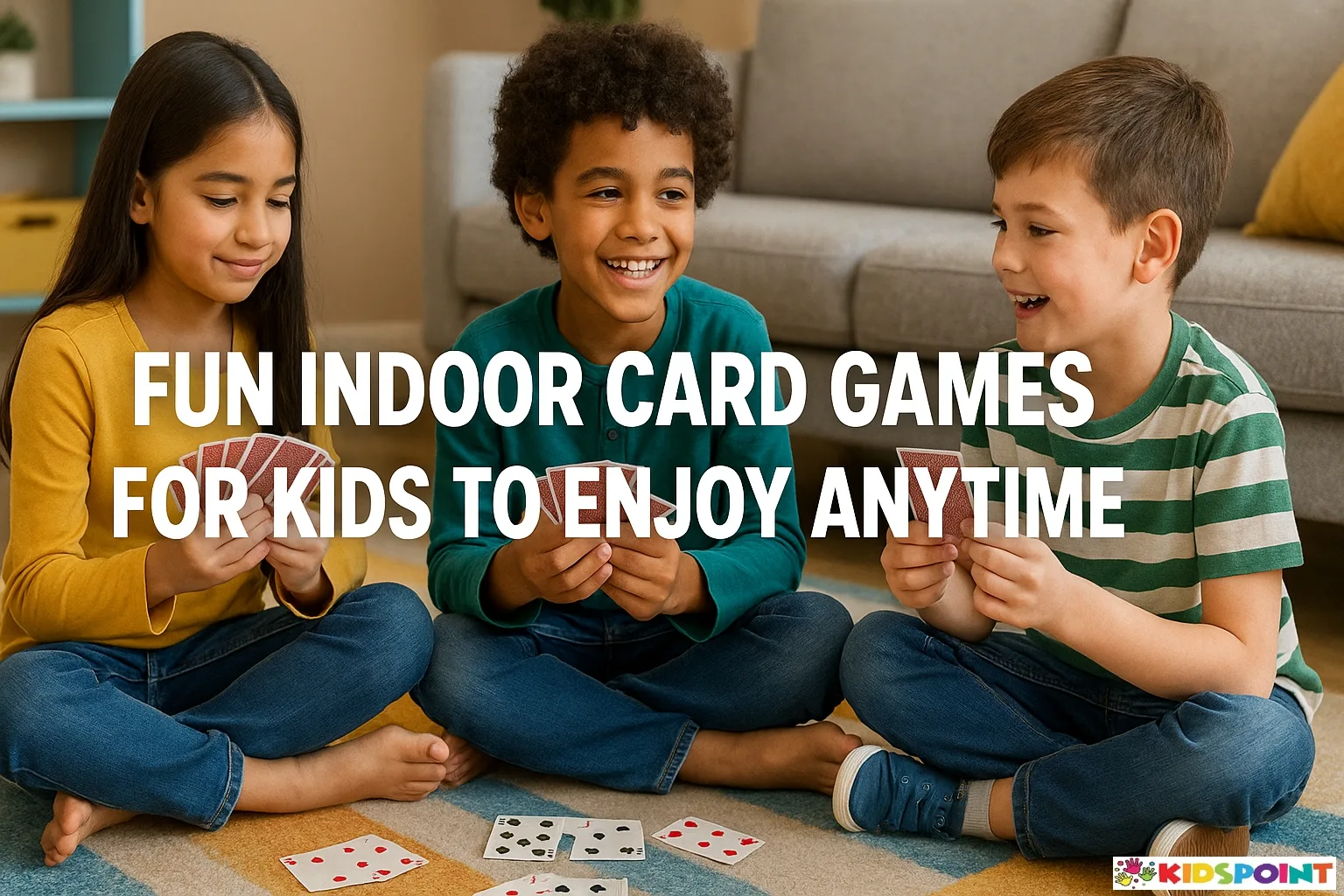
When it’s raining outside, too cold to play in the park, or your kids just need some screen-free fun, indoor card games are the perfect solution. They’re entertaining, educational, and incredibly easy to set up. With just a simple deck of cards—or a few themed kids’ card sets—you can keep little ones engaged for hours.
At The Kids Point, we believe in learning through play. That’s why we’ve put together this comprehensive guide on the best fun indoor card games for kids to enjoy anytime. Whether your children are preschoolers learning numbers or older kids mastering strategy, these games are designed to spark creativity, teamwork, and cognitive skills—all while having a blast.
Why Card Games Are Perfect for Kids
Before jumping into the fun, let’s talk about why card games are such a great choice for children.
Boost Cognitive Skills: Card games help develop memory, pattern recognition, and logical thinking. Kids learn to strategize, match, and count—all valuable early learning skills.
Encourage Social Interaction: These games teach patience, turn-taking, and communication. Whether it’s playing with siblings, friends, or parents, card games create shared laughter and bonding moments.
Portable and Affordable Fun: Unlike board games that need space and setup, a deck of cards fits right in your pocket. Perfect for travel, waiting rooms, or cozy indoor playdates.
Improve Emotional Control: Losing gracefully and celebrating wins are part of emotional learning. Card games gently teach kids how to manage emotions and practice sportsmanship.
Top Fun Indoor Card Games for Kids
Below are some of the most enjoyable, age-appropriate card games for kids that you can play indoors anytime. We’ve organized them by age group so you can find the perfect match for your family.
Go Fish (Ages 4 and Up)
Number of players: 2–6
What you need: A standard deck of 52 cards or themed “Go Fish” decks for kids
How to Play:
- Each player gets 5–7 cards.
- The goal is to collect four of a kind (e.g., four 3s).
- Players take turns asking others for a card they need.
- If the player has it, they must hand it over; if not, they say “Go Fish!”
- The asking player then draws a card from the pile.
Why Kids Love It: “Go Fish” is simple to learn and encourages memory and matching. Kids love the suspense of whether they’ll “go fish” or score a match!
Snap! (Ages 3 and Up)
Number of players: 2–6
What you need: Any deck of cards
How to Play:
- Deal all cards evenly.
- Players take turns placing one card face-up into a center pile.
- When two cards of the same rank appear consecutively, players shout “SNAP!”
- The first to shout collects the pile.
Why It’s Great: Snap improves quick reflexes and visual recognition. It’s fast-paced, noisy, and perfect for short indoor bursts of fun.
Memory Match (Ages 3–7)
Number of players: 2–4
What you need: A deck with pairs (can use animal cards or picture cards)
How to Play:
- Lay all cards face-down in rows.
- Players take turns flipping over two cards, trying to find a match.
- If they match, the player keeps them and goes again. If not, it’s the next player’s turn.
Why It’s Educational: This game strengthens concentration and memory recall, especially useful for younger kids developing cognitive skills.
Crazy Eights (Ages 6 and Up)
Number of players: 2–5
What you need: Standard deck of cards
How to Play:
- Deal 5–7 cards to each player.
- The rest form a draw pile with one card face-up as the starting pile.
- Players take turns matching the top card by number or suit.
- Eights are “wild cards” and can be played on any card.
Goal: Be the first player to get rid of all your cards!
Why It’s Fun: Kids enjoy the flexibility of using wild cards to change the game. It teaches strategy and helps them learn suits and numbers easily.
Old Maid (Ages 4 and Up)
Number of players: 3–6
What you need: A special Old Maid deck or standard cards (remove one queen)
How to Play:
- Deal all cards.
- Players remove pairs from their hands.
- Everyone takes turns drawing one card from the player to their left.
- The player left holding the unmatched “Old Maid” card at the end loses.
Why Kids Love It: Old Maid mixes humor and suspense, making it perfect for family game night. Plus, it teaches matching and deduction in a lighthearted way.
Uno (Ages 5 and Up)
Number of players: 2–10
What you need: Uno deck
How to Play:
- Each player gets 7 cards.
- Match the top discard card by color or number.
- Special cards like “Skip,” “Reverse,” and “Draw Two” make gameplay exciting.
- Don’t forget to shout “UNO!” when you have one card left!
Why It’s a Hit: Uno’s colorful cards and unpredictable twists keep everyone on their toes. It’s one of the most beloved indoor games for all ages.
War (Ages 6 and Up)
Number of players: 2
What you need: Standard deck
How to Play:
- Split the deck evenly between two players.
- Both flip the top card at the same time.
- The higher card wins and takes both.
- If cards tie, it’s “war”: each puts three cards face-down and one face-up; the higher card wins all.
Why It’s Educational: This game reinforces number values and comparison—ideal for early math learners.
Slapjack (Ages 5 and Up)
Number of players: 2–6
What you need: Standard deck
How to Play:
- Deal all cards evenly.
- Players take turns flipping cards into a center pile.
- When a Jack appears, everyone slaps the pile.
- The first to slap wins all the cards in the pile.
Why It’s a Favorite: Slapjack combines speed, excitement, and a touch of chaos—perfect for high-energy kids stuck indoors.
Animal Rummy (Ages 4 and Up)
Number of players: 2–6
What you need: Animal Rummy deck or themed set
How to Play:
- Similar to traditional Rummy but uses pictures instead of numbers.
- Players match cards of the same animal or complete “families.”
Why It’s Fun for Kids: Animal Rummy introduces kids to basic Rummy concepts with colorful visuals and adorable animals.
Spit (Ages 7 and Up)
Number of players: 2
What you need: Standard deck
How to Play:
- Each player has a stack and two center piles.
- Players race to play cards in sequence, either up or down, as quickly as possible.
- The game is fast-paced and filled with energy.
Why It’s Exciting: Spit challenges reaction time, focus, and sequencing skills—great for older kids who enjoy a thrill.
Educational Benefits of Playing Card Games Indoors
We advocate for purposeful play that enhances both fun and learning. Here’s what kids gain from these simple games:
Math Skills: Counting, adding, recognizing numbers, and comparing values become second nature through repetitive play.
Memory Development: Matching and remembering card positions sharpen both short-term and long-term memory.
Strategy and Critical Thinking: Games like Crazy Eights or Rummy help children anticipate outcomes and plan moves logically.
Emotional Growth: Learning to win and lose gracefully fosters emotional maturity and sportsmanship.
Fine Motor Skills: Shuffling, dealing, and flipping cards build hand-eye coordination and dexterity.
Tips for Making Indoor Card Game Time More Fun
- Set the Scene: Create a cozy indoor setup—maybe a blanket fort, bean bags, or a small table.
- Keep It Short: Young kids have shorter attention spans. Play 10–15 minute rounds.
- Add Prizes or Rewards: Small treats or stickers can motivate kids to participate.
- Use Themed Decks: Choose cards with animals, superheroes, or cartoons to keep it engaging.
- Rotate Games: Keep a weekly “card challenge” night to introduce variety.
DIY Card Game Ideas
Want to add a personal touch? Create your own card games with your kids!
Picture Match: Use index cards and draw pairs of matching shapes or animals. Mix and play just like “Memory.”
Color Hunt: Make cards in different colors. Kids draw cards and find an object of that color around the house.
Story Builders: Write simple words or pictures on cards. Players draw three and make up a short story using them.
These DIY versions not only save money but also nurture creativity and bonding time.
Digital Alternatives (When You’re on the Go)
If you can’t carry physical cards, try child-friendly digital versions of card games available on tablets or phones.
Apps like UNO Junior, Card Party, or Memory Kids offer safe, interactive options—but we always recommend balancing screen time with real-life play.
Safety and Age Appropriateness
When choosing card games for kids:
- Avoid small pieces with toddlers (choose jumbo cards).
- Supervise games involving fast reflexes like Slapjack.
- Encourage fairness—remind players that fun comes first!
Our safety and inclusivity are at the heart of all our play ideas.
Bringing Families Together Through Play
In today’s digital world, family connection is more important than ever. Card games bridge generations—grandparents, parents, and kids can all play together. The laughter, teamwork, and light competition create memories that last a lifetime.
When children engage in shared indoor play, they not only develop vital skills but also strengthen emotional bonds. That’s why we promote card games as part of a healthy playtime routine for every household.
FAQs – Fun Indoor Card Games for Kids
What are the best card games for young kids?
Games like Go Fish, Old Maid, and Memory Match are great for preschoolers because they’re simple, colorful, and easy to understand.
How can card games help my child learn?
Card games improve memory, counting, strategy, and social skills—all while keeping kids entertained and engaged.
Can I make my own card games at home?
Yes! You can create DIY card games using index cards or paper with pictures, words, or numbers to make learning more personal and fun.
What’s the ideal age for kids to start playing card games?
Children as young as 3 can start with matching or picture-based card games, while kids aged 6 and above can enjoy more complex ones like Crazy Eights or Uno.
Why are card games better than screen games?
Card games encourage real interaction, creativity, and critical thinking—helping kids develop focus and social connections without screen time.
Conclusion: Shuffle, Deal, and Let the Fun Begin!
Card games are timeless, affordable, and endlessly versatile. From the giggles of Go Fish to the strategy of Crazy Eights, these simple decks of paper offer infinite joy.
At The Kids Point, we encourage parents to make card games a regular part of their child’s playtime routine. They’re not just games—they’re tools for growth, imagination, and family connection.
So the next time you hear, “I’m bored!”—grab a deck, gather around, and let the fun begin. Because with The Kids Point, learning and laughter are always just a shuffle away.