

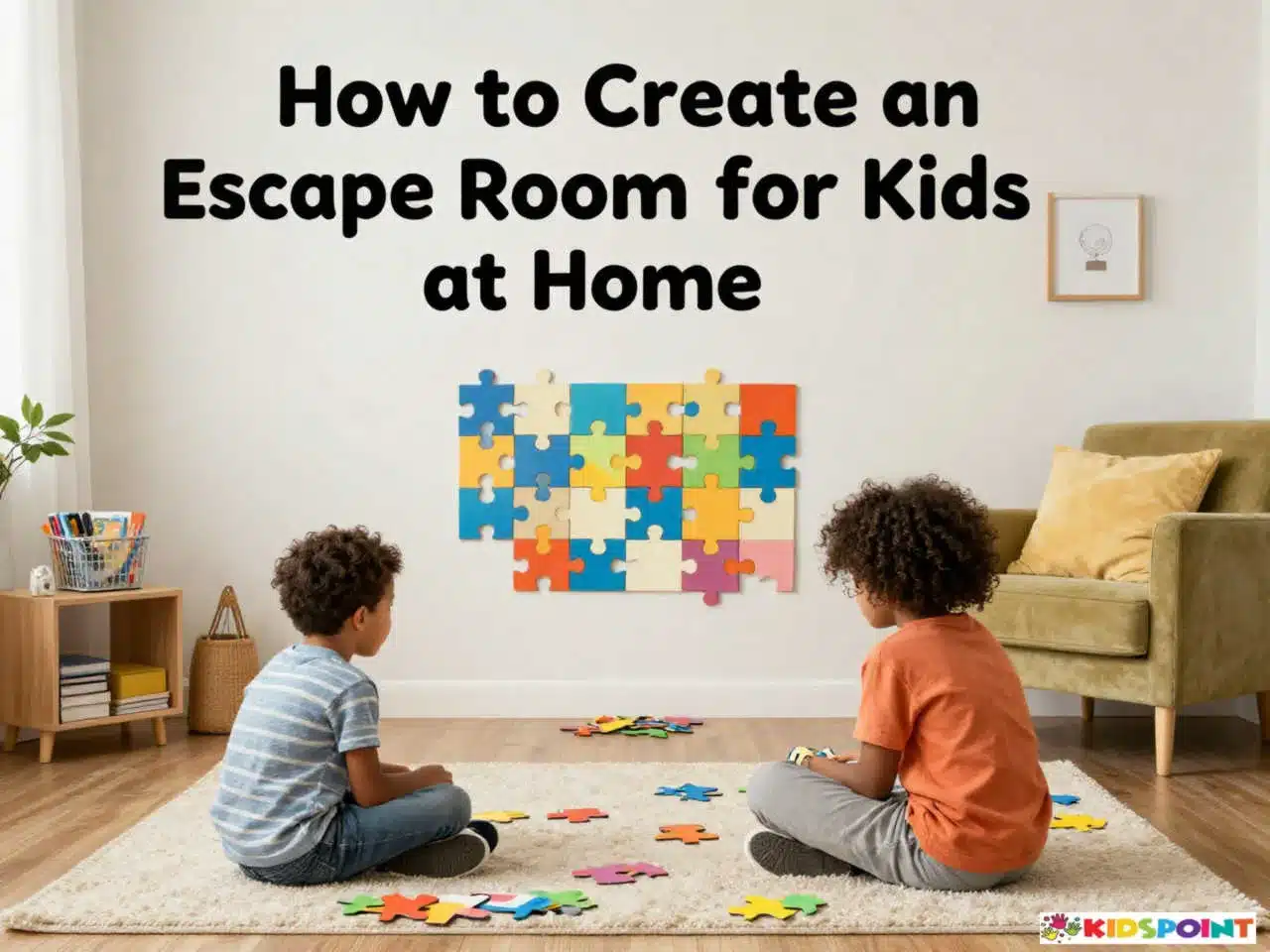
Creating memorable experiences for children does not always require expensive trips or elaborate party venues. With a little creativity, you can transform your living room, basement, or backyard into an exciting adventure filled with puzzles, teamwork, and fun. Learning how to create an escape room for kids at home is a fantastic way to encourage problem-solving, communication, and imaginative play while keeping children entertained for hours.
Whether you’re planning a birthday party, a family game night, a rainy-day activity, or a classroom-style learning experience, a DIY escape room offers endless possibilities. Best of all, you can customize every aspect to match your child’s age, interests, and skill level.
At The Kids Point, we believe that learning should always be exciting. This guide will walk you through everything you need to know about designing an unforgettable escape room experience that children will love.
What Is an Escape Room?
An escape room is an interactive game where participants solve a series of puzzles, clues, and challenges to complete a mission within a set amount of time. Unlike traditional games, escape rooms encourage players to think critically, communicate effectively, and work together.
For kids, the goal doesn’t necessarily have to be escaping from a locked room. Instead, they might:
- Find hidden treasure
- Rescue a magical creature
- Save the kingdom
- Recover a stolen object
- Solve a mystery
- Complete a secret mission
The adventure becomes even more enjoyable when wrapped in an exciting story.
Why Kids Love Escape Rooms
Children naturally enjoy mysteries and challenges. Escape rooms combine several activities they already love into one immersive experience.
Benefits include:
- Improves critical thinking
- Encourages teamwork
- Develops communication skills
- Boosts creativity
- Strengthens memory
- Promotes logical reasoning
- Builds confidence
- Reduces screen time
- Encourages active movement
- Makes learning enjoyable
Instead of passively watching entertainment, children become active participants in the story.
Choose the Perfect Theme
The theme is the foundation of your escape room. A fun story makes every puzzle feel meaningful.
Popular themes include:
Pirate Treasure Hunt: Players search for hidden clues to locate a pirate’s lost treasure before another pirate finds it.
Dinosaur Adventure: Children become paleontologists searching for dinosaur eggs before a volcano erupts.
Space Mission: Young astronauts repair a damaged spaceship and return safely to Earth.
Secret Spy Mission: Players decode secret messages and stop a fictional villain.
Wizard School: Kids solve magical riddles to unlock a powerful spell.
Jungle Expedition: Explorers discover ancient ruins filled with mysterious puzzles.
Superhero Rescue: Heroes work together to save the city from disaster.
Fairy Tale Mystery: Characters from famous fairy tales need help solving magical problems.
Choose a theme that matches your child’s interests to increase excitement.
Decide on the Story
Every great escape room begins with a simple but exciting storyline.
For example:
“An ancient treasure has disappeared from the pirate captain’s secret island. Only brave explorers can solve the clues, unlock the treasure chest, and recover the missing gold before sunset.”
A clear mission keeps children focused throughout the game.
Pick the Right Age Group
Puzzle difficulty should match children’s abilities.
Ages 4–6
Keep challenges simple.
Ideas include:
- Matching colors
- Shape recognition
- Picture puzzles
- Counting games
- Animal identification
- Easy scavenger hunts
Ages 7–9
Introduce basic reasoning.
Examples:
- Number codes
- Word searches
- Simple riddles
- Pattern recognition
- Hidden messages
Ages 10–12
Increase complexity.
Ideas include:
- Logic puzzles
- Decoding ciphers
- Multi-step clues
- Math challenges
- Puzzle combinations
Teens
Include advanced puzzles requiring planning, deduction, and teamwork.
Choose the Game Length
Children generally stay engaged with shorter games.
Recommended durations:
- Ages 4–6: 20–30 minutes
- Ages 7–9: 30–45 minutes
- Ages 10–12: 45–60 minutes
- Teens: 60–90 minutes
Avoid making the game too long, as younger players may lose focus.
Select Your Playing Area
You don’t need an entire house.
Great locations include:
- Living room
- Dining room
- Bedroom
- Basement
- Backyard
- Garage
- Classroom
- Community center
Use furniture creatively to hide clues.
Gather Simple Supplies
Most DIY escape rooms require only household items.
Useful materials include:
- Envelopes
- Sticky notes
- Colored paper
- Tape
- Scissors
- Markers
- Cardboard boxes
- Balloons
- String
- Toy locks
- Plastic keys
- Small treasure chest
- Flashlights
- Toy magnifying glass
- Puzzle books
- Plastic cups
- Dice
You probably already own many of these items.
Create Fun Puzzles
The puzzles are the heart of every escape room.
Mix different types to keep the game exciting.
Hidden Object Hunt
Hide important objects around the room.
Players must collect them before moving on.
Secret Messages
Write clues using invisible ink made with lemon juice or use a white crayon and reveal messages with watercolor paint.
Number Lock Puzzle
Assign numbers to clues that combine into a lock code.
Example:
Red balloon = 2
Blue box = 7
Green book = 5
Code = 275
Jigsaw Puzzle
Print a clue, cut it into pieces, and let children reassemble it.
Picture Matching
Match animals with habitats.
Match superheroes with symbols.
Match planets with names.
Each correct match reveals the next clue.
Maze Challenge
Children complete a maze to discover a hidden word.
Word Scramble
Unscramble letters to reveal:
TREASURE
PIRATE
MAGIC
KEY
DRAGON
Riddle Challenge
Example:
“I have keys but open no locks.”
Answer:
Keyboard
The answer leads to the next clue hidden near a computer.
UV Flashlight Clues
Write clues using invisible markers that appear under a UV flashlight.
Kids absolutely love this activity.
Puzzle Box
Place one clue inside another box.
Children solve one challenge before opening the next.
Build a Clue Chain
Every clue should naturally lead to another.
For example:
Clue 1 → Kitchen
Clue 2 → Toy Box
Clue 3 → Bookshelf
Clue 4 → Couch Cushion
Clue 5 → Treasure Chest
This keeps the adventure flowing smoothly.
Add Physical Challenges
Escape rooms don’t always need to be mental.
Include movement activities.
Ideas:
- Crawl through a blanket tunnel
- Toss beanbags into buckets
- Balance on tape lines
- Build a block tower
- Hop like frogs
- Jump five times
- Walk backward
- Complete a mini obstacle course
Physical tasks keep energetic children engaged.
Include Educational Elements
Learning can be hidden inside the adventure.
Examples include:
Math: Solve equations to unlock a code.
Reading: Read a paragraph and answer questions.
Science: Identify planets. Sort animals into habitats. Match magnets with metals.
Geography: Find countries on a map.
History: Arrange famous events in order. Children often learn better through play.
Decorate the Room
Simple decorations dramatically improve immersion.
Ideas include:
- Pirate flags
- Fairy lights
- Artificial vines
- Cardboard castles
- Treasure maps
- Glow sticks
- Balloons
- Fake spider webs
- Animal toys
- Space posters
Background decorations make the adventure feel real.
Use Sound Effects
Music creates atmosphere.
Examples:
- Ocean waves
- Jungle sounds
- Space ambience
- Medieval music
- Mysterious background tracks
- Rainstorms
- Castle bells
Keep the volume low enough for players to hear one another.
Add Costumes
Costumes increase excitement.
Kids can dress as:
- Pirates
- Detectives
- Wizards
- Knights
- Astronauts
- Explorers
- Superheroes
Even simple hats or capes make the experience more memorable.
Offer Helpful Hints
Some children become frustrated if puzzles are too difficult.
Prepare three hint cards.
Examples:
Hint 1:
“Look somewhere soft.”
Hint 2:
“Count the books.”
Hint 3:
“Try looking underneath.”
Offering hints keeps the game enjoyable without giving away every answer.
Use a Countdown Timer
A timer adds excitement.
Display a countdown on:
- A tablet
- A laptop
- A phone
- A kitchen timer
Seeing time tick away creates friendly suspense.
Reward Every Team
Every child should feel successful.
Reward ideas include:
- Stickers
- Mini trophies
- Chocolate coins
- Certificates
- Coloring books
- Small toys
- Puzzle books
- Glow bracelets
- Medal ribbons
Celebrate teamwork rather than competition.
Safety Tips
Safety always comes first.
Remember to:
- Remove tripping hazards.
- Avoid locking doors.
- Keep emergency exits accessible.
- Use child-safe decorations.
- Supervise younger children.
- Avoid candles or open flames.
- Keep fragile items out of reach.
- Ensure puzzles are age-appropriate.
Children should feel challenged—not frightened.
Sample Escape Room Plan
Theme:
Pirate Treasure Hunt
Mission:
Recover Captain Goldbeard’s hidden treasure before rival pirates arrive.
Room Setup:
- Treasure chest
- Pirate map
- Rope decorations
- Toy telescope
- Plastic coins
Puzzle Order:
- Find hidden pirate map.
- Solve compass puzzle.
- Decode secret message.
- Match pirate symbols.
- Open treasure chest.
- Celebrate with prizes.
Total Time:
Approximately 40 minutes.
Budget-Friendly Ideas
You don’t need to spend much money.
Affordable supplies include:
- Cardboard boxes
- Recycled paper
- Plastic containers
- Homemade treasure maps
- Printed puzzles
- Old books
- Stuffed animals
- Kitchen utensils
- Building blocks
Creativity matters far more than expensive props.
Common Mistakes to Avoid
Many first-time creators accidentally make the game too difficult.
Avoid these common errors:
- Too many puzzles
- Confusing clues
- Long waiting times
- No clear storyline
- Tiny clue writing
- Poor lighting
- Hiding clues too well
- Making only one child participate
Aim for a balanced experience where everyone contributes.
How to Keep Every Child Involved
If several children are playing, design puzzles that require teamwork.
Examples:
- One child reads a clue while another searches the room.
- Two players solve different parts of a puzzle simultaneously.
- Everyone contributes a piece of a code.
- Teams work together to assemble a large puzzle.
Inclusive gameplay ensures no one feels left out.
Make It Reusable
One of the best parts of creating an escape room is that you can reuse many of the materials.
Store items such as:
- Puzzle cards
- Decorations
- Treasure chest
- Plastic locks
- Maps
- Costumes
- Clue envelopes
Next time, simply change the story and rearrange the clues for a brand-new adventure.
Why Escape Rooms Support Learning
Escape rooms naturally combine education with entertainment. Children practice reading, counting, observation, memory, reasoning, and teamwork without feeling like they’re completing schoolwork.
Parents and teachers also benefit because escape rooms encourage collaboration, confidence, and independent thinking. Each puzzle solved gives children a sense of accomplishment that motivates them to keep learning.
Whether you’re homeschooling, hosting a birthday party, or planning a weekend activity, an escape room can become one of your family’s favorite traditions.
FAQs About Creating an Escape Room for Kids at Home
How old should kids be to enjoy a home escape room?
Most children can enjoy an escape room from around age 4 with simple puzzles. Older kids can handle more challenging clues and longer adventures.
How many puzzles should a kids’ escape room include?
A typical game includes 5–10 puzzles, depending on the children’s ages and the desired game length.
Do I need to buy special escape room kits?
No. Most home escape rooms can be created using everyday household items, printed clues, and a little creativity.
How long should a kids’ escape room last?
For younger children, aim for 20–30 minutes. Older kids usually enjoy games lasting 45–60 minutes.
What is the best theme for a kids’ escape room?
Popular themes include pirates, spies, space adventures, fairy tales, superheroes, dinosaurs, and magical kingdoms. Choose a theme that matches your child’s interests for the most engaging experience.
Learning how to create an escape room for kids at home opens the door to endless adventures filled with imagination, laughter, and meaningful learning. By combining a creative storyline, engaging puzzles, exciting decorations, and age-appropriate challenges, you can transform an ordinary day into an unforgettable experience. The best escape rooms don’t rely on expensive materials—they rely on creativity, teamwork, and the joy of solving problems together.
At The Kids Point, we encourage families to embrace hands-on activities that strengthen relationships while helping children develop valuable life skills. With a little planning and plenty of imagination, your home can become the setting for an exciting escape room adventure that kids will remember long after the final clue is solved.