

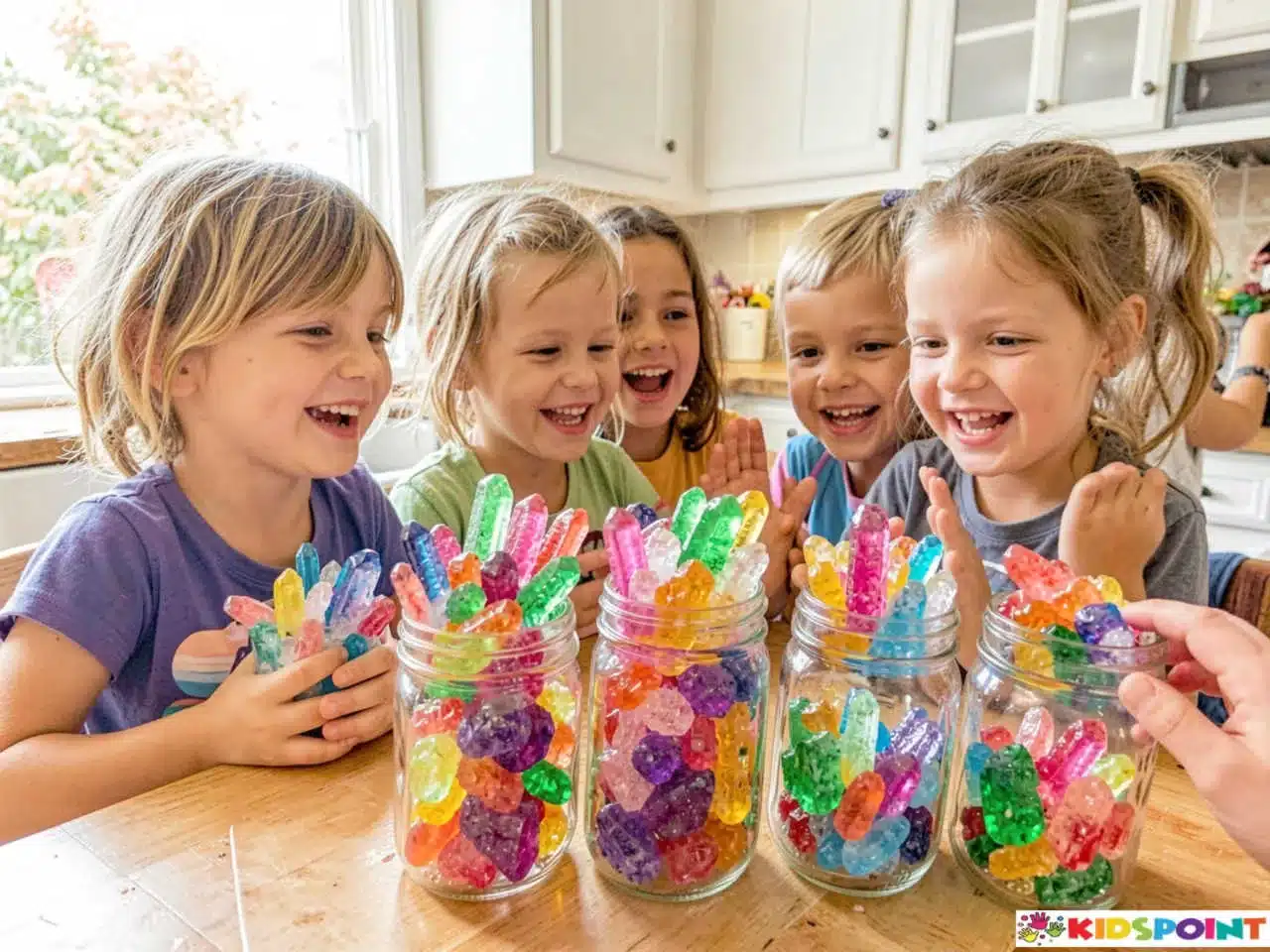
Science experiments at home can turn ordinary days into exciting learning adventures, especially when they involve something sweet and hands-on like rock candy. Learning how to make rock candy is one of the most engaging activities for kids because it combines science, creativity, and patience in a fun and memorable way.
In this guide, we will walk you through a simple, safe, and educational method for making rock candy with children. These science-based activities for kids are perfect for parents in the USA who want to encourage curiosity, STEM learning, and quality family time. From understanding sugar crystals to watching them grow over time, this activity turns your kitchen into a mini science lab.
Why Rock Candy Is One of the Best Activities for Kids
Rock candy is more than just a sweet treat. It is a real science experiment that teaches children about crystallization, saturation, and patience. When kids participate in making rock candy, they are actively engaging in hands-on activities for kids that strengthen observation skills and curiosity.
Educational experts often recommend kitchen science because it helps children connect abstract scientific ideas with real-life experiences. Watching crystals form over days makes learning exciting and meaningful.
Key benefits include:
- Introduction to basic chemistry concepts
- Improved patience and observation skills
- Hands-on STEM learning experience
- Development of fine motor skills
- Encouragement of curiosity and experimentation
This simple experiment turns everyday ingredients into a fascinating learning opportunity.
Ingredients Needed for Making Rock Candy
Before starting this fun kitchen experiment, it is important to gather all the required materials. These simple ingredients make rock candy one of the easiest activities for kids to set up at home.
You will need:
- 2 to 3 cups of granulated sugar
- 1 cup of water
- Wooden skewers or cotton string
- Clothespins or clips
- Glass jars or cups
- Food coloring (optional)
- Flavoring extracts (optional, like vanilla or strawberry)
Parents should always supervise children during preparation, especially when handling hot water.
This setup is safe, simple, and perfect for introducing kids to early science experiments.
Step-by-Step Guide to Making Rock Candy with Kids
Creating rock candy is a slow but exciting process. Children get to see real crystals forming over several days, making it one of the most rewarding activities for kids.
Step 1: Prepare the Skewers
Dip wooden skewers or string into water, then roll them in sugar. Let them dry completely. This helps crystals form more easily later.
Step 2: Boil the Sugar Solution
In a pot, heat water and slowly add sugar until it dissolves completely. Keep stirring until the solution becomes saturated.
Step 3: Add Color and Flavor (Optional)
Once the mixture is ready, add a few drops of food coloring or flavoring to make the rock candy more exciting for kids.
Step 4: Pour into Jars
Carefully pour the sugar solution into glass jars. Make sure children stay away from hot liquid during this step.
Step 5: Insert Skewers
Place the sugar-coated skewers into the jars without touching the sides. Secure them with clothespins.
Step 6: Wait and Watch
Leave the jars in a safe place. Over the next 5 to 7 days, crystals will begin to grow slowly.
This waiting period is what makes the experiment so powerful. It teaches children patience and scientific observation.
The Science Behind Rock Candy for Kids
Understanding the science behind rock candy makes this one of the most educational activities for kids. The process involves crystallization, where sugar molecules form solid structures as water evaporates.
When hot water holds sugar, it creates a supersaturated solution. As the solution cools, sugar begins to separate and attach to the seeded skewer or string. Over time, these sugar crystals grow larger and form rock candy.
Simple explanation for kids:
- Hot water dissolves sugar
- Cooling water cannot hold all the sugar
- Extra sugar forms crystals
- Crystals stick to the skewer and grow
This process introduces children to early chemistry concepts in a visual and exciting way.
Fun Ways to Customize Rock Candy Activities for Kids
One of the best parts of this experiment is how easily it can be customized. Personalizing science makes activities for kids even more engaging and memorable.
Here are some creative ideas:
- Use different food colors for rainbow rock candy
- Try various flavors like mint or fruit extracts
- Create themed candy jars for holidays
- Experiment with different sugar concentrations
- Compare crystal sizes in different conditions
For example, children can make a “rainbow crystal set” by using multiple jars with different colors. This helps them understand variation in experiments.
Customization encourages creativity and deeper learning.
Educational Benefits of Rock Candy Activities for Kids
Rock candy is not just a fun treat, it is a powerful STEM learning tool. These hands-on activities for kids help children understand scientific processes in a real-world context.
Key educational benefits include:
- Understanding chemical reactions
- Learning patience through observation
- Improving measurement and timing skills
- Strengthening critical thinking
- Encouraging curiosity about science
Studies show that children learn better when they can physically observe changes over time. Rock candy provides exactly that kind of slow, visible transformation.
It also introduces foundational science vocabulary in a natural way.
Safety Tips for Making Rock Candy with Kids
While rock candy is a safe experiment, adult supervision is essential, especially when dealing with heat and boiling water. Safe activities for kids ensure a positive and worry-free experience.
Important safety tips include:
- Always supervise boiling water
- Use heat-resistant containers
- Keep hot sugar solution away from children
- Wash hands before and after handling materials
- Place jars in a stable, safe location
Safety builds confidence and allows children to focus on learning without risk.
Common Mistakes to Avoid When Making Rock Candy
Sometimes the experiment may not go as planned. Understanding common mistakes helps improve results and keeps activities for kids successful.
Avoid these issues:
- Not dissolving enough sugar in water
- Moving jars during crystal formation
- Using dirty containers or skewers
- Skipping the sugar coating step
- Using too much food coloring
Patience is key. Crystals take time to form, and interruptions can affect growth.
If results are slow, it is still a great learning experience for children.
How Parents Can Turn Rock Candy into a Learning Experience
Parents play an important role in turning simple experiments into meaningful activities for kids. With a little guidance, rock candy becomes a full science lesson.
Helpful strategies include:
- Ask kids to predict what will happen
- Encourage daily observation and journaling
- Discuss changes in crystal size over time
- Relate the experiment to real-world science
- Celebrate the final result together
For example, children can draw what they see each day, helping them develop observation and communication skills.
This turns science into storytelling and discovery.
Why STEM Activities Like Rock Candy Matter for Kids
STEM-based learning is essential for developing future-ready skills. Simple experiments like rock candy introduce children to science, technology, engineering, and math in a fun and accessible way.
Benefits of STEM activities for kids include:
- Better problem-solving skills
- Increased interest in science
- Improved logical thinking
- Stronger academic performance
- Hands-on learning experience
When children learn through doing, they retain information longer and develop a natural curiosity for discovery.
Frequently Asked Questions (FAQs)
How long does it take to make rock candy with kids?
It usually takes 5 to 7 days for crystals to fully form.
Is making rock candy safe for kids?
Yes, it is safe with adult supervision, especially during boiling water steps.
What is the science behind rock candy?
It involves sugar crystallization from a supersaturated solution.
Can kids eat homemade rock candy?
Yes, once fully formed, it is safe to eat as it is made from sugar.
What are the best activities for kids to learn science at home?
Simple experiments like rock candy, baking soda volcanoes, and slime making are great STEM activities.
Making rock candy is one of the most exciting, educational, and rewarding activities for kids. It combines science, patience, and creativity into one simple kitchen experiment that children can enjoy and learn from.
From understanding crystallization to watching sugar transform into crystals, kids gain real-world science knowledge while having fun.
At The Kids Point, we believe learning should always be interactive, engaging, and memorable. Explore more creative learning ideas and science-based activities at The Kids Point and turn everyday moments into exciting discoveries.