

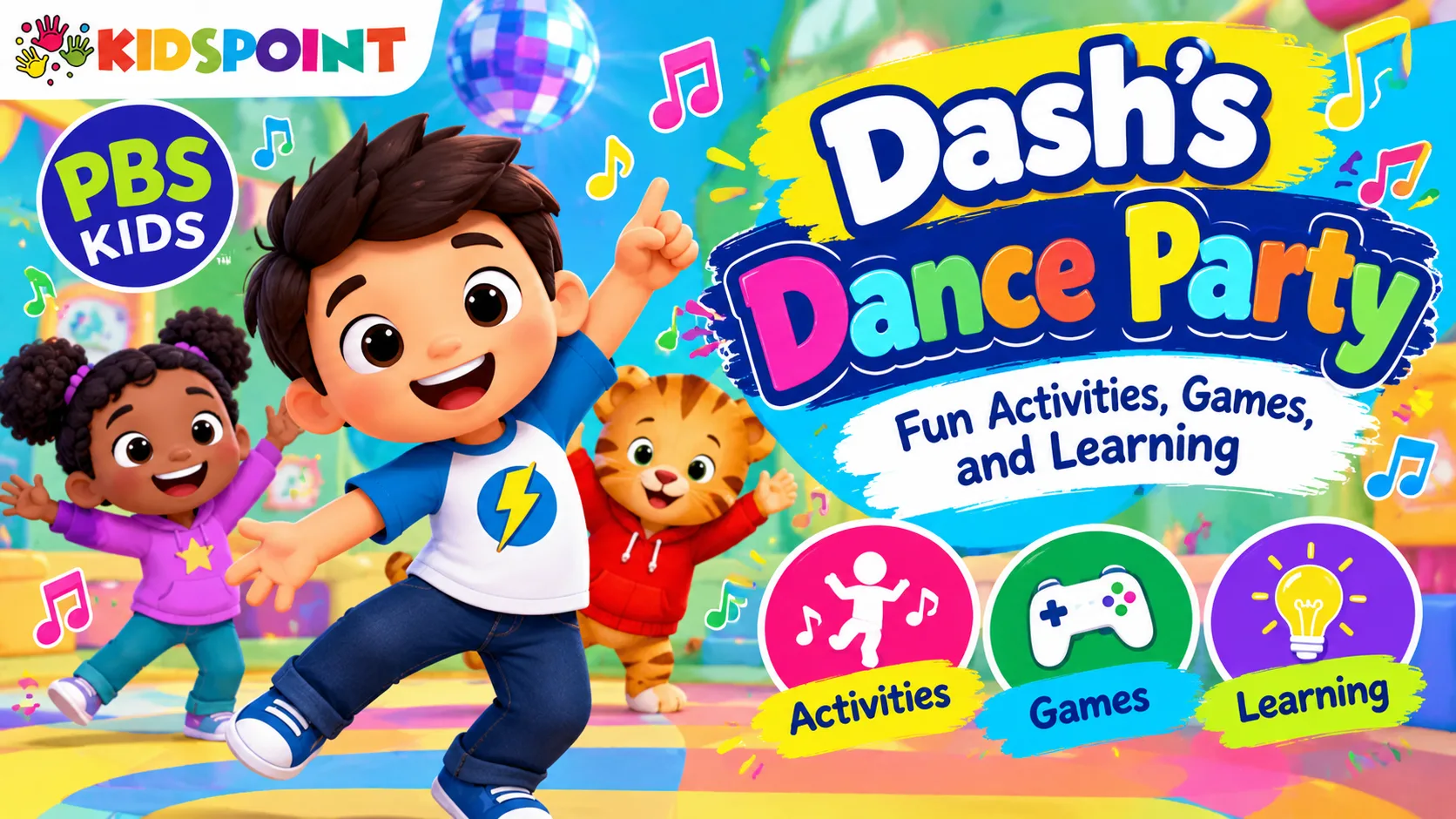
PBS Kids Dash’s Dance Party is a fun way to introduce children to movement, music, creativity, and playful learning. Dance activities can turn an ordinary afternoon into an energetic experience while giving kids opportunities to move their bodies, follow directions, express themselves, and use their imagination.
Dash, the familiar PBS KIDS character, makes dance-themed activities especially appealing to young children. A dance party doesn’t have to mean complicated choreography or a big event. With a little music, some space, and a few creative ideas, parents, teachers, and caregivers can create an enjoyable activity for children at home or in a classroom.
In this guide, you’ll find simple Dash’s Dance Party activities, games, and learning ideas that encourage children to move, listen, create, and have fun.
What Is Dash’s Dance Party?
Dash’s Dance Party is associated with PBS KIDS’ playful approach to children’s learning and entertainment. The idea of a dance party gives children a chance to combine music and movement with imaginative play.
For young children, movement can be a natural part of learning. They can practice following instructions, remembering sequences, identifying rhythms, and expressing ideas through actions.
A Dash-themed dance activity can include:
- Simple dance moves
- Freeze-dance games
- Music and rhythm activities
- Movement challenges
- Creative dance stories
- Color or shape games
- Counting activities
- Follow-the-leader games
- Imaginative movement
The goal isn’t to teach children professional dance techniques. Instead, it is to create a playful environment where they can move safely and explore their creativity.
Why Dance Activities Are Fun for Kids
Children naturally enjoy moving, especially when movement is connected to music or imaginative games.
A dance activity can encourage several useful skills at the same time.
- Listening: Children need to listen carefully when an adult gives instructions such as “jump,” “freeze,” “turn,” or “clap.”
- Coordination: Simple movements such as clapping, stepping, and moving from side to side give children opportunities to practice coordination.
- Memory: Remembering a short sequence of movements can become a fun memory challenge.
- Creativity: Children can invent their own dance moves and decide how a character, animal, or imaginary creature might move.
- Social Skills: Group dance games encourage children to take turns, watch others, and participate together.
Fun Dash’s Dance Party Activities
Ready to get moving? Try these simple activities with children.
1. Freeze Dance
Freeze dance is one of the easiest activities to organize.
Play child-friendly music and let children dance however they want. When the music stops, everyone freezes.
After a few seconds, start the music again.
To give the game a Dash-themed twist, call out different characters or objects before each round.
For example:
- “Dance like a robot!”
- “Dance like a bouncing ball!”
- “Dance like a butterfly!”
- “Dance like a superhero!”
- “Dance like you’re exploring space!”
The activity encourages children to listen for changes in the music while using their imagination.
2. Dash Says
Put a dance-themed spin on the classic “Simon Says” game.
An adult can say:
“Dash says clap your hands.”
Children follow the instruction.
But if the instruction doesn’t begin with “Dash says,” they should wait.
Use simple movements such as:
- Clap
- Stomp
- Turn around
- Touch your shoulders
- March in place
- Wiggle your fingers
- Stretch your arms
- Tap your knees
Keep the movements simple and appropriate for the children’s age and available space.
3. Animal Dance Party
Ask children to choose an animal and imagine how it might move.
For example:
Penguin: Take small waddling steps.
Bunny: Make gentle little hops.
Butterfly: Move your arms like wings.
Elephant: Take slow, big steps.
Frog: Try gentle frog-inspired movements.
After each round, ask children to choose a different animal.
This activity combines movement with imaginative thinking.
4. Color Dance Game
Choose several colors and give each one a movement.
For example:
- Red = clap
- Blue = march
- Green = sway
- Yellow = spin gently
Hold up or call out a color, and children perform the corresponding movement.
This can turn dance time into a simple learning game for younger children who are practicing color recognition.
5. Number Dance
Turn counting practice into movement.
Ask children to perform an action a certain number of times.
For example:
“Clap three times!”
“Stomp two times!”
“March five steps!”
“Jump two times!”
You can gradually change the numbers depending on the children’s ages and abilities.
This activity connects physical movement with early math practice.
Dash’s Dance Party Learning Games
Dance doesn’t have to be separate from learning. With a little creativity, movement can become part of many educational activities.
6. Alphabet Dance
Assign a movement to different letters.
For example:
A: clap
B: stomp
C: turn
D: wave
Call out a letter and ask children to perform its movement.
For older children, you can call out simple words and let them spell them using the movements.
7. Shape Dance
Choose a few basic shapes.
Ask children to create shapes using their arms or bodies.
For example:
- Circle
- Triangle
- Square
- Straight line
You can also place large paper shapes on the floor and ask children to move toward the shape you call out.
8. Rhythm Copycat
Create a simple rhythm using claps, taps, or stomps.
For example:
Clap – clap – pause – clap
Ask children to copy it.
Once they understand the game, let each child create a rhythm for everyone else to copy.
This turns the activity into a fun listening and memory challenge.
9. Dance Story
Create a simple story that includes movements.
For example:
“Dash is walking through a forest.”
Children walk slowly.
“Suddenly, Dash sees a butterfly!”
Children flap their arms gently.
“Then the wind begins to blow.”
Children sway from side to side.
“Dash reaches a sunny field.”
Children stretch their arms upward.
You can create an entirely new story each time.
Creative Dance Activities for Kids
Children don’t always need instructions to have fun. Sometimes the best activity is giving them a theme and letting them create.
10. Create a New Dance Move
Ask every child to invent one simple dance move.
They can give their move a funny name.
Examples might include:
- The Wiggly Wave
- The Rocket Step
- The Rainbow Spin
- The Happy Hop
- The Robot March
Everyone can take turns demonstrating their move.
11. Build a Dance Sequence
Choose three simple movements.
For example:
Clap → Step → Turn
Practice the sequence together.
Then add another movement.
Clap → Step → Turn → Wave
Children can try to remember the entire sequence.
This can become a fun memory game without feeling like a traditional lesson.
12. Musical Imagination
Choose different imaginary settings and ask children to dance according to the setting.
Try:
- Underwater
- Outer space
- A jungle
- A snowy mountain
- A magical castle
- A dinosaur world
Ask questions such as:
“How would you move on the moon?”
“How would you dance underwater?”
“How would a tiny creature move?”
There are no right or wrong answers. The goal is creative expression.
Dash’s Dance Party Games for Groups
Dance games can work particularly well when several children participate.
13. Follow the Leader
Choose one child to be the leader.
The leader performs simple movements while everyone else follows.
After a short turn, choose another leader.
This gives children an opportunity to practice observation, turn-taking, and creative movement.
14. Dance Detective
Choose one child to be the “dance detective.”
The detective closes their eyes or turns away while another child becomes the movement leader.
The leader changes movements while everyone follows.
The detective then tries to figure out who the leader is.
For safety, children should remain in a comfortable space and avoid movements that could cause collisions.
15. Pass the Move
The first child creates one simple movement.
The next child copies it and adds another.
The third child repeats both and adds another.
Continue around the group.
The sequence can become surprisingly funny as more movements are added.
Educational Benefits of Movement Games
Dance activities should primarily be fun, but they can also create opportunities for children to practice different skills.
- Physical Coordination: Simple movements can encourage children to practice coordination and body awareness.
- Memory and Attention: Following movement sequences requires children to listen, remember, and respond.
- Early Math: Counting steps, claps, or jumps can connect movement with numbers.
- Creativity: Children can invent their own movements, stories, and dance sequences.
- Social Interaction: Group activities can encourage children to cooperate and take turns.
These activities should always be adapted to children’s ages, abilities, and individual comfort levels.
Simple Dash Dance Party Setup
You don’t need expensive equipment to organize a dance activity.
A basic setup might include:
- A safe open area
- Child-friendly music
- Comfortable clothing
- Optional colorful decorations
- Optional character-themed activity cards
- Plenty of room to move
Clear away furniture or objects that children could bump into.
Adults should also adjust the activity according to the available space. A small room might be better for clapping, marching in place, and gentle movements, while a larger area may allow more movement.
Make Your Own Dance Cards
You can create simple movement cards using paper.
Write one movement on each card:
- Clap
- March
- Wiggle
- Stretch
- Wave
- Turn
- Freeze
Place the cards in a container.
Children can take turns choosing a card and leading the movement.
For a learning version, add letters, numbers, colors, or shapes to the cards.
A 15-Minute Dash Dance Party Plan
Don’t have much time? Try this simple schedule.
Minutes 1–3: Warm-Up
Start with gentle movements such as walking in place, clapping, and stretching.
Minutes 4–6: Freeze Dance
Play music and pause it at different moments.
Minutes 7–9: Learning Game
Try colors, numbers, letters, or shapes with movement.
Minutes 10–12: Creative Dance
Give children an imaginary setting and let them create movements.
Minutes 13–15: Favorite Moves
Let children choose their favorite movements and create a short sequence.
The exact timing doesn’t matter. The activity can be shorter or longer depending on the children.
Safety Tips for Children’s Dance Activities
Dance games should be fun and comfortable.
Keep these basic safety ideas in mind:
- Choose a clear area free from obstacles.
- Encourage children to use age-appropriate movements.
- Avoid pushing, running into others, or unsafe tricks.
- Give children enough personal space.
- Allow children to take breaks whenever they need one.
- Use suitable music and volume levels.
- Adapt activities for different physical abilities.
- Never pressure a child to perform a movement they don’t want to do.
The focus should be enjoyment, participation, and creativity rather than perfect performance.
The Kids Point: Learning Through Movement and Play
At The Kids Point, we believe children learn through many different experiences, including stories, games, creativity, exploration, and play.
Movement activities such as dance can give children a playful way to practice listening, memory, communication, creativity, and early learning concepts. A simple game can become a learning opportunity when children count movements, identify colors, follow sequences, or create their own stories.
Our goal is to provide children, parents, caregivers, and educators with engaging, age-appropriate, and safe ideas that make learning enjoyable.
A Dash-themed dance activity is a great example of how children’s favorite characters and interests can inspire creative play.
PBS Kids Dash’s Dance Party can inspire plenty of fun activities that combine music, movement, imagination, and learning. From freeze dance and animal movements to color games, number challenges, rhythm activities, and creative storytelling, there are many ways to turn dance time into an engaging experience for children.
You don’t need professional dance skills or complicated equipment. A safe space, suitable music, and a little imagination are enough to get started.
Whether you’re planning a classroom activity, family game, playdate, or afternoon at home, these ideas can help children move, create, listen, and laugh together.
Frequently Asked Questions
What is PBS Kids Dash’s Dance Party?
Dash’s Dance Party is a dance-themed concept associated with PBS KIDS that can inspire children to combine music, movement, creativity, and playful learning.
What activities can kids do for a Dash dance party?
Children can enjoy freeze dance, follow-the-leader, animal dances, rhythm games, color dances, number dances, creative movement, and dance storytelling.
Is Dash’s Dance Party educational?
Dance activities can provide opportunities for children to practice skills such as listening, memory, coordination, counting, language, creativity, and social interaction.
What age group can enjoy dance activities?
Dance activities can be adapted for different ages. Younger children may enjoy simple movements and imitation games, while older children can create longer sequences and movement stories.
Do children need special dance equipment?
No. Most children’s dance games can be done with a safe open space and suitable music. Optional activity cards, decorations, or props can make the experience more engaging.
How can parents turn dance into a learning game?
Parents can connect movements with colors, numbers, letters, shapes, rhythms, or simple instructions. This allows children to practice learning concepts while moving and playing.
How long should a children’s dance party last?
There is no required length. A short 10–15 minute activity can be enough for younger children, while older children may enjoy longer sessions with breaks.
How can children stay safe during dance activities?
Use a clear space, provide enough room between children, avoid unsafe movements, keep music at a comfortable volume, and allow children to rest whenever needed.
Can children create their own dance games?
Yes. Children can invent movements, create dance sequences, make movement cards, or develop stories that include different actions.
For more fun educational activities, creative games, stories, and kid-friendly learning ideas, explore The Kids Point and discover new ways to make everyday learning enjoyable.