
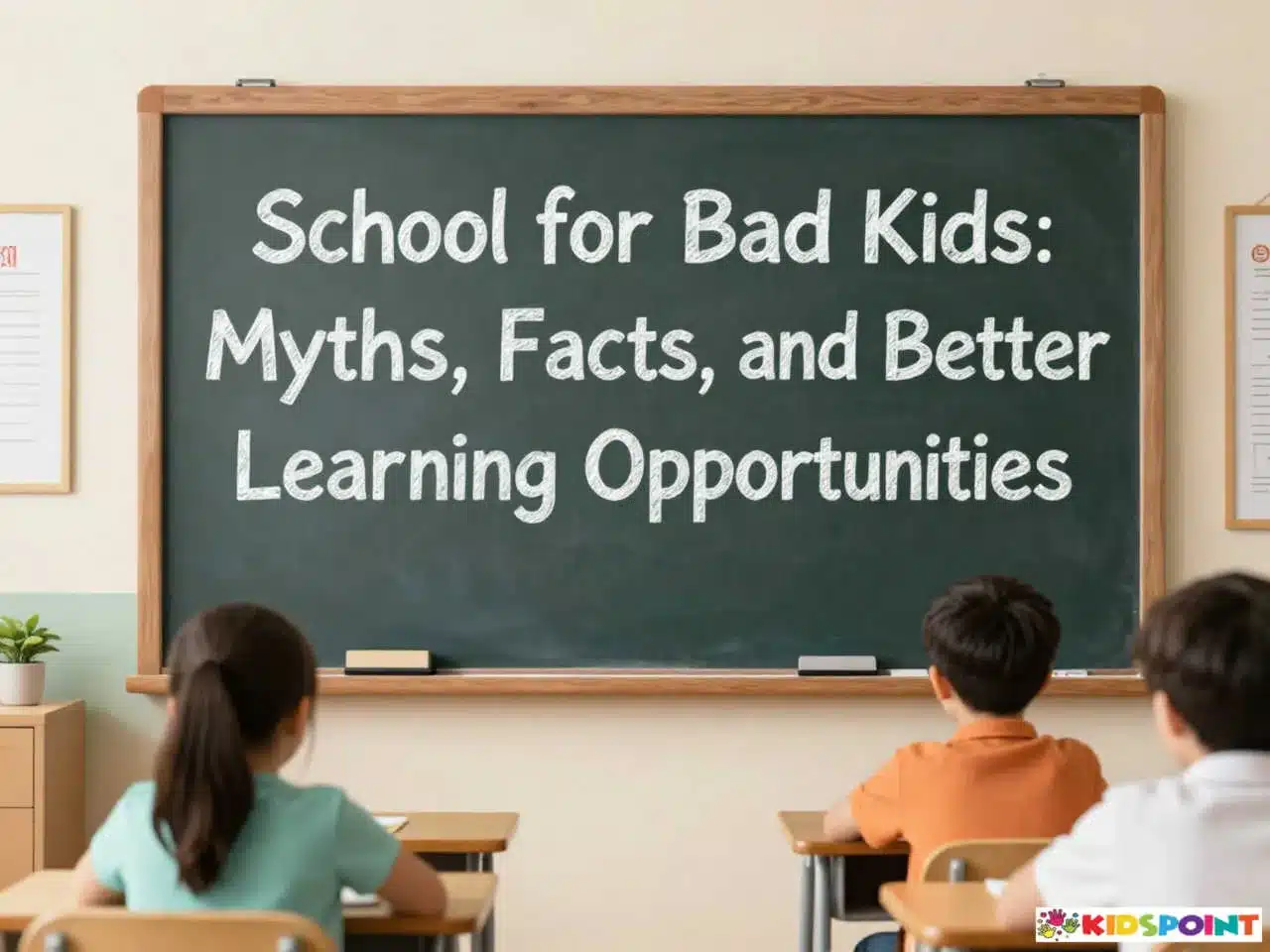
Every child deserves the opportunity to learn, grow, and succeed, regardless of their behavior, academic struggles, or personal challenges. The phrase “school for bad kids” is often used by people searching for information about schools designed for children with behavioral issues or disciplinary problems. However, this phrase is misleading because there are no schools specifically created for “bad” children. Instead, there are educational programs, alternative schools, therapeutic schools, and specialized learning environments that help students overcome obstacles and reach their full potential.
At The Kids Point, we believe every child has unique strengths and deserves compassion, guidance, and the right educational support. This article explores the myths surrounding the idea of a “school for bad kids,” explains the facts behind alternative education, and highlights better learning opportunities available for children who need extra help.
Understanding the Term “School for Bad Kids”
The phrase “school for bad kids” has become popular in online searches, but it does not accurately describe modern education. Children are not defined by a single mistake, challenging behavior, or learning difficulty.
Instead, educators recognize that behavior often reflects underlying issues such as:
- Learning disabilities
- Emotional challenges
- Family stress
- Mental health concerns
- Trauma
- Bullying
- Social difficulties
- Attention disorders such as ADHD
- Autism spectrum disorders
- Anxiety or depression
Schools and educational professionals work to identify these root causes rather than labeling children negatively.
Why the Label “Bad Kid” Is Harmful
Calling a child “bad” can have long-lasting consequences.
Damages Self-Esteem: Children often believe what adults repeatedly tell them. Being labeled as bad may cause them to lose confidence and motivation.
Creates Negative Expectations: When students feel teachers expect them to fail, they may stop trying to improve.
Ignores the Real Problem: Behavior usually has a reason. Punishment without understanding fails to solve the underlying issue.
Affects Relationships: Labels can influence how classmates, teachers, and even family members treat a child.
Limits Growth: Children develop continuously. A difficult period should never define their future.
Bad Kids Need Separate Schools
This is one of the biggest misconceptions.
Most students displaying behavioral problems continue attending traditional schools while receiving additional support. Only in certain situations do families consider specialized educational settings.
These settings are designed to provide:
- Smaller class sizes
- Individual attention
- Behavioral support
- Counseling services
- Academic intervention
- Social skills training
The goal is always improvement—not punishment.
Alternative Schools Are Punishment Centers
Many people mistakenly believe alternative schools are places where difficult students are sent as punishment.
The reality is quite different.
Alternative schools often provide:
- Flexible teaching styles
- Personalized learning plans
- Career-focused education
- Emotional support
- Smaller student-to-teacher ratios
- Positive behavior programs
Many students actually thrive in these environments because they receive instruction tailored to their needs.
Children with Behavior Problems Cannot Succeed
This is simply false.
Many successful adults experienced behavioral or academic struggles during childhood.
With proper guidance, children can become:
- Entrepreneurs
- Scientists
- Teachers
- Artists
- Athletes
- Engineers
- Doctors
- Community leaders
Success depends more on support than labels.
Common Reasons Children Struggle in School
Understanding why children experience behavioral challenges helps parents and educators respond effectively.
Learning Difficulties: Undiagnosed dyslexia, dyscalculia, or other learning disabilities may cause frustration that appears as misbehavior.
Attention Disorders: Students with ADHD often struggle with focus, impulsivity, and organization.
Emotional Trauma: Family conflict, divorce, abuse, or loss can significantly affect classroom behavior.
Mental Health Challenges: Anxiety and depression may reduce concentration and increase irritability.
Bullying: Victims of bullying sometimes become withdrawn, angry, or disruptive.
Social Skill Deficits: Some children simply need help learning how to communicate, cooperate, and manage emotions.
What Are Alternative Schools?
Alternative schools provide different educational approaches for students whose needs are not fully met in traditional classrooms.
These schools may focus on:
- Individual learning
- Project-based education
- Behavioral support
- Flexible schedules
- Career preparation
- Emotional wellness
- Credit recovery
- Smaller learning communities
Alternative education is not about punishment—it’s about providing a better fit.
Therapeutic Schools
Some children require more comprehensive support.
Therapeutic schools combine:
- Academic instruction
- Mental health services
- Counseling
- Behavioral therapy
- Family involvement
- Emotional skill development
These schools are especially beneficial for students facing significant emotional or behavioral challenges.
Special Education Services
Many behavioral issues are connected to disabilities.
Special education services may include:
- Individualized Education Programs (IEPs)
- Classroom accommodations
- Speech therapy
- Occupational therapy
- Behavioral intervention plans
- One-on-one instructional support
These services help students succeed within mainstream schools whenever possible.
Positive Behavioral Interventions and Supports (PBIS)
Many schools now use Positive Behavioral Interventions and Supports (PBIS).
Rather than focusing only on punishment, PBIS emphasizes:
- Teaching expected behaviors
- Rewarding positive choices
- Preventing problems
- Creating supportive school cultures
- Helping students learn self-control
Research shows positive reinforcement often works better than repeated punishment.
Restorative Practices in Schools
Many schools have replaced zero-tolerance discipline with restorative practices.
Instead of simply suspending students, restorative approaches encourage:
- Honest conversations
- Accountability
- Problem-solving
- Conflict resolution
- Repairing relationships
- Building empathy
These practices help students learn valuable life skills.
The Role of Parents
Parents play a crucial role in helping children overcome behavioral challenges.
Helpful strategies include:
Maintain Open Communication: Talk daily about school experiences without judgment.
Set Consistent Expectations: Clear rules help children understand boundaries.
Celebrate Progress: Recognize improvements, even small ones.
Work with Teachers: Strong parent-teacher partnerships create consistency.
Seek Professional Help: When necessary, consult psychologists, counselors, or pediatric specialists.
The Role of Teachers
Teachers often make a tremendous difference in children’s lives.
Effective educators:
- Build trusting relationships
- Use positive reinforcement
- Adapt lessons to student needs
- Encourage participation
- Teach emotional regulation
- Communicate with families
- Recognize individual strengths
Supportive teachers often become lifelong mentors.
Emotional Intelligence Matters
Academic success alone isn’t enough.
Children also need emotional intelligence, including:
- Self-awareness
- Self-control
- Empathy
- Communication
- Conflict resolution
- Responsible decision-making
Schools increasingly integrate social-emotional learning into daily instruction.
Better Learning Opportunities Beyond Traditional Schools
Children learn differently. Fortunately, many educational options now exist.
Alternative Education Programs: These programs offer individualized instruction and flexible pathways.
Charter Schools: Some charter schools specialize in serving students with unique educational needs.
Montessori Schools: These schools encourage independence, hands-on learning, and student choice.
Online Learning: Virtual education may benefit students experiencing bullying, anxiety, or medical challenges.
Homeschooling: Some families choose homeschooling to provide personalized education in a supportive environment.
Vocational Schools: Career-focused education can motivate students who struggle with traditional academics.
Skills That Help Every Child Succeed
Instead of labeling children, schools should focus on developing essential life skills.
Important skills include:
- Critical thinking
- Communication
- Teamwork
- Creativity
- Problem-solving
- Time management
- Responsibility
- Emotional resilience
- Adaptability
- Leadership
These skills prepare children for adulthood regardless of their academic path.
Warning Signs Parents Should Not Ignore
Early intervention is important.
Parents should seek professional advice if a child consistently:
- Refuses to attend school
- Has frequent emotional outbursts
- Displays aggressive behavior
- Experiences severe anxiety
- Shows signs of depression
- Suddenly loses academic interest
- Becomes socially isolated
- Frequently breaks school rules
Addressing concerns early often leads to better outcomes.
Building a Positive School Environment
Schools that succeed with struggling students typically share common characteristics.
They provide:
- Safe classrooms
- Respectful teachers
- Inclusive cultures
- Clear expectations
- Counseling support
- Family involvement
- Engaging instruction
- Opportunities for success
Children perform best when they feel safe, respected, and understood.
How Communities Can Help
Supporting children extends beyond schools.
Communities can provide:
- Youth mentoring programs
- After-school activities
- Sports teams
- Libraries
- Community centers
- Counseling resources
- Volunteer opportunities
- Tutoring programs
These experiences help children develop confidence and positive relationships.
Encouraging Growth Instead of Labels
Every child makes mistakes.
The difference between failure and success often depends on how adults respond.
Rather than asking, “What’s wrong with this child?” educators increasingly ask:
- What happened?
- What support does this child need?
- What strengths can we build upon?
- How can we help them succeed?
This growth-focused mindset encourages lasting improvement.
Practical Tips for Supporting Challenging Students
Parents and educators can work together using these practical strategies:
- Focus on strengths rather than weaknesses.
- Create predictable routines.
- Use calm, respectful communication.
- Offer choices whenever possible.
- Encourage healthy sleep and nutrition.
- Limit excessive screen time.
- Teach coping skills.
- Practice patience and consistency.
- Celebrate positive behavior immediately.
- Model kindness and respect.
Small daily actions often produce meaningful long-term changes.
Looking Toward the Future
Education continues evolving to better meet students’ diverse needs.
Today’s schools increasingly recognize that behavior is communication. Rather than isolating children who struggle, educators are investing in mental health resources, individualized instruction, inclusive classrooms, and restorative approaches that help every student thrive.
Technology, personalized learning, and stronger partnerships between schools and families are creating more opportunities than ever before. The future of education is not about separating “bad kids” from others—it is about ensuring every child has access to the support, encouragement, and learning environment they need to succeed.
Common Questions About Schools for Challenging Students
Is there really a school for bad kids?
No. There are no schools specifically for “bad kids.” Some students attend alternative or therapeutic schools that provide additional academic and behavioral support.
Why do some children have behavioral problems at school?
Behavioral challenges can result from learning disabilities, emotional stress, mental health concerns, trauma, bullying, or other underlying issues.
What is an alternative school?
An alternative school offers flexible teaching methods, smaller class sizes, and personalized support for students whose needs may not be met in traditional classrooms.
Can children with behavior issues become successful?
Yes. With the right guidance, support, and learning environment, children with behavioral challenges can achieve academic, personal, and professional success.
How can parents help children who struggle in school?
Parents can support their children by maintaining open communication, working closely with teachers, encouraging positive behavior, and seeking professional help when needed.
The idea of a “school for bad kids” is based more on misunderstanding than reality. Children are not inherently bad—they may simply face challenges that require patience, guidance, and specialized support. Whether through traditional schools, alternative education, therapeutic programs, or personalized learning plans, the goal should always be to help children build confidence, improve behavior, and achieve academic success.
At The Kids Point, we believe every child deserves the chance to learn without being judged by labels. By replacing myths with facts and focusing on positive learning opportunities, parents, teachers, and communities can work together to create brighter futures for every student. Compassion, understanding, and individualized support remain the most powerful tools in helping children reach their fullest potential.