

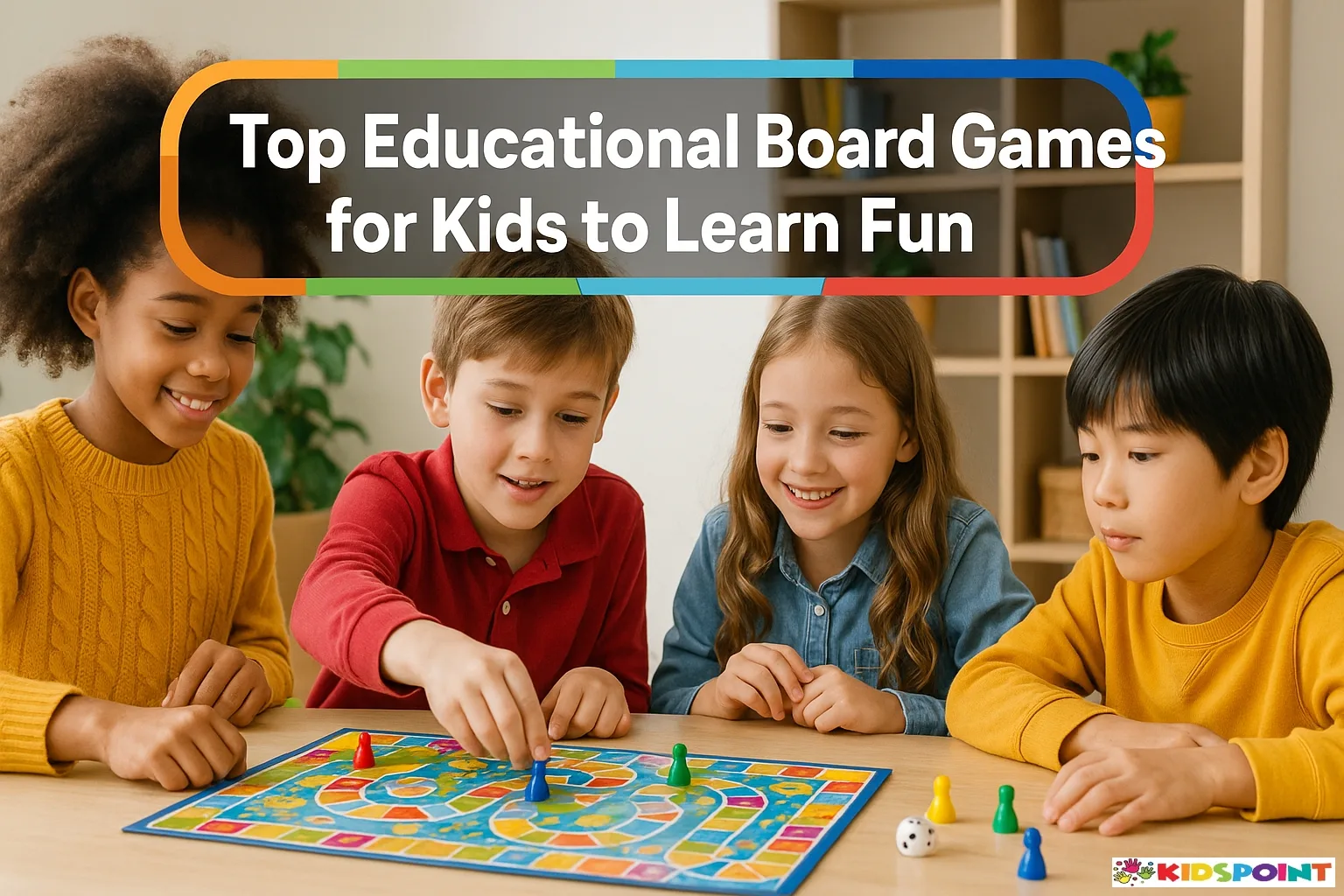
Play isn’t just about fun—it’s one of the most powerful ways children learn, grow, and develop essential skills. In today’s world, parents and educators are increasingly turning to educational board games as a smart way to combine learning with playtime. These games encourage kids to think critically, collaborate, solve problems, and explore new concepts in a joyful and engaging way.
At The Kids Point, we believe that learning should never feel like a chore. That’s why we’ve carefully curated some of the best educational board games for kids that nurture curiosity, creativity, and essential life skills—all while keeping the fun alive. Whether you’re a parent looking to make family nights more meaningful or a teacher searching for interactive classroom activities, these games are perfect for turning learning into an adventure.
Why Educational Board Games Matter
Board games are more than just entertainment—they’re a tool for holistic development. Here are some of the key benefits:
Enhances Cognitive Skills
Educational board games are designed to stimulate brain activity. They challenge kids to strategize, plan, remember rules, and make logical decisions. Games that involve numbers, letters, or puzzles also strengthen memory, pattern recognition, and reasoning skills.
Boosts Social and Emotional Development
Playing board games helps children learn patience, teamwork, and good sportsmanship. Taking turns, following rules, and celebrating wins—or gracefully accepting losses—are essential life lessons that these games teach naturally.
Encourages Problem-Solving and Critical Thinking
From solving riddles to navigating mazes, board games often require quick thinking and smart decision-making. This builds a problem-solving mindset that can be applied in real life.
Reduces Screen Time
In a world dominated by digital devices, educational board games offer a refreshing offline alternative. Families can bond over shared experiences, laughter, and interactive learning without screens.
We understand how crucial these benefits are for a child’s growth. That’s why our top recommendations focus on both educational value and fun.
Top Educational Board Games for Kids
Scrabble Junior – Building Vocabulary Through Play
Scrabble Junior is a fantastic game for introducing children to words, spelling, and vocabulary. Designed for younger players, it simplifies the classic word game and makes it easy for kids to match letters to form words.
Why Kids Love It:
- Bright and colorful board design
- Encourages early reading skills
- Easy to play with family and friends
Skills Developed: Vocabulary, spelling, language comprehension, letter recognition.
Recommended Age: 5 years and above.
Monopoly Junior – Learning Math and Money Management
A simplified version of the classic game, Monopoly Junior introduces kids to basic math, counting, and money concepts in a fun and exciting way. Players buy properties, collect rent, and learn about budgeting while enjoying friendly competition.
Why Kids Love It:
- Fun characters and colorful board
- Real-life money handling scenarios
- Perfect for family game nights
Skills Developed: Basic math, decision-making, strategic thinking, financial literacy.
Recommended Age: 5 years and above.
Rush Hour – Strengthening Logic and Spatial Reasoning
Rush Hour is an engaging puzzle game that involves moving cars around to clear a path for the red car to exit. It may sound simple, but it encourages deep thinking and strategy.
Why Kids Love It:
- Addictive and challenging puzzles
- Solo or group play options
- Gradually increasing difficulty
Skills Developed: Logical reasoning, problem-solving, spatial awareness, patience.
Recommended Age: 8 years and above.
Brain Quest – Boosting General Knowledge
Brain Quest is an educational trivia game packed with questions across various subjects such as science, math, history, and language. Kids love challenging their friends and parents while learning fun facts.
Why Kids Love It:
- Fast-paced and competitive
- Covers a wide range of subjects
- Encourages curiosity and confidence
Skills Developed: General knowledge, quick thinking, memory recall, language development.
Recommended Age: 6 years and above.
Qwirkle – Patterns, Colors, and Strategy
Qwirkle is a matching game where kids create lines of tiles that share either the same shape or color. It’s simple yet deeply strategic, making it a hit with families and classrooms alike.
Why Kids Love It:
- Easy rules, big rewards
- Encourages creativity and strategy
- Great for mixed-age groups
Skills Developed: Pattern recognition, color and shape matching, strategic planning, focus.
Recommended Age: 6 years and above.
Zingo! – Fast-Paced Language and Matching Fun
Zingo! is a bingo-style game where kids race to match images and words on their cards. It’s perfect for preschoolers learning to recognize words and images quickly.
Why Kids Love It:
- Fun, fast, and interactive
- Encourages quick responses
- Ideal for group play
Skills Developed: Word recognition, concentration, visual perception, social skills.
Recommended Age: 4 years and above.
Guess Who? – Observation and Deductive Reasoning
Guess Who? is a classic game that encourages children to ask yes/no questions to identify their opponent’s mystery character. It’s an excellent way to sharpen reasoning and communication skills.
Why Kids Love It:
- Fun guessing game with lots of laughs
- Encourages curiosity and interaction
- Easy to learn and replayable
Skills Developed: Deductive reasoning, questioning skills, communication, logical thinking.
Recommended Age: 6 years and above.
Choosing the Right Board Game for Your Child
Not all educational board games are suitable for every child. When choosing the perfect game, consider these key factors:
Age Appropriateness
Look at the recommended age on the box to ensure the game aligns with your child’s developmental level. Younger kids benefit from games that focus on matching, colors, and basic words, while older kids enjoy strategic and challenging puzzles.
Learning Objectives
Think about what skills you want to nurture. Is it math, reading, logic, or teamwork? Choose a game that aligns with your educational goals.
Engagement Level
Children learn best when they’re fully engaged. Select games with vibrant designs, fun themes, and interactive mechanics to keep them interested.
Number of Players
Some games are best for solo play, while others are great for group or family activities.We encourage family game nights where learning becomes a shared experience.
How to Turn Board Games into Learning Opportunities
Make Learning Intentional—but Fun
Introduce games as fun family time, not a lesson. Children are more likely to retain what they learn when they’re enjoying the process.
Ask Questions During the Game
For example, while playing Monopoly Junior, you can ask questions about counting money or making decisions. In Guess Who?, ask why they eliminated certain options.
Celebrate Every Win—Big or Small
Encouragement builds confidence. Even small achievements in a board game can boost a child’s self-esteem and eagerness to learn more.
Use Games to Reinforce School Learning
If your child is learning spelling, a game like Scrabble Junior can make practice more fun. For math skills, Monopoly Junior is a great fit.
We often remind parents that the goal isn’t just to win—it’s to learn and grow together.
Educational Board Games for Different Age Groups
Preschoolers (Ages 3–5)
- Zingo!
- Candy Land
- Chutes and Ladders
These games focus on color recognition, counting, and basic vocabulary. They help children develop attention spans and understand simple rules.
Early Elementary (Ages 6–8)
- Guess Who?
- Qwirkle
- Brain Quest
Perfect for improving problem-solving, vocabulary, and critical thinking.
Older Kids (Ages 9 and Above)
- Scrabble Junior (advanced play)
- Rush Hour
- Catan Junior
These games introduce strategy, logic, negotiation, and higher-level thinking skills.
Why Parents Love Board Games
We don’t just recommend board games—we handpick them based on their educational value, fun factor, and long-term benefits. Parents appreciate our curated selection because:
- We focus on games that support school learning in an enjoyable way.
- Our recommendations encourage quality family time and reduce screen dependency.
- We select games that grow with your child, offering new challenges as they develop.
We also provide tips, activity guides, and resources to help parents get the most out of each game. Whether it’s boosting vocabulary through Scrabble Junior or teaching money skills through Monopoly Junior, we make sure learning never gets boring.
Integrating Board Games into Daily Routines
Family Game Night: Set aside one evening each week for a board game night. It’s a great way to bond, laugh, and learn as a family.
Classroom and Homeschool Use: Teachers and homeschoolers can integrate board games into lessons to make topics more interactive. Math games, word-building games, and logic puzzles can enhance traditional teaching methods.
Playdates and Group Learning: Board games are fantastic for playdates. They help children build friendships while developing cooperation and communication skills.
Travel and Downtime: Many educational board games come in portable versions, making them great companions for road trips, flights, or quiet evenings at home.
Tips for Making the Most of Educational Board Games
- Start Simple: Introduce easy games first, then move to more complex ones as your child’s skills grow.
- Encourage Collaboration: Cooperative games teach teamwork and empathy.
- Mix It Up: Rotate games to keep the excitement alive.
- Lead by Example: When parents actively participate, kids stay more engaged.
- Create a Learning Space: A designated play corner can make game time special and focused.
The Future of Learning Through Play
Educational board games are evolving. Many modern games blend traditional mechanics with storytelling, creativity, and real-world concepts. They’re becoming a powerful tool in classrooms, therapy settings, and homes worldwide.
We’re passionate about promoting a learning environment where play and education go hand in hand. Board games not only teach academic skills but also foster resilience, patience, and problem-solving—qualities that last a lifetime.
FAQs
What are educational board games?
Educational board games are designed to help kids learn through play. They build essential skills like math, reading, logic, and problem-solving in a fun, interactive way.
What age group can play educational board games?
There are board games for every age group. We recommend selecting games that match your child’s learning level and interests.
How do these games help children learn?
They make learning enjoyable while developing cognitive skills, boosting creativity, and encouraging teamwork and communication.
How can parents use these games effectively?
Parents can include board games in daily routines, play together as a family, and ask open-ended questions to enhance learning.
Where can I find the best educational board games for kids?
You can find a wide range of high-quality educational board games, carefully chosen to make learning exciting for kids.
Final Thoughts
Learning doesn’t have to be confined to textbooks and classrooms. Educational board games bring learning to the table—literally—through laughter, challenges, and shared experiences.
Whether your child is discovering their first words, practicing math, or developing advanced problem-solving skills, the right board game can make a world of difference.
At The Kids Point, our mission is to help parents and educators create joyful learning experiences that shape confident, curious, and capable young minds. So the next time you want to make learning fun, gather the family, choose a board game, and let the adventure begin.