

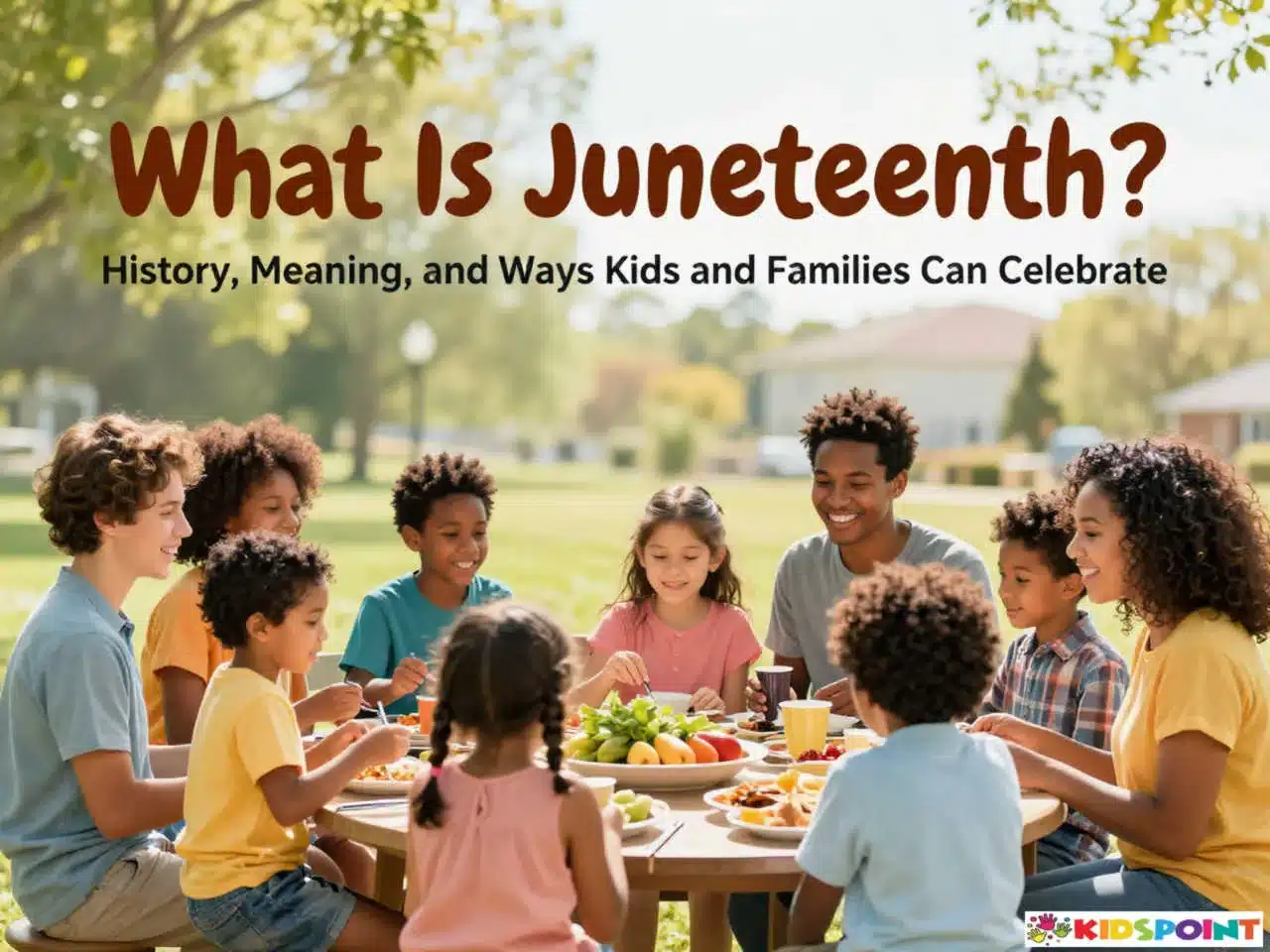
Have your kids ever asked why some holidays are celebrated with parades, storytelling, and family gatherings? Juneteenth is one of the most meaningful holidays in the United States, yet many families are still learning about its importance. Understanding Juneteenth can help children appreciate freedom, equality, history, and community in age-appropriate ways.
Juneteenth offers families a chance to celebrate culture, learn together, and enjoy meaningful activities for kids that encourage curiosity and compassion. From crafts and storytelling to community events and educational games, there are many ways to make this holiday memorable for preschoolers, children, and parents alike.
In this guide, we will explore the history of Juneteenth, what it means, why it matters today, and family-friendly ways to celebrate with fun and educational activities.
What Is Juneteenth?
Juneteenth is a federal holiday in the United States celebrated every year on June 19. It commemorates the day in 1865 when enslaved African Americans in Galveston, Texas, learned they were free, more than two years after the Emancipation Proclamation had officially ended slavery in Confederate states.
The name “Juneteenth” combines the words “June” and “nineteenth.” It is sometimes called Freedom Day, Jubilee Day, Liberation Day, or Emancipation Day.
For kids, Juneteenth can be explained simply as a celebration of freedom, fairness, and remembering important moments in history. Families can use this holiday to discuss kindness, inclusion, equality, and respect for others.
Today, Juneteenth is celebrated with:
- Family gatherings
- Educational events
- Music and cultural festivals
- Storytelling sessions
- Community picnics
- Art projects and activities for kids
Teaching children about Juneteenth helps them better understand American history while encouraging empathy and appreciation for diversity.
The History of Juneteenth Explained for Families
To understand Juneteenth, it helps to know a little American history.
During the Civil War, President Abraham Lincoln issued the Emancipation Proclamation on January 1, 1863. This order declared enslaved people in Confederate states free. However, because of ongoing conflict and limited enforcement, many enslaved people in Texas did not immediately receive freedom.
On June 19, 1865, Union General Gordon Granger arrived in Galveston, Texas, and announced that enslaved people were finally free. This announcement marked a major turning point in American history.
Families began celebrating Juneteenth the following year with prayer, music, food, storytelling, and community gatherings. Over time, the holiday grew in significance across the country.
In 2021, Juneteenth officially became a federal holiday in the United States.
When discussing history with children, parents can simplify the explanation by saying:
Juneteenth celebrates the day when freedom reached everyone.
This simple message makes the topic easier for younger kids to understand while preserving the holiday’s importance.
Why Is Juneteenth Important for Kids to Learn About?
Teaching kids about Juneteenth helps build understanding, empathy, and cultural awareness from an early age. Children naturally ask questions about fairness, kindness, and justice. Juneteenth creates opportunities for meaningful family conversations.
Learning about Juneteenth can help children:
- Understand the value of freedom
- Learn about important moments in U.S. history
- Appreciate cultural diversity
- Develop empathy and kindness
- Celebrate community and inclusion
Parents do not need to make the conversation overly complex. Preschoolers and younger children benefit from simple lessons focused on fairness, friendship, and celebrating differences.
Older kids may enjoy learning about historical figures, reading books, or attending educational events.
Combining history with hands-on activities for kids also makes learning more engaging and memorable.
Meaningful Juneteenth Activities for Kids and Families
Families can celebrate Juneteenth through fun, educational, and age-appropriate experiences. These activities help children connect with the meaning behind the holiday while having fun.
Read Juneteenth Books Together
Books are one of the easiest ways to introduce Juneteenth to children.
Look for kid-friendly stories that explain freedom, equality, and African American history in simple language. Reading together also encourages questions and family discussion.
Good reading sessions can include:
- Storytime for preschoolers
- Family book discussions
- Picture books about diversity
- Historical stories for older kids
Reading helps kids understand emotions, experiences, and perspectives from history.
Create Juneteenth Arts and Crafts
Hands-on crafts make learning more interactive for children.
Families can try:
- Freedom-themed coloring pages
- Unity handprint art
- DIY Juneteenth flags
- Paper chain crafts representing togetherness
- Cultural art inspired by African American traditions
Crafts encourage creativity while helping children connect emotionally to the holiday.
Attend Community Celebrations
Many communities across the USA host Juneteenth events for families.
You may find:
- Cultural festivals
- Family-friendly parades
- Live music performances
- Educational exhibits
- Kids’ activity stations
These celebrations provide opportunities for children to experience history, culture, and community in exciting ways.
Before attending, parents can talk with children about why people celebrate Juneteenth and what they might learn.
Cook Traditional Foods Together
Food is an important part of many Juneteenth celebrations.
Cooking together can become both educational and fun.
Families might prepare:
- Barbecue dishes
- Fresh fruit desserts
- Cornbread
- Red drinks and red foods often associated with Juneteenth traditions
Cooking gives children practical learning experiences while creating family memories.
For younger children, simple kitchen tasks like mixing ingredients or decorating desserts can be enjoyable activities for kids.
Watch Educational Videos or Documentaries
Visual learning works especially well for many children.
Parents can choose short, age-appropriate videos about Juneteenth to help explain the holiday in simple language.
After watching, ask questions such as:
- What did you learn today?
- Why is freedom important?
- How can we treat others fairly?
These conversations encourage critical thinking and understanding.
Simple Ways Preschoolers Can Celebrate Juneteenth
Preschoolers learn best through play, stories, and visuals. Since history can feel complex for younger children, keep activities simple and positive.
Try these preschool-friendly ideas:
- Storytelling Time – Read books focused on kindness, fairness, and friendship.
- Music and Dancing – Listen to uplifting music and dance together as a family.
- Coloring Activities – Print themed coloring pages about freedom and community.
- Family Picnic – Celebrate together outdoors while discussing gratitude and kindness.
- Kindness Activities – Encourage kids to share toys, help others, or create thank-you cards.
These simple activities for kids help preschoolers connect with Juneteenth in ways they can understand.
How Parents Can Talk About Juneteenth With Children
Many parents wonder how to discuss Juneteenth in an age-appropriate way. The key is to be honest, simple, and encouraging.
Here are some helpful tips:
Keep Language Age Appropriate
Young children do not need detailed historical explanations. Focus on themes like fairness, freedom, and treating others kindly.
Encourage Questions
Children are naturally curious. Let them ask questions and answer honestly using simple language.
Use Stories and Examples
Books, crafts, and family discussions often make learning easier than long explanations.
Focus on Positive Learning
Juneteenth is not only about history. It is also about celebration, resilience, culture, and hope.
Parents who approach the holiday with openness help children develop respect for diversity and historical understanding.
Why Family Traditions Matter on Juneteenth
Creating family traditions around Juneteenth can help children build lasting memories and meaningful connections.
Simple traditions might include:
- Annual storytelling nights
- Family volunteer projects
- Cooking meals together
- Visiting museums or cultural centers
- Trying new educational activities for kids
Traditions give children something to look forward to while reinforcing important lessons about unity and history.
Over time, these moments can become valuable family memories.
Frequently Asked Questions (FAQs)
What is Juneteenth for kids?
Juneteenth is a holiday that celebrates freedom and remembers the day enslaved African Americans learned they were free in the United States.
Why do families celebrate Juneteenth?
Families celebrate Juneteenth to honor history, freedom, culture, and community while teaching children important lessons about equality.
What are fun Juneteenth activities for kids?
Popular activities for kids include crafts, storytelling, reading books, attending festivals, cooking together, and coloring projects.
How do you explain Juneteenth to preschoolers?
You can explain Juneteenth by saying it celebrates freedom, kindness, and fairness for everyone in simple, age-appropriate language.
Is Juneteenth a federal holiday in the USA?
Yes. Juneteenth became a federal holiday in the United States in 2021.
What foods are commonly eaten on Juneteenth?
Many families enjoy barbecue, cornbread, fresh fruit, and traditional red foods and drinks during Juneteenth celebrations.
Juneteenth is more than just a holiday. It is an opportunity for families to learn, celebrate, and grow together. By teaching children about freedom, fairness, and community, parents can create meaningful experiences that leave lasting impressions.
Whether you choose storytelling, crafts, cooking, or educational activities for kids, celebrating Juneteenth can be both fun and meaningful for the whole family.
At The Kids Point, we believe learning should always be engaging, inclusive, and memorable. Explore more creative family ideas and educational resources at The Kids Point.