

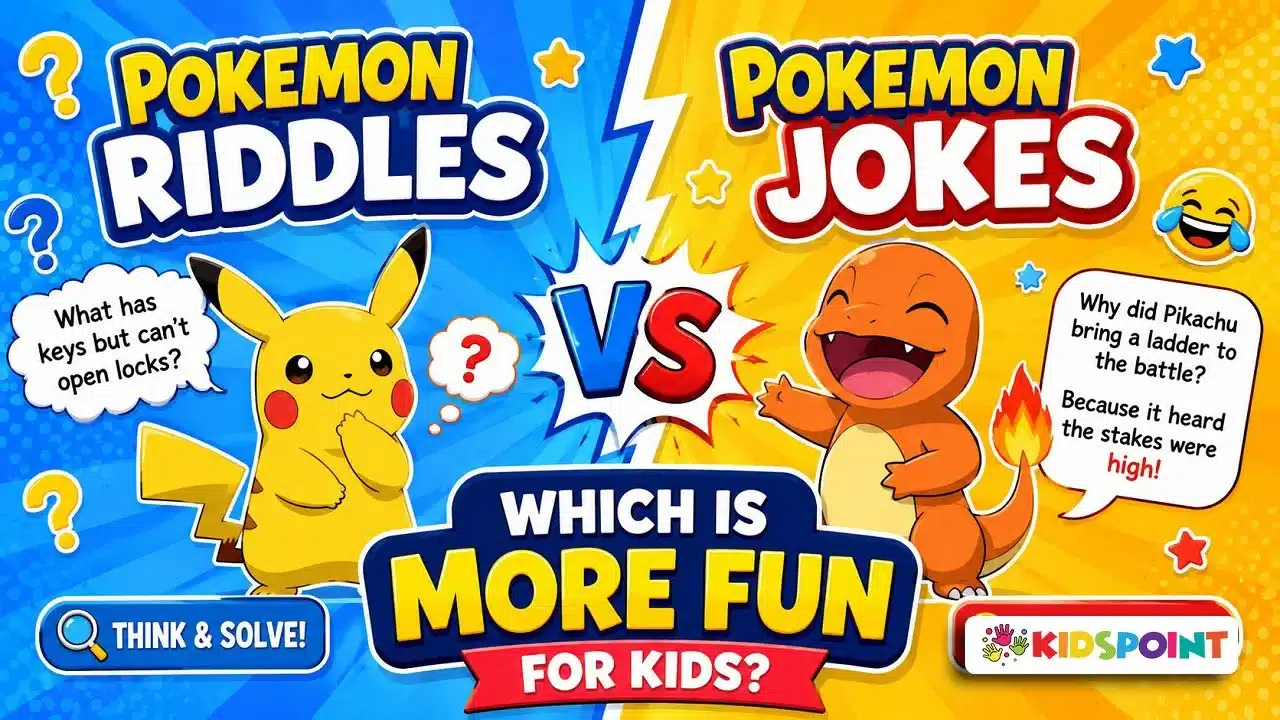
If your child loves Pikachu, Charmander, and the entire Pokemon world, then you already know how powerful this universe is for learning and entertainment. In recent years, pokemon jokes for kids have become one of the most searched and shared forms of kid-friendly humor online. Parents, teachers, and caregivers are using Pokemon-themed humor and puzzles to make learning more engaging and interactive.
In this article, we will explore pokemon jokes for kids alongside pokemon riddles for kids, comparing which one is more fun, more educational, and more beneficial for young learners. You will also discover examples, benefits, and practical ways to use them in daily activities with children.
Whether you are a parent trying to reduce screen time or a teacher looking for classroom engagement ideas, this guide will help you choose the best option.
What Makes Pokemon Jokes for Kids So Popular?
Pokemon is already a global phenomenon, and when combined with humor, it becomes even more engaging for children. Funny pokemon jokes for kids are simple, playful, and often rely on wordplay related to Pokemon characters, moves, and traits.
Kids love jokes because they are easy to understand and provide instant laughter. Unlike complex stories, jokes require minimal explanation, making them perfect for preschoolers and early learners.
For example, a simple joke like:
“Why did Pikachu stay inside? Because it was shockingly tired!”
This kind of humor is easy for kids to remember and share with friends, which also helps improve communication skills and confidence.
From an educational perspective, jokes also help children develop language awareness, improve vocabulary, and understand basic humor structures.
Pokemon Riddles vs Pokemon Jokes: Key Differences
When comparing pokemon riddles for kids and jokes, it is important to understand their core differences. Both are fun, but they serve slightly different purposes in child development.
Pokemon jokes focus on humor and laughter. They are quick, punchy, and designed to entertain. Kids enjoy the surprise element of the punchline.
On the other hand, pokemon riddles require thinking and problem-solving. They challenge children to analyze clues and come up with answers based on logic or memory.
For example:
Joke: “What do you call a sleepy Snorlax? A nap-master!”
Riddle: “I evolve from Charmander and I can fly. Who am I?” (Answer: Charizard)
The joke is immediate fun, while the riddle encourages thinking and reasoning.
In terms of engagement, jokes are more suitable for younger children, while riddles are better for slightly older kids who enjoy challenges.
Educational Benefits of Pokemon Jokes and Riddles
Both pokemon jokes for kids and riddles provide strong educational value when used correctly. They are not just entertainment tools but also learning resources that support cognitive development.
Here are some key benefits:
- Improves memory retention through character association
- Enhances language and vocabulary skills
- Encourages logical thinking and reasoning (especially riddles)
- Builds confidence in communication and storytelling
- Reduces stress and increases classroom engagement
- Promotes social interaction among peers
Research in early childhood education shows that humor-based learning improves retention by up to 40 percent compared to traditional memorization methods. This is why many educators integrate jokes and riddles into their teaching strategies.
Additionally, Pokemon-themed content keeps children emotionally engaged, which improves attention span and participation.
Best Examples of Pokemon Jokes and Riddles for Kids
To help you get started, here are some simple and fun examples of both jokes and riddles you can share with children.
Funny Pokemon Jokes for Kids
- Why did Bulbasaur bring a backpack? Because it wanted to carry leaf supplies!
- What do you call a singing Jigglypuff? A pop star!
- Why did Pikachu get promoted? Because it was shocking at its job!
- What is Snorlax’s favorite hobby? Sleeping in meetings!
Pokemon Riddles for Kids
- I am yellow and electric. I say my own name. Who am I? (Pikachu)
- I am a fire-type starter that evolves into a dragon-like form. Who am I? (Charmander line)
- I am known for sleeping a lot and blocking paths. Who am I? (Snorlax)
- I am a water-type Pokemon that evolves from Squirtle. Who am I? (Wartortle or Blastoise depending on stage)
These examples show how jokes create laughter, while riddles encourage thinking and recall skills.
How to Use Pokemon Jokes and Riddles in Daily Learning
Parents and teachers can use pokemon jokes for kids and riddles in many creative ways to make learning more interactive.
Here are some practical methods:
- Start the day with a Pokemon joke to create a positive classroom or home environment
- Use riddles as a warm-up exercise before lessons
- Turn learning sessions into quiz games using Pokemon clues
- Reward correct answers with stickers or small incentives
- Encourage kids to create their own jokes and riddles
These activities not only make learning enjoyable but also help children develop creativity and independent thinking.
For example, a teacher might say:
“Let’s solve today’s Pokemon riddle before math class starts!”
This keeps students engaged and mentally active.
Which Is More Fun: Pokemon Jokes or Riddles?
The answer depends on the child’s age, personality, and learning style.
Younger children (ages 3–6) usually enjoy pokemon jokes for kids more because they are simple and funny. They do not require deep thinking and deliver instant joy.
Older children (ages 7–12) often prefer pokemon riddles for kids because they enjoy solving challenges and testing their knowledge.
Ideally, a mix of both is the best approach. Jokes provide laughter and relaxation, while riddles build intelligence and problem-solving skills.
In other words:
- Jokes = Instant fun
- Riddles = Brain challenge
- Together = Balanced learning experience
How Pokemon Humor Supports Child Development
Humor plays an important role in emotional and intellectual development. When children engage with funny pokemon jokes for kids, they learn how language can be playful and creative.
This has several developmental advantages:
- Strengthens emotional intelligence
- Encourages positive social behavior
- Reduces anxiety in learning environments
- Helps children express themselves better
- Improves storytelling ability
When combined with riddles, it creates a balanced learning environment where children are both entertained and challenged.
Educators often use humor as a teaching strategy because it improves classroom participation and reduces boredom.
Frequently Asked Questions (FAQs)
What are pokemon jokes for kids?
Pokemon jokes for kids are simple, funny jokes based on Pokemon characters and themes designed to entertain children and improve language skills.
Are pokemon riddles good for learning?
Yes, pokemon riddles for kids help improve problem-solving skills, memory, and logical thinking while keeping children engaged.
Which is better for preschoolers, jokes or riddles?
For preschoolers, jokes are usually better because they are easier to understand and provide instant enjoyment.
Can pokemon humor improve education?
Yes, both jokes and riddles enhance learning by increasing attention span, vocabulary, and engagement in classroom activities.
Where can I find more pokemon jokes for kids?
You can find more pokemon jokes for kids and riddles on educational websites, parenting blogs, and kid-friendly platforms like The Kids Point.
Both pokemon jokes for kids and pokemon riddles for kids offer unique benefits that make learning fun and interactive. Jokes bring laughter and joy, while riddles encourage thinking and creativity. Together, they create a powerful combination for child development and educational engagement.
If you want more creative learning ideas, fun activities, and educational resources for children, explore more content from The Kids Point. It is a great place for parents and teachers looking to make learning more exciting and meaningful for kids.